
A portable generator is one of those investments you hope you never have to use, but when the power goes out, it becomes the most important item in your home. However, there is a catch: generators need to be outside to operate safely, yet they are vulnerable to the very weather causing the outage—rain, snow, and ice. Finding the best generator covers for outside usage is not just about keeping the machine clean; it is about ensuring you have reliable power when the grid fails.


Leaving a generator exposed to the elements can lead to rusted components, water in the fuel tank, or catastrophic electrical failure. Even worse, using a makeshift cover (like a plywood board or a standard tarp) can restrict airflow, causing the engine to overheat or creating a carbon monoxide hazard.
5 Best Generator Covers for Outside
I analyze five top-rated solutions available, ranging from heavy-duty “running covers” that allow you to operate the machine in a storm, to premium storage covers designed to keep your unit pristine between uses.
| Cover Model | Notable Qualities | Ideal User | Standout Strength | General Purpose |
| Porch Shield Waterproof Cover | Heavy-duty storage cover; fits 5000–10000W units | Homeowners seeking reliable off-duty protection | Robust fabric for long-term storage | Outdoor storage and weather protection when generator is not running |
| GenTent Running Cover (Universal Kit) | Engineered running cover for open-frame units | Users needing power in rain or snow | Safe wet-weather operation | Operation cover for storm conditions or job sites |
| IGAN Running Cover (3500–12000W) | All-weather running enclosure | Frequent generator users needing durable all-season protection | Heavy-duty enclosure-style design | Protects while running and during storage |
| Universal Generator Cover (Running, Blue) | Double-layer running cover with storage bag | Buyers seeking budget-friendly operational protection | 600D+210D layered construction | Weather protection during generator operation |
| Honda 08P57-Z25-500 Cover | Brand-specific storage cover for Honda units | Honda owners with wheel-kit-equipped generators | OEM matching fit | Dust and weather protection for storage |
How We Selected These Products
To compile this list of the best generator covers, we evaluated products based on three critical criteria: Material Quality, Design Functionality, and Safety Features.
It is vital to understand the difference between the two main categories of covers in this review:
- Running Covers (Operational): Designed with specific ventilation and framing to stay on the generator while it is running. These protect the electrical panel from rain while allowing exhaust and heat to escape.
- Storage Covers: Designed only for when the generator is turned off and cooling down. These provide a tight, full seal against dust and moisture but must never be used while the generator is running.
Our analysis relies on product specifications, user comparisons, and industry safety standards to determine which covers offer the best protection for your specific needs.
1. Porch Shield Waterproof Generator Cover

The Porch Shield Waterproof Generator Cover is a classic example of a “storage-only” cover done right. While it cannot be used while the machine is running, it is an essential accessory for keeping your generator ready for action during the off-season.
Based on the product class, this cover typically utilizes a 600D durable polyester fabric with a water-resistant laminated undercoating. The design focuses on full encapsulation—covering the generator from the top down to the wheels to prevent dust, UV rays, and moisture from corroding the engine components.
Pros:
- Heavy-Duty Fabric: The material is thick and resistant to tearing, offering better longevity than cheap plastic tarps.
- Secure Fit: Usually features an elastic hem cord and bottom strap to prevent the cover from blowing away in high winds.
- Value: typically offers a high level of protection at a lower price point than running covers.
Cons:
- Storage Only: You must remove this cover before starting the generator.
- Breathability: While good for keeping water out, fully sealed covers can sometimes trap condensation if not vented properly (though Porch Shield usually includes vents).
My Advice: If you store your generator in a shed, garage, or under a carport, this is the ideal dust and scratch protector. It’s a small investment to extend the life of your machine.
2. GenTent Generator Running Cover (Universal Kit)
Best For: Severe Weather Safety & Reliability

The GenTent is widely considered the gold standard in the “running cover” category. Unlike a draped tarp, the GenTent uses a fiberglass frame and clamp system that attaches directly to the generator’s frame. This creates a domed canopy that sheds water while maintaining natural airflow for the engine cooling system.
What sets the GenTent apart is its engineering pedigree. It is often independently lab-tested to withstand hurricane-force winds (up to 70 mph) and heavy snow loads. The “Universal Kit” provided here is designed to adapt to a wide range of open-frame generators, making it a versatile choice for homeowners who want professional-grade protection.
Pros:
- Operational Safety: Can be left on safely while the generator runs in rain or snow.
- Refueling Access: Features a thoughtful door flap that allows you to refuel without removing the entire canopy.
- Wind Resistance: The strapped/clamped design prevents the cover from flapping or flying off in a storm.
Cons:
- Price: It is significantly more expensive than standard storage covers.
- Assembly: Requires initial setup and installation of the mounting brackets.
3. IGAN Generator Covers While Running (3500w-12000w)
Best For: Rugged Durability & Heavy Winds
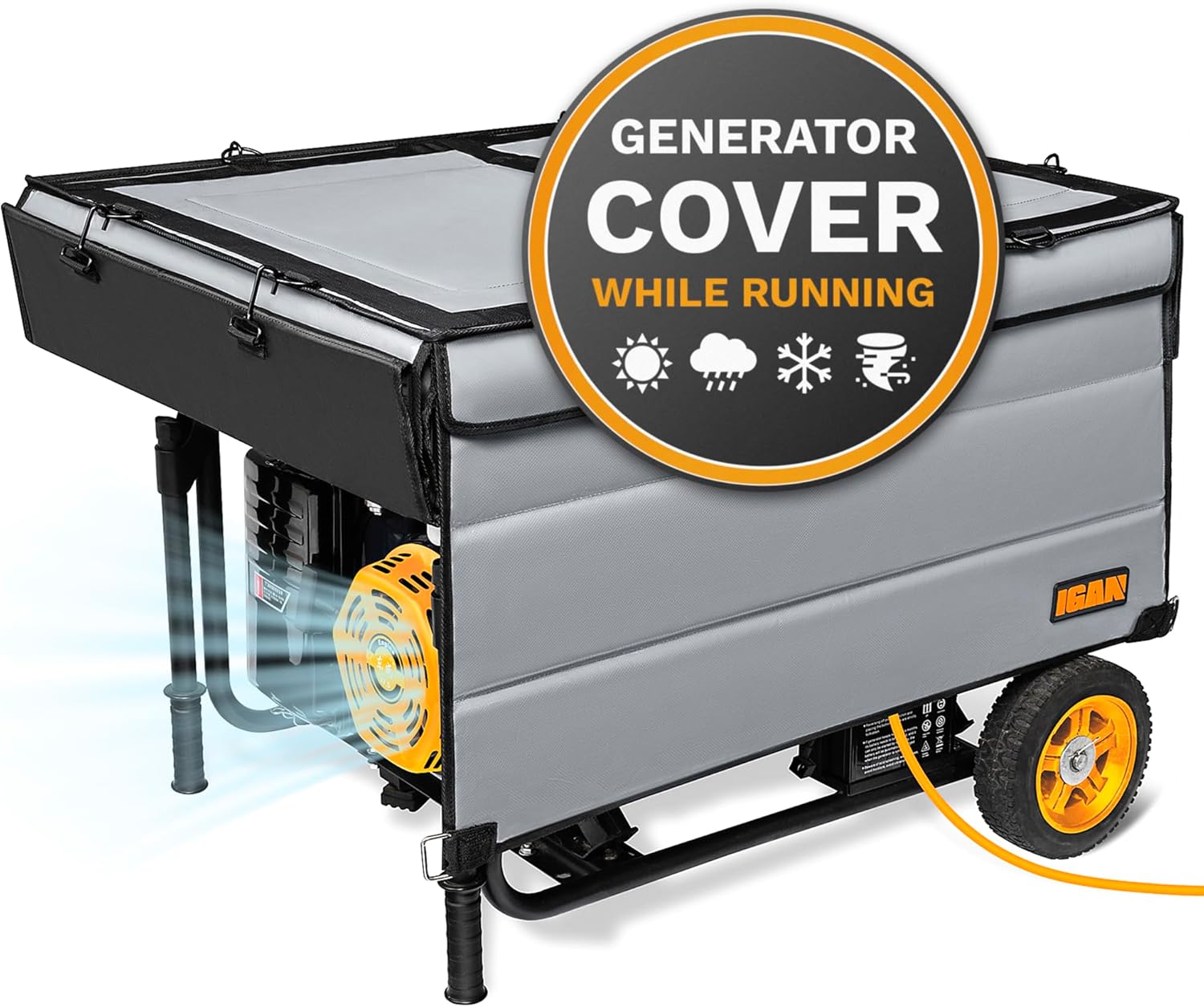
The IGAN Generator Cover is a direct competitor to the GenTent, but it takes a slightly different approach to construction. Instead of flexible fiberglass rods, IGAN often utilizes a stainless steel frame system that feels incredibly rigid.
The “Ultra Heavy Duty” claim in the title is backed by the use of thick tarpaulin material, which is generally heavier and more abuse-resistant than standard nylon. This cover is designed to fit most standard 3.5kw to 12kw generators, effectively turning your open-frame generator into a mini-shed that can withstand harsh outdoor elements while operating.
Pros:
- Robust Frame: The stainless steel pipes provide excellent structural integrity, ensuring the cover doesn’t collapse under snow load.
- All-Weather Use: Fully capable of protecting the electrical panel while the unit is running.
- Coverage: The skirt design offers extensive coverage for the electrical outlets.
Cons:
- Weight: Heavier than the GenTent, which might make it slightly more cumbersome to handle.
- Bulk: The rigid frame design can make the generator feel larger and harder to store if you don’t disassemble the cover.
Why I recommend this: If you prioritize “toughness” over lightweight design, the IGAN is a beast. It feels industrial and is built to take a beating.
4. Universal Generator Cover for Outside Use (Blue, Double Layer)

This Universal Generator Cover (Product 04) enters the market as a cost-effective alternative to the big brands. The title highlights a “600+210D Double Layer” production, suggesting a focus on waterproofing and durability by layering different denier fabrics.
The blue color is a notable feature; while aesthetic preference is subjective, a brighter color can be a safety asset in a blackout, making the generator more visible in low-light conditions compared to black or grey covers. Like the IGAN and GenTent, this is intended to be used while the generator is running.
Pros:
- Material Thickness: Double-layer construction adds confidence regarding water resistance.
- Visibility: The blue color helps prevent tripping hazards in a dark, stormy backyard.
- Versatility: Designed to fit the popular 5kW-10kW frame size.
Cons:
- Generic Brand: It may lack the specific wind-tunnel testing or brand longevity of GenTent.
- Fitment: “Universal” fits can sometimes be looser than model-specific kits, potentially leading to flapping in high winds.
5. Honda 08P57-Z25-500 Generator Cover

For owners of specific Honda generators (typically the EM and EB series with folding handles), the Honda 08P57-Z25-500 is the OEM (Original Equipment Manufacturer) choice. This is a storage cover, not a running cover.
There is a distinct advantage to buying OEM: the fit is usually perfect. Unlike universal covers that bunch up at the corners or drag on the ground, this cover is tailored to the dimensions of specific Honda models. It features the Honda logo and is made of materials approved by the manufacturer to protect the paint and plastic of their units.
Pros:
- Perfect Fit: tailored specifically for Honda models with wheel kits and folding handles.
- Branding: Matches your equipment for a professional look.
- Resale Value: Keeping OEM accessories can help maintain the resale value of premium Honda generators.
Cons:
- Limited Compatibility: It will not fit other brands or even other Honda models correctly.
- Price: You often pay a “Honda tax” for the brand name compared to generic equivalents.
My Comment: If you spent the money on a high-end Honda generator, do not skimp on the cover. Get this one to ensure it stays looking new.
Expert Insight: The Critical Safety Gap
The most common mistake buyers make when shopping for best generator covers for outside is confusing storage covers with running covers.
The Danger of the “MacGyver” Method
I have seen homeowners try to run a generator with a storage cover draped loosely over the top, or worse, with a piece of plywood balanced on the frame. This is dangerous.
- Overheating: Generators are air-cooled. Blocking the air intake (usually on the side or bottom) can destroy the engine in minutes.
- CO Poisoning: A cover that doesn’t vent exhaust properly can redirect deadly carbon monoxide back toward the house or into the generator’s own air intake, causing it to stall.
Why Running Covers Work
Products like the GenTent and IGAN utilize a “skirt” system. They cover the top (electrical panel and gas tank) to block rain, but they leave the bottom perimeter open for air intake. They also maintain a specific shape to ensure the hot muffler doesn’t melt the fabric. When the storm hits, you need a cover engineered for airflow, not just waterproofing.
Buying Guide: What to Look For
Before you click “Buy,” consider these three factors to ensure you get the right product.
1. Storage vs. Operation
Decide immediately: Do you need a cover to keep dust off in the garage (get the Porch Shield or Honda), or do you need to run the machine in the rain (get the GenTent, IGAN, or Universal Blue)? You likely need both, or a running cover that can double as storage (though running covers usually don’t seal the bottom as tightly against rodents).
2. Frame Fitment
- Tubular Frames: Most standard portable generators have a round pipe frame. GenTent and IGAN clamp easily to these.
- Square Frames: Some older or industrial generators have square tubing. Check if the kit includes adapters for square frames.
- Inverters: Fully enclosed inverter generators (the quiet plastic suitcases) require completely different mounting kits (usually strap-based). The products in this list are primarily for open-frame generators.
3. Material Rating (Denier)
Look for the “D” number (e.g., 600D). This stands for Denier, a unit of fabric density.
- Higher is better: 600D is standard for heavy-duty outdoor gear.
- Vinyl vs. Poly: Vinyl (tarpaulin) is heavier and more waterproof but can be stiff in freezing cold. Polyester is lighter but needs a good coating to remain waterproof.
What Buyers Often Miss About Generator Covers
Many generator owners underestimate how different storage covers and running covers truly are. A running cover is not just a waterproof tent—it must allow safe airflow and prevent exhaust interference. Professionals often prioritize covers with structured support to keep material from touching hot engine components.
Common misconceptions include:
- “Any cover keeps a generator dry while operating.”
Not true. Running covers require specialized design to protect components while maintaining ventilation and ensuring safety. - “Storage covers are all the same.”
Material thickness, UV protection, and stitching quality dramatically affect longevity. - “Universal fit means perfect fit.”
Universality is convenient but may trade precision fit for broad compatibility. - “Heavier fabric is always better.”
Only if reinforced well. Some heavy materials sag without proper structure.
Professionals often look for three things: proper airflow design, weatherproofing that accounts for wind-driven rain, and ease of installation—because in emergencies, time matters.
Conclusion,
Don’t wait for the storm warning to appear on your phone. Secure your generator now so that when the lights go out, your power stays on.