
You know! A reliable 12 volt fan for RV use can make the difference between a restless night & a livable space: especially when shore power is not available. For that, as more travelers embrace off-grid camping, van life, and energy-conscious setups, demand has grown for fans that run efficiently on a vehicle’s DC electrical system.

Today’s vibe reflects that shift. Instead of one-size-fits-all solutions: RV owners can choose from roof-mounted exhaust fans, compact circulation units, and wall-mounted oscillators. And even hybrid portable options…
Each fan approach solves a different problem. And understanding those differences matters far more than chasing raw power or flashy features.
How We Selected These 12v Fans for RVs
This roundup focuses on five distinct fan styles commonly used in RVs, campers, vans, and boats. Selection is based on:
- Clear relevance to 12V RV applications
- Variety of installation types and use cases
- Established brands or clearly defined product purposes
- Information available from product titles and general category knowledge
This analysis does not claim hands-on testing. Instead, it reflects informed editorial judgment, typical buyer considerations, and how these products compare within their respective niches.
5 Best 12 Volt Fans for RVs
| Fan’s Model | Notable Qualities | Ideal User | Standout Strength | General Purpose |
| RoadPro RP-1179 Metal Fan | Compact, metal build, automotive style | Budget-minded travelers | Simplicity and durability | Personal airflow |
| RVLOVENT Roof Vent Fan | Large roof vent format, remote control | Full-size RV owners | Whole-cabin ventilation | Heat and moisture exhaust |
| Koonie Rechargeable Clip Fan | Battery-powered, portable | Flexible or mixed-use campers | Placement versatility | Spot cooling |
| ZOIZ Wall Mount Fan | Oscillating, LED light, wall-mounted | Van life & small campers | Space-saving circulation | Interior airflow |
| Caframo Sirocco II | Marine-grade, low power draw | Long-term RV & boat owners | Efficiency and reliability | Continuous air circulation |
1. RoadPro RP-1179 RV & Car Fan

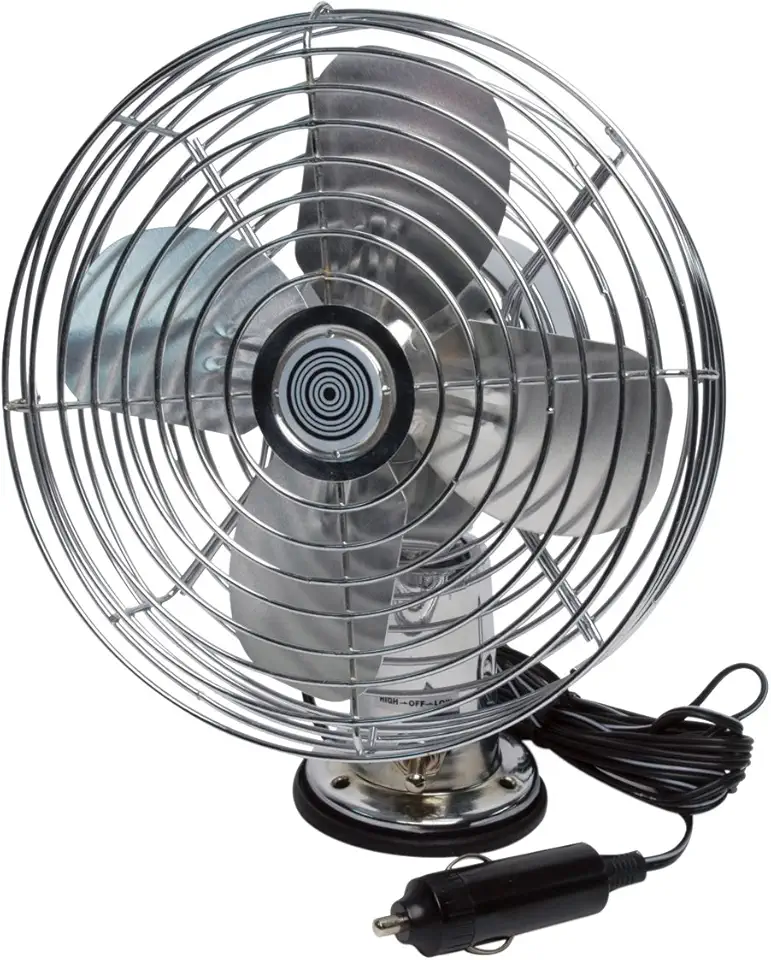
The RoadPro RP-1179 is a throwback to the utilitarian accessories of the trucking world. Unlike modern plastic fans, this unit features a chrome-plated metal housing that screams durability. It is designed to plug directly into a standard 12V cigarette lighter socket, making it an instant “plug-and-play” solution for drivers or dashboard mounting.
Best use cases:
Ideal for drivers or passengers who want targeted airflow without modifying their RV. It’s also appealing as a backup fan.
Pros:
- Straightforward design
- Metal construction suggests durability
- Likely easy to power from a 12V outlet
Cons:
- Limited coverage area
- No advanced airflow control
2. RVLOVENT Roof Vent Fan 12V Remote Control
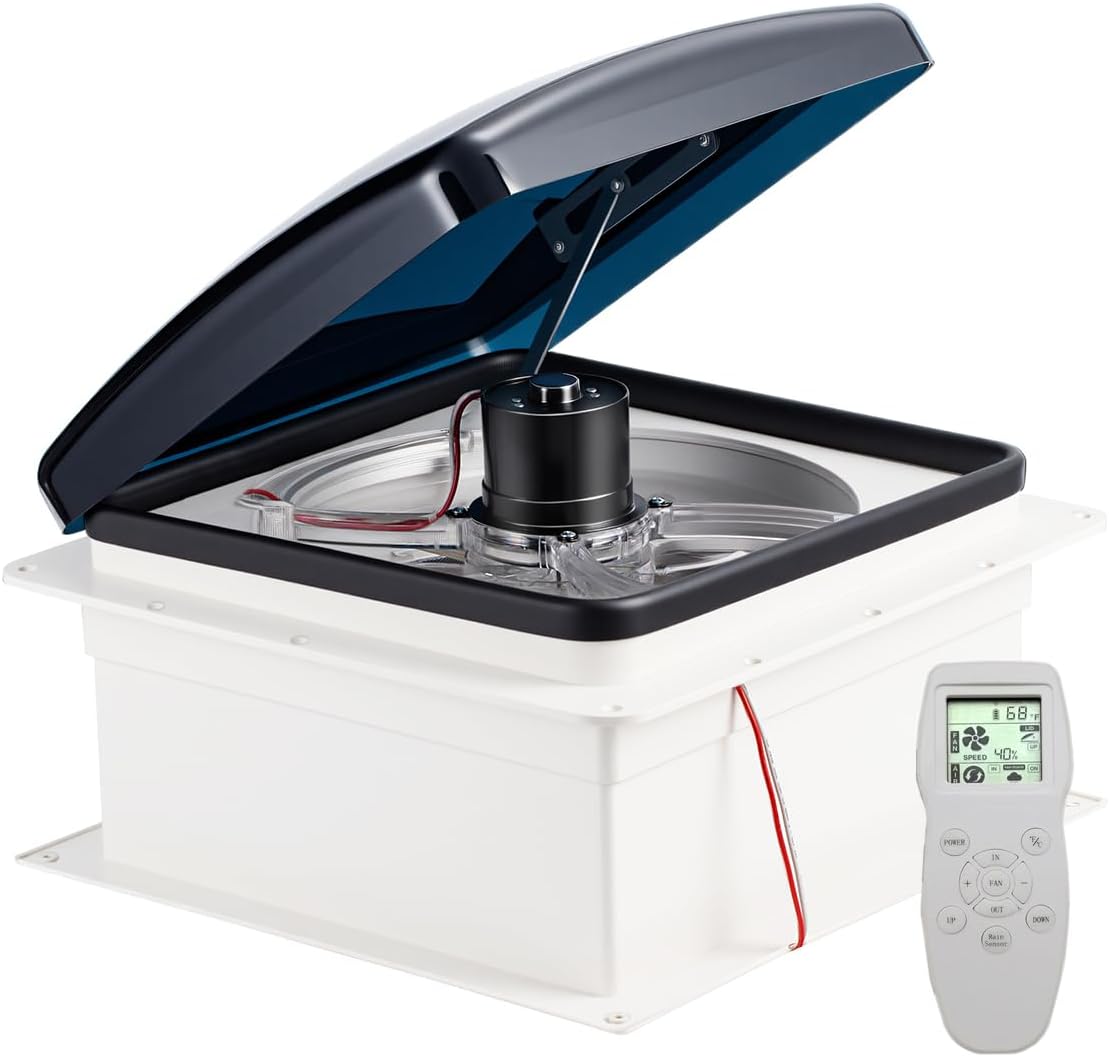
Roof vent fans play a different role altogether. Rather than cooling people directly, they move hot air out and pull fresh air in. A 14 x 14-inch format suggests compatibility with standard RV roof openings, while remote control and multi-speed operation point toward convenience.
Suitable for:
Owners of travel trailers or motorhomes who struggle with heat buildup, humidity, or cooking odors.
Pros:
- Whole-RV ventilation potential
- Remote operation adds usability
- Suitable for long-term installation
Cons:
- Installation complexity
- Not portable or multi-purpose
3. Koonie 10000mAh Rechargeable Portable Clip Fan for RV & Van

While not strictly a wired 12V fan, this rechargeable model earns its place through versatility. Its ability to operate independently of the RV’s electrical system can be a major advantage during dry camping.
Pros:
- No wiring required
- Clip-on design allows creative placement
- Useful beyond RV applications
Cons:
- Limited runtime compared to hardwired fans
- Not optimized for whole-space ventilation
Best use cases: Campers who want flexibility—inside tents, near bunks, or even outdoors.
4. ZOIZ 12V RV Wall Mount Fan
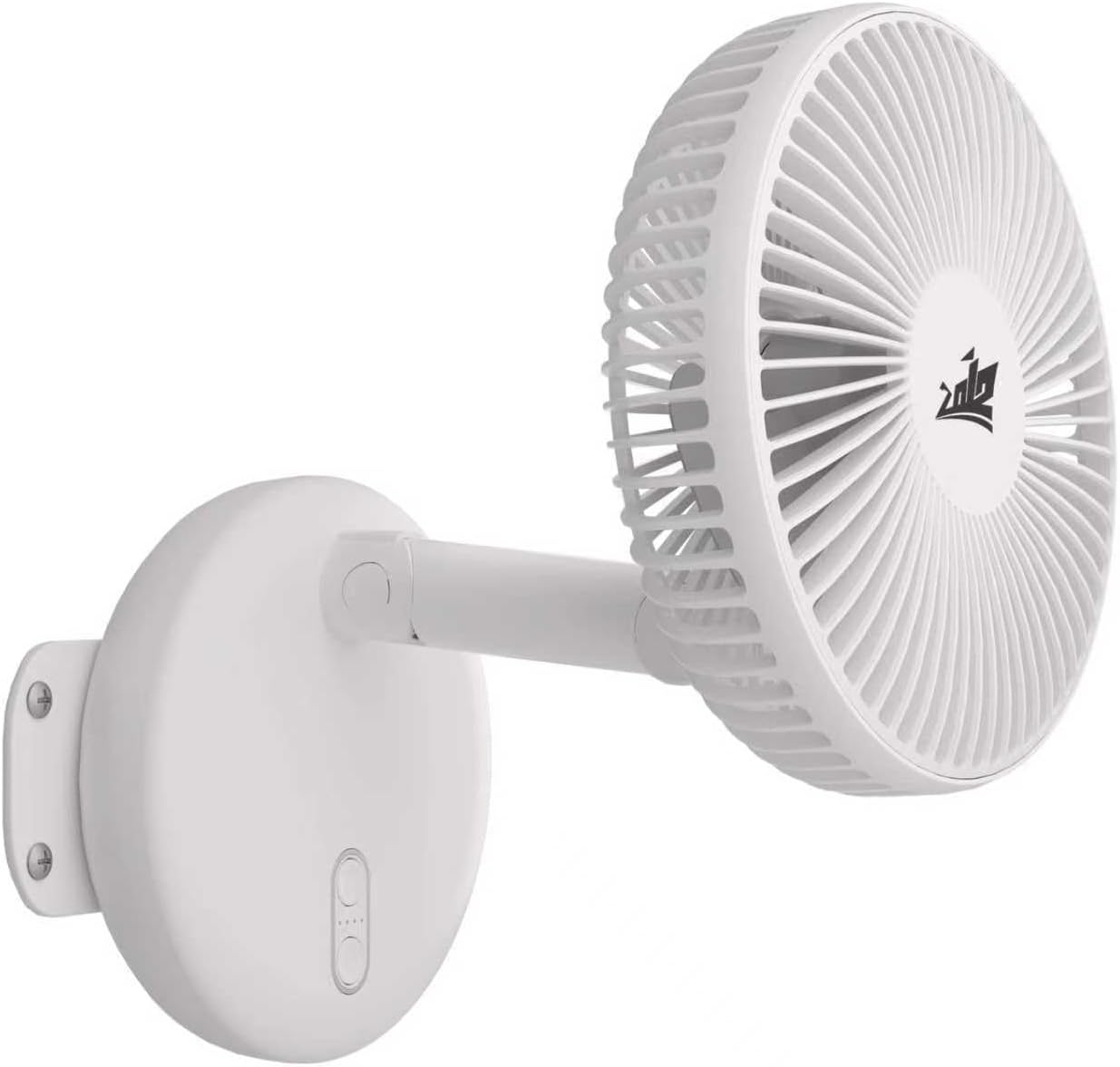
The ZOIZ 7-inch fan is designed for permanent mounting in living areas. It solves a common issue with small RV fans: directionality. By including oscillation, it spreads air across a wider area, such as a dinette or sleeping quarter. The addition of an LED light is a thoughtful touch, serving double duty as a reading light.
This fan strikes a balance between portability and permanence. Compared to desk-style fans, it integrates better into an RV’s layout.
Pros:
- Space-efficient mounting
- Oscillation improves air distribution
- Dual-purpose design
Cons:
- Requires installation
- Smaller fan diameter limits reach
5. Sirocco Auto Sensor System 12 Volt Fan for RV

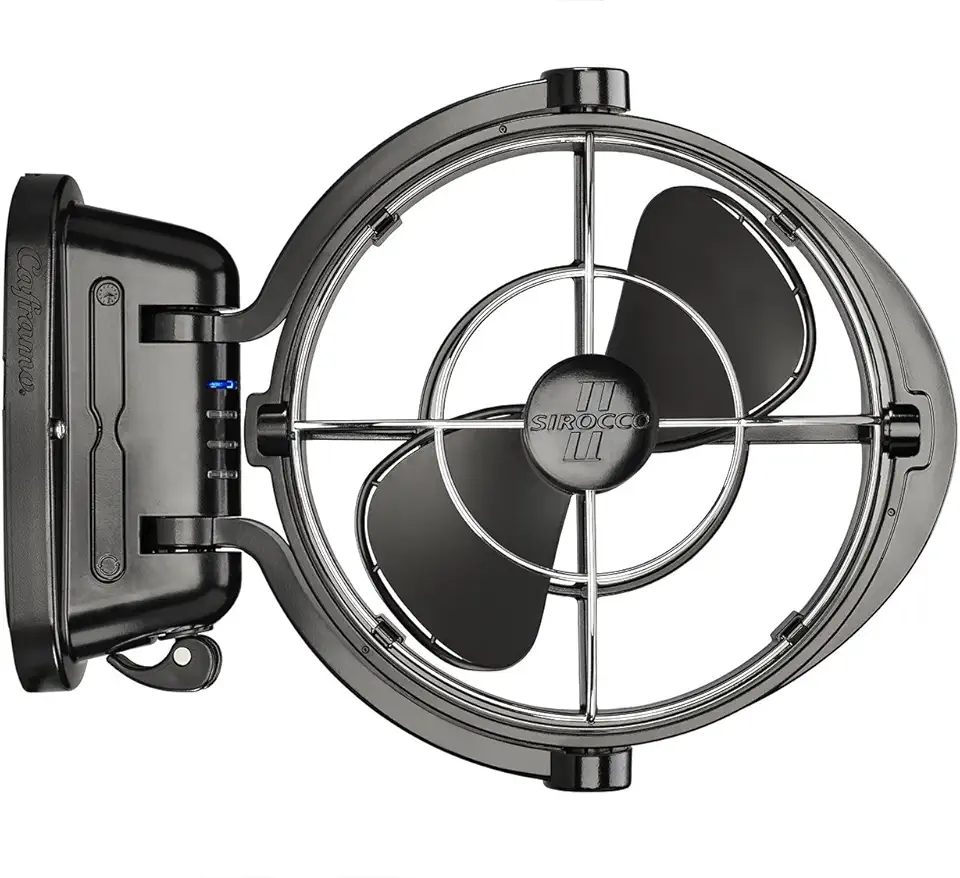
The Sirocco II is widely considered the gold standard in the marine and RV industries. Made in Canada, it is famous for its unique gimbal design that allows 360-degree directional airflow and folds flat against the wall when not in use. It is hardwired and auto-sensing for 12V or 24V systems.
If you are a Serious RV traveler or boat owner, this fan is perfect for you!
Pros:
- Energy-efficient design
- Omnidirectional airflow
- Reputation for reliability
Cons:
- Hardwire installation required
- Higher upfront investment
Buying Guide: How to Choose the Right 12V RV Fan
Design Type:
Decide between roof ventilation, wall-mounted circulation, or portable spot cooling.
Performance Expectations:
Fans don’t replace air conditioners. They manage heat, airflow, and comfort.
Power and Efficiency:
Look for low-draw designs if you camp off-grid or rely on solar.
Installation vs. Flexibility:
Hardwired fans offer stability; portable models offer adaptability.
Value for Money:
Higher-priced fans often justify cost through longevity and efficiency rather than features.
Maintenance and Reliability:
Simple designs often last longer in vibration-prone RV environments.
What Really Matters in RV Fans
One common misconception is that higher airflow always equals better cooling. In RVs, airflow direction and ventilation strategy matter just as much. Roof fans reduce heat load, while circulation fans improve comfort. Professionals often recommend using both.
Another frequent pitfall is underestimating power consumption. Even small differences in efficiency can matter when running off batteries overnight. Experienced RVers tend to prioritize quiet operation and low draw over sheer size.
Pro Tip: If you are sensitive to noise, look for “brushless” motors or fans specifically marketed for sleeping areas.
Remember! “Heavy Duty” usually implies “loud.”