
Whether you need to keep the lights on during a blackout, power your RV’s air conditioner, or run essential tools at a job site, finding the right power source is crucial. The best 4000 watt generators strike the perfect “sweet spot” in portable power: they are strong enough to run major appliances like refrigerators and 13,500 BTU RV AC units, yet compact enough for one person to move around.
In this guide, we have compiled a list of the top-rated 4000-watt models currently available. We analyzed them based on noise levels, fuel efficiency, portability, and “smart” features like Bluetooth monitoring and remote starting. Below, you’ll find a quick comparison to help you choose the right model, followed by in-depth reviews of each unit.
Compare The Top 4000 Watt Generators
| Generator Model | Peak / Running Watts | Fuel Type | Start Type | Weight | Est. Noise Level |
| Pulsar PGD40ISCO | 4000W / 3200W | Gas | Recoil | ~46 lbs | 59 dBA |
| Generic Inverter | 4000W / 3200W | Gas | Recoil | ~48 lbs | Super Quiet |
| maXpeedingrods | 4000W / 3200W | Gas | Recoil | 50.7 lbs | ~60 dBA |
| Champion Dual Fuel | 4000W / 3000W | Dual Fuel | Recoil | 51.8 lbs | 64 dBA |
| Westinghouse | 4000W / 3300W | Dual Fuel | Electric/Remote | 63 lbs | 52 dBA |
| WEN GN400iM | 4000W / 3500W | Gas | Recoil | 73.3 lbs | Open Frame |
| PROYAMA 4000W | 4000W / 3200W | Gas | Recoil | 47 lbs | ~62 dBA |
Best 4000 Watt Generators for RVs, Camping & Home Backup
Pulsar PGD40ISCO
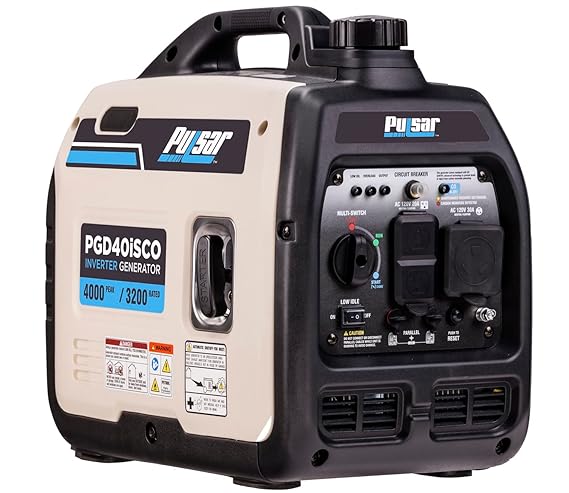
If portability is your top priority, the Pulsar PGD40ISCO is an incredible contender. Weighing in at just roughly 46 pounds, this is arguably one of the lightest 4000-watt inverters on the market, making it easy for a single person to lift into a truck bed or RV storage compartment. It delivers clean sine wave power, which is essential for safely charging sensitive electronics like laptops and smartphones without risking damage. With a noise rating of around 59 dB, it operates at the volume of a normal conversation, making it ideal for campgrounds where noise restrictions are tight.
Pros:
- Ultra-lightweight: Extremely easy to transport.
- Quiet Operation: Great for camping and residential areas.
- Clean Power: Safe for sensitive electronics (Inverter technology).
- Parallel Capable: Can connect to another unit for double power.
Cons:
- Recoil Start Only: No electric push-button start.
- Small Tank: 1-gallon tank requires more frequent refueling during heavy loads.
4000 Watt Inverter Generator (Blue)
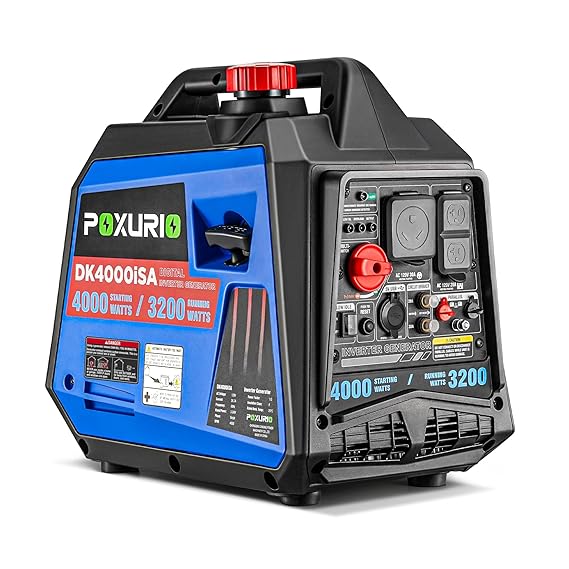
This generic “Blue” model focuses on delivering high value for budget-conscious buyers who need an RV-ready solution without paying a premium for big-name branding. It offers the standard 4000-watt surge capacity needed to start up RV air conditioners and includes an Economy Mode to adjust engine speed based on load, saving you gas money in the long run. It is EPA-compliant and built for straightforward “plug and play” use, making it a solid backup choice for basic home needs or weekend camping trips where reliability and quiet performance are required.
Pros:
- Cost-Effective: Typically priced lower than major brands.
- RV Ready: Comes with the necessary outlets for campers.
- Fuel Efficiency: Economy mode extends run time.
Cons:
- Basic Features: Lacks advanced tech like Bluetooth or remote start.
- Brand Support: Customer service may not be as robust as established brands.
maXpeedingrods MXR4000
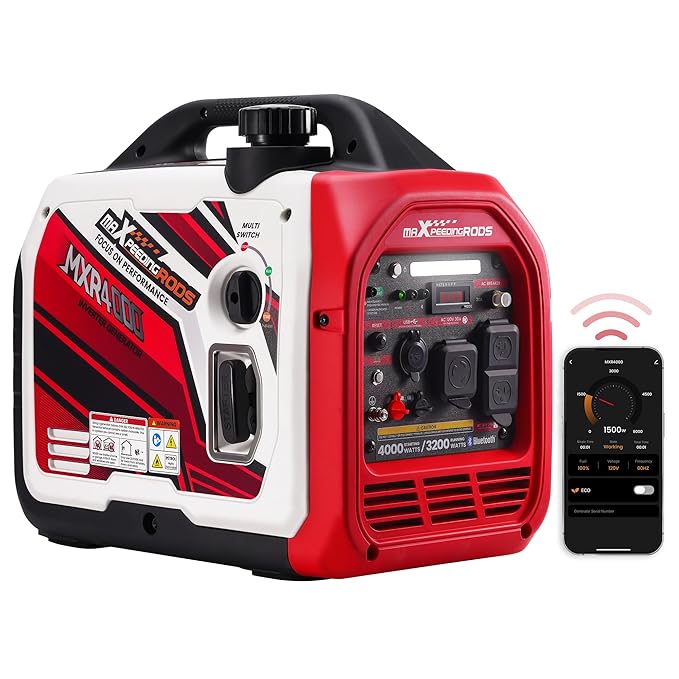
The maXpeedingrods MXR4000 stands out because of its modern tech integration. It features Bluetooth connectivity that allows you to monitor load, fuel levels, and remaining run time directly from a smartphone app. This is a game-changer for RVers who want to check their generator’s status from inside the comfort of their camper without going outside in the rain or cold. Beyond the app, it provides a solid 3200 running watts and includes a CO (Carbon Monoxide) alarm, adding an extra layer of safety for your family.
Pros:
- Bluetooth App Monitoring: Check fuel and load status remotely.
- Safety First: Integrated CO alarm shuts down the unit if unsafe levels are detected.
- Compact Design: Suitcase-style handle makes it easy to carry.
Cons:
- App Dependency: Some users may find the app setup tricky initially.
- Manual Start: Still relies on a pull-cord recoil start.
Champion Power Equipment 4000-Watt Dual Fuel
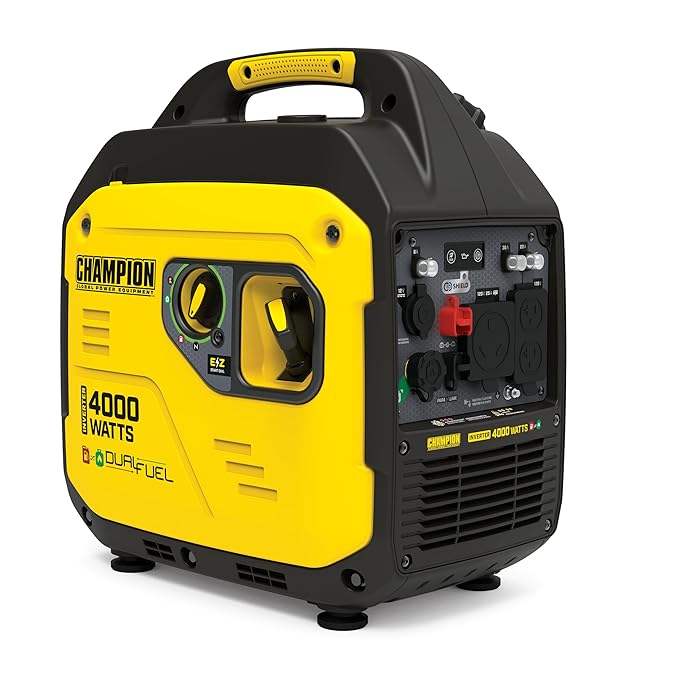
Champion is a heavyweight in the generator industry, and this Dual Fuel model demonstrates why. The ability to switch between gasoline and propane with the turn of a dial gives you unmatched flexibility—propane is easier to store long-term and doesn’t gum up the carburetor like old gasoline does. This unit is “RV Ready” right out of the box with a TT-30R outlet and includes Champion’s CO Shield® technology. If you live in an area prone to hurricanes or storms, the dual-fuel capability is a massive advantage when gasoline shortages occur.
Pros:
- Dual Fuel Flexibility: Runs on Gas or Propane (LPG).
- CO Shield: Automatic shutoff for carbon monoxide safety.
- Extended Warranty: Champion typically offers excellent 3-year support.
- Quiet Technology: Engineered to reduce noise pollution.
Cons:
- Slightly Lower Power on Propane: Propane is less efficient than gas, slightly reducing running watts.
- No Electric Start: Recoil start only on this specific model.
Westinghouse iGen4000DFc
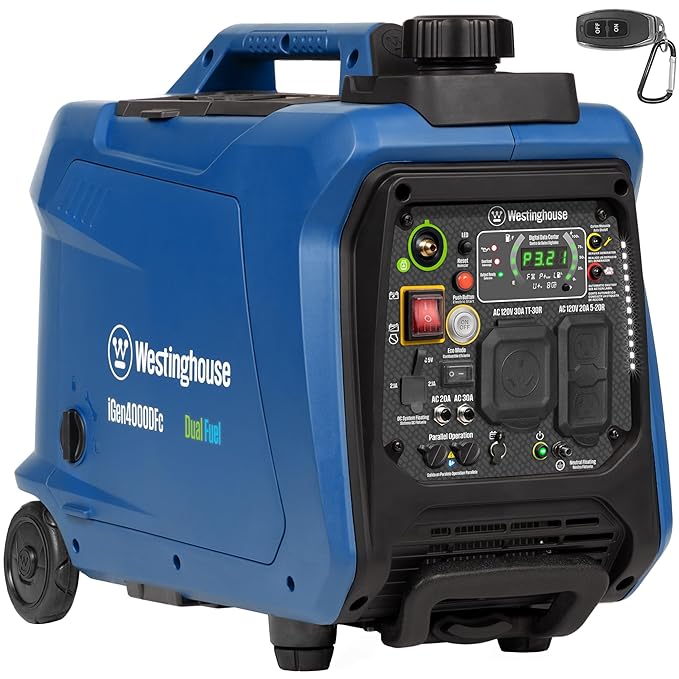
If you want the ultimate convenience package, the Westinghouse iGen4000DFc is the winner. It combines Dual Fuel capability with a Remote Electric Start. Imagine waking up on a chilly morning in your RV and starting the generator with a key fob from your bed to get the coffee maker running—that is the luxury this unit provides. It also features a rotating digital data center that displays fuel level and power output instantly. With a super-quiet operation (as low as 52 dBA), it is one of the quietest generators in its class, perfect for strict campgrounds.
Pros:
- Remote Start: Key fob included for distant starting.
- Super Quiet: Rated as low as 52 dBA, excellent for sleeping.
- Dual Fuel: Runs on Gas or Propane.
- Informative Display: LED data center shows real-time stats.
Cons:
- Heavier: Weighs around 63 lbs, making it harder to lift than the Pulsar.
- Battery Maintenance: The internal battery for the starter needs occasional charging.
WEN RV-Ready 4000-Watt (GN400iM)
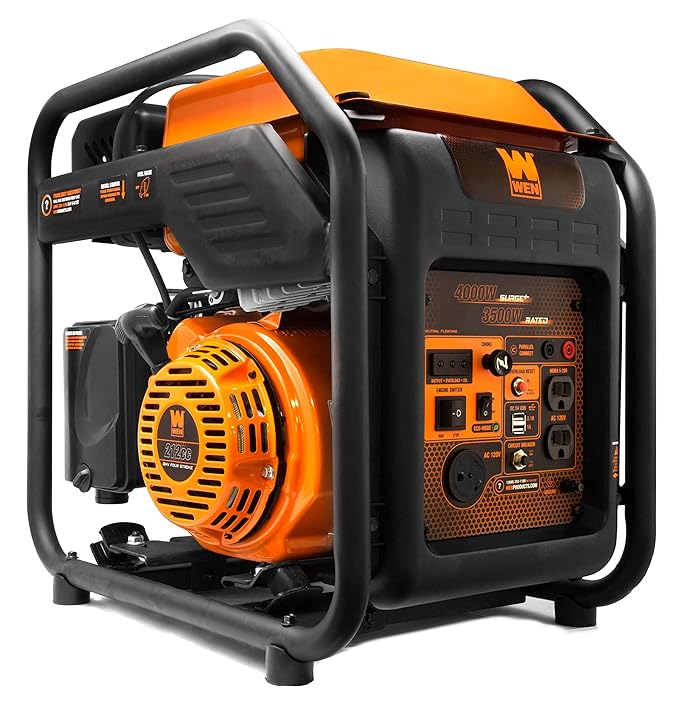
The WEN GN400iM utilizes an “Open Frame Inverter” design. This hybrid build gives you the clean, stable power of an inverter (safe for electronics) but with the rugged, open-frame construction of a traditional generator. This design typically allows for better airflow and lower manufacturing costs, making it a powerful budget-friendly option. While it is physically larger and slightly louder than the enclosed “suitcase” models, it delivers robust performance for job sites or home backup where noise is less of a primary concern than raw power and price.
Pros:
- High Value: Excellent power-to-price ratio.
- Rugged Build: tough metal frame protects the engine.
- Fuel Shutoff: Allows the carburetor to run dry, preventing stale gas issues during storage.
Cons:
- Louder: Open frame design doesn’t dampen sound as well as enclosed plastic shells.
- Heavier: At ~73 lbs, it is the heaviest on this list.
PROYAMA 4000W Portable Generator

The PROYAMA 4000W is a feature-packed unit designed for the modern camper. It often comes as a complete kit, sometimes including useful accessories like a cover or funnel. It features a digital interface for tracking voltage and hours, which is crucial for staying on top of maintenance schedules like oil changes. It also includes an ECO-mode to drop the idle speed when power demand is low, significantly increasing fuel efficiency. The built-in LED light is a thoughtful touch, helping you plug in cords or refuel safely in the dark during a power outage.
Pros:
- Digital Interface: Easy to read voltage and run hours.
- Useful Accessories: Often includes a weatherproof cover.
- LED Light: Integrated light helpful for nighttime setup.
- Parallel Ready: Expandable power if needed.
Cons:
- Manual Choke: Requires manual adjustments during cold starts.
- Brand Recognition: Less well-known than Champion or Westinghouse.
Buying Guide: Why 4000 Watts?
You might be wondering, “Is 4000 watts enough?” For most users, the answer is a resounding yes.
- RV Owners: A 4000-watt unit (with approx 3200 running watts) is generally sufficient to start and run a 13,500 BTU air conditioner while simultaneously powering lights and a TV.
- Home Backup: It can power a full-size refrigerator, a freezer, several lights, fans, and charge all your mobile devices.
- Mobility: Once you go above 4500 watts, generators typically become too heavy to lift (100+ lbs) and require wheels and ramps. The 4000-watt class stays portable.
Final Verdict
For the best overall convenience, the Westinghouse iGen4000DFc wins with its remote start and dual-fuel capability. If you need the lightest option for easy travel, the Pulsar PGD40ISCO is hard to beat. Finally, if you are on a budget but need clean power, the WEN GN400iM open frame inverter is a smart financial choice.