
Choosing the best propane whole home generator isn’t about chasing the highest watt number. It’s about matching real power needs with fuel flexibility, noise levels, and how much effort you want to put into setup and maintenance. Propane appeals to many homeowners because it stores cleanly, burns reliably in cold weather, and avoids fuel degradation issues. The challenge is that “whole home” means very different things depending on the size of your house and what you expect to run.
Below is a practical comparison of well-known portable generators that can realistically support whole-home backup when paired with the right transfer switch and load management.
Compare The Top Propane Whole Home Generators
| Generator | Peak Watts | Fuel Type | Electric Start | Noise Level | Best For |
| AIVOLT 8000W | 8000 | Gas / Propane | Yes | Very quiet (inverter) | Partial home backup, essentials |
| Generac 12,500W | 12,500 | Gas / Propane / NG | Yes | Moderate | Flexible fuel whole-home support |
| Aceup Energy 4000W | 4000 | Gas / Propane | Yes | Quiet | Light-duty backup |
| DuroMax XP13000EH | 13,000 | Gas / Propane | Yes | Loud | Heavy appliance coverage |
| Westinghouse 14,500W | 14,500 | Gas / Propane / NG | Yes (remote) | Loud | Large homes, high loads |
| DuroStar DS13000MX | 13,000 | Gas / Propane | Yes (remote) | Loud | High-demand whole home use |
AIVOLT 8000W Dual Fuel Super Quiet Inverter Generator

This generator is best suited for homeowners who prefer quiet, clean power over brute force. It handles essentials like refrigerators, lights, electronics, and even small HVAC systems when managed carefully. The inverter design minimizes noise and maintains stable power, which is crucial for modern appliances. Its main limitation is output—this won’t run an entire large home at once.
Verdict: Buy this if you want quiet, efficient backup for critical circuits; skip it if you expect to power everything simultaneously.
Generac 12,500 Starting Watt Tri-Fuel Portable Generator

This is a flexible option for homeowners who value fuel choice. Propane, gas, or natural gas all work, making it adaptable in long outages. Power output is strong enough for most mid-sized homes with reasonable load management. Noise is noticeable, but expected at this class.
Verdict: a solid pick for households wanting fuel security; not ideal if quiet operation is a priority.
Aceup Energy 4000 Watt Dual Fuel Inverter Generator
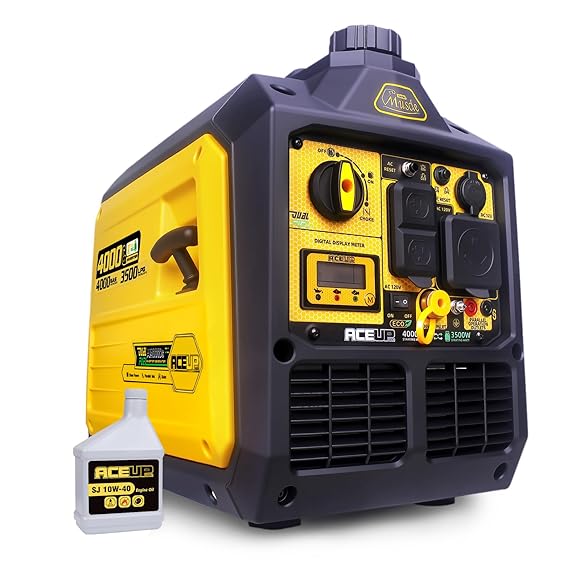
This unit is realistically a partial backup solution. It shines in portability and quiet operation but is limited to essential loads only. It’s best for small homes, apartments, or backup for medical devices and refrigeration.
Verdict: Good for minimal needs; not a true whole-home solution.
DuroMax XP13000EH 13,000-Watt Dual Fuel Portable Generator
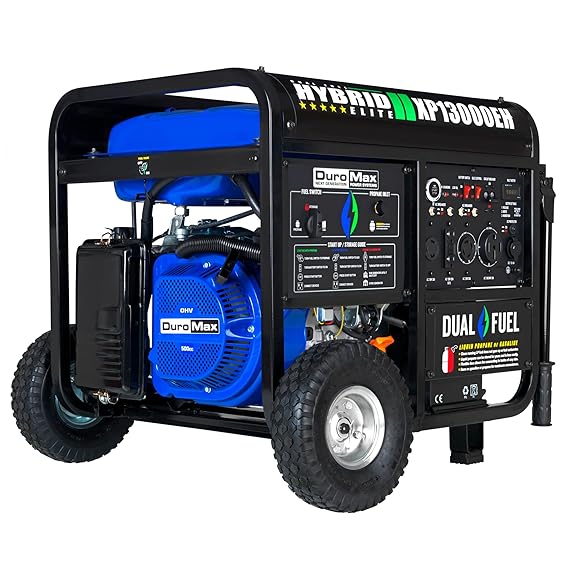
This is a workhorse built for serious power demands. It can handle major appliances, well pumps, and central air with proper load planning. Noise and fuel consumption are the trade-offs. Verdict: ideal for larger homes that need muscle; not for noise-sensitive neighborhoods.
Westinghouse 14,500 Peak Watt Propane Home Backup Generator

This generator is designed for maximum coverage. With high output and tri-fuel capability, it’s capable of supporting most homes comfortably during outages. Expect higher noise and size in exchange for capacity. Verdict: excellent for large homes; overkill for modest setups.
DuroStar DS13000MX 13,000-Watt Propane Portable Generator

Built for reliability and power, this model balances strong output with propane efficiency. Remote start adds convenience during emergencies. It’s heavy and loud, but dependable. Verdict: good for homeowners prioritizing power and durability; not ideal for portability.
Quick Buying Tip
“Whole home” rarely means everything at once. Even large generators require smart load management to avoid overload and wasted fuel.
Final Takeaway,
The best propane whole home generator depends on how much power you truly need and how comfortable you are managing loads. Smaller inverter models work well for essentials, while high-wattage units suit large homes with higher demands. Focus on realistic usage, fuel access, and noise tolerance to make a confident choice.