
Choosing the best battery operated generator gets complicated when real-world limits are involved. Some buyers need serious backup power but don’t have room for oversized units. Others want something compact and affordable, even if that means giving up runtime or output. Charging speed, battery chemistry, portability, and output limits all pull the decision in different directions.
A generator that works great for RVs may be excessive for apartment emergencies, while ultra-small models often struggle to power anything beyond basics. This guide compares five battery operated generators with very different strengths, focusing on how well each performs when space, power demand, or flexibility is restricted.
Comparison of the Best Battery Operated Generator Options Under Real Constraints
| Generator | Battery Capacity | Max Output | Portability | Best Fit Constraint |
| DJI Power 1000 V2 | 1024Wh | 2600W | Compact, carryable | High power in limited space |
| BROWEY 153Wh | 153Wh | 150W | Very small, lightweight | Emergency-only, ultra-portable |
| HOWEASY 88Wh | 88Wh | 120W | Pocket-size | Minimal power needs |
| Pecron F3000LFP | 3072Wh | 3600W | Large, wheeled | Long runtime at home |
| GROWATT INFINITY 2000 | 2048Wh | 2400W | Medium-heavy | Balanced home backup |
DJI Power 1000 V2 Portable Power Station
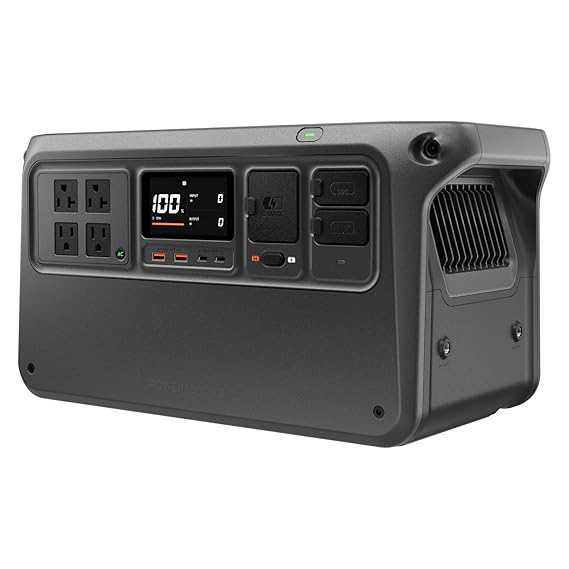
This model works well when space is limited but power demand is not. Its 2600W stable output can handle refrigerators, power tools, and multiple devices at once without feeling undersized. The fast recharge capability makes it practical for short outages where downtime matters. The main compromise is capacity: 1024Wh is enough for several hours, not days, of heavy use. It fits best for users who want strong output in a compact footprint rather than extended runtime.
BROWEY Portable Power Station 153Wh
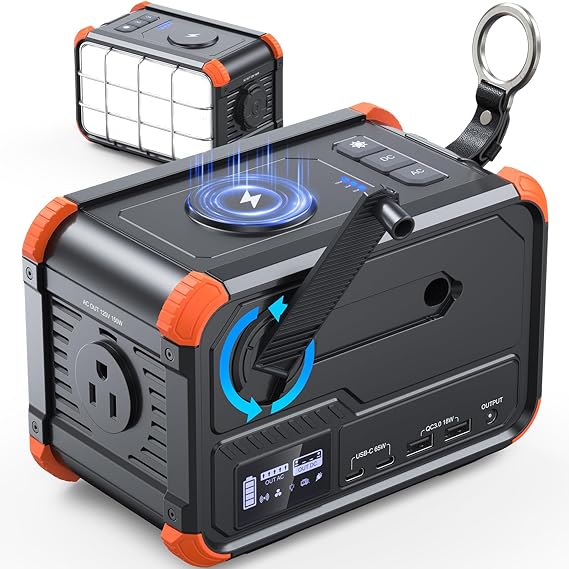
This unit focuses entirely on portability and emergency flexibility. It can charge phones, small electronics, and low-wattage devices when nothing else is available. The hand crank and wireless charging features add resilience in rare situations, but output is extremely limited. Running appliances or tools is not realistic. This option suits buyers who accept strict power limits in exchange for a lightweight, grab-and-go emergency solution.
HOWEASY Portable Power Station 120W
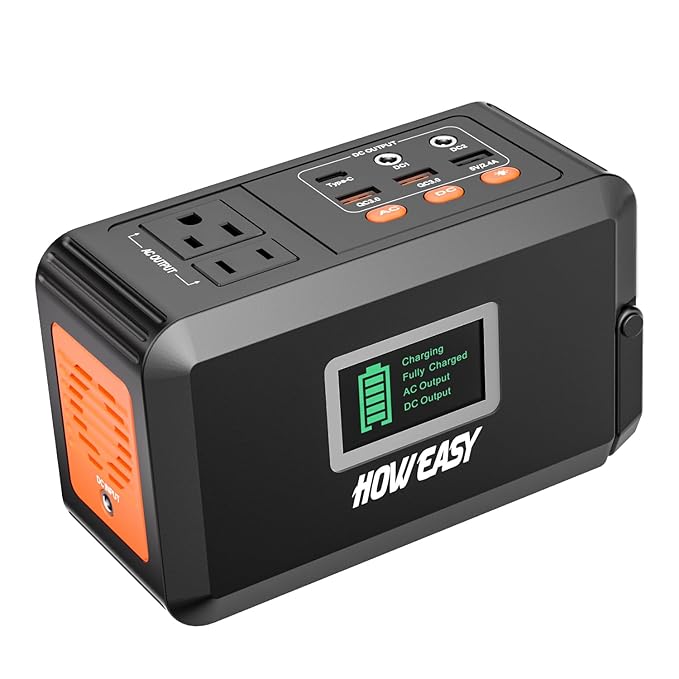
The HOWEASY model sits at the extreme low end of capacity. It handles LED lights, phones, and small electronics during short outages or outdoor trips. Its size and simplicity are advantages when storage space is minimal. The downside is obvious: 88Wh disappears quickly, and the AC outlet is only suitable for very light loads. It fits users who only need brief, basic power support and understand the limitations clearly.
Pecron Portable Power Station F3000LFP with Cart Kit

This generator targets buyers who need long runtime more than portability. With over 3000Wh and high output, it can support multiple appliances, medical devices, or extended outages. The wheeled cart helps, but this is not a compact unit. The tradeoff is space and weight, which may be restrictive for apartments or small homes. It works best for users who prioritize endurance and home-based reliability.
GROWATT INFINITY 2000 Portable Power Station
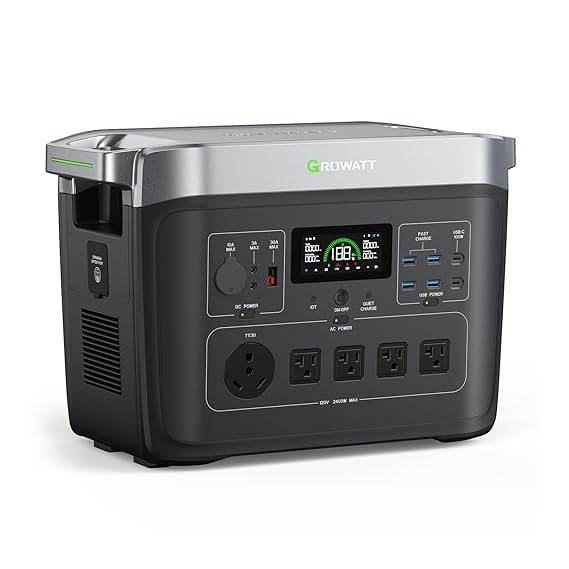
This model strikes a middle ground between size and capacity. The 2048Wh battery provides solid backup time without reaching the bulk of larger systems. Output is strong enough for most household essentials, making it suitable for planned outages or RV use. The compromise is weight and recharge time compared to smaller units. It fits buyers who want balanced performance without going to full-scale systems.
How to Choose Under This Limitation
When options are restricted, prioritize what actually needs power. Output matters more than capacity for appliances, while capacity matters more for runtime. Smaller units make sense for phones and lights, but quickly fall short for refrigeration or medical equipment.
Consider how often outages occur and how long power is realistically needed. Choosing slightly more capacity than expected usually prevents frustration later.
A Realistic Way to Decide
The best battery operated generator is the one that matches limits honestly, not optimistically. Compact models excel for short, low-demand use, while larger systems earn their size by extending runtime.
Focus on the few devices that truly matter during an outage, then choose the smallest system that can support them reliably. That approach keeps expectations realistic and avoids overspending or underpowering.