
If you spend real time outdoors camping, hiking, road-tripping, or dealing with power outages. You already know a solar power bank isn’t a magic charger. Sun charging is slow, weight matters, and reliability beats flashy features. For this kind of user, the best solar powered battery pack is less about marketing numbers and more about having backup power that actually works when outlets aren’t an option.
Whether it’s keeping your phone alive on a long trail, charging a GPS in the car, or maintaining emergency power during storms, the right portable solar battery pack should be tough, predictable, and easy to live with. The options below focus on what matters for outdoor and off-grid use, not desk drawers or casual day trips.
Compare the Best Solar Powered Battery Pack for Outdoor Use
| Solar Pack name | Capacity | Solar Panels | Charging Speed | Durability | Best For |
| Solar Power Bank 38800mAh (B0D86WNKF1) | 38,800mAh | 4 fold-out | 18W | IP67 | Heavy outdoor use |
| Solar Power Bank 45800mAh (B0FKTCZKHD) | 45,800mAh | 4 fold-out | 15W | Water-resistant | Cable-free convenience |
| Portable Solar Power Bank 20000mAh (B0FCXRHZKT) | 20,000mAh | 1 panel | 15W | Waterproof | Lightweight trips |
| SOARAISE Solar Charger Power Bank 48000mAh | 48,000mAh | 4 fold-out | PD/QC 3.0 | Rugged | Long trips & groups |
| BLAVOR Solar Power Bank 10,000mAh | 10,000mAh | 1 panel | 20W | Shock & water resistant | Day hikes & minimalists |
| Solar Charger Power Bank 49800mAh (B0FCXRLQLW) | 49,800mAh | 3 fold-out | 22.5W | Outdoor-grade | High power demand |
Solar Power Bank 38800mAh with Solar Panels
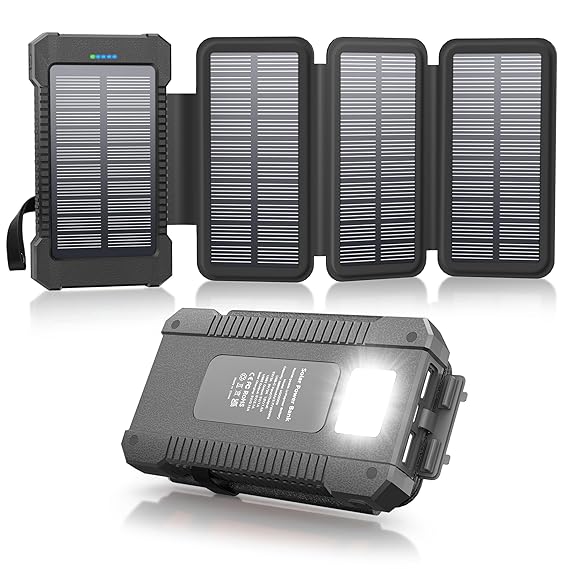
This is the kind of solar battery pack outdoor users usually picture: big capacity, fold-out panels, and a tough shell. It works best as a power reserve you top up at home, then slowly refill via sunlight during extended trips. The IP67 rating makes it reliable for rain, mud, or being tossed into a pack. It’s bulky, though, so it’s not something you’d want dangling from a belt loop.
Verdict: Best for campers, overlanders, or emergency kits where weight matters less than endurance.
Solar Power Bank 45800mAh with Built-in Cables
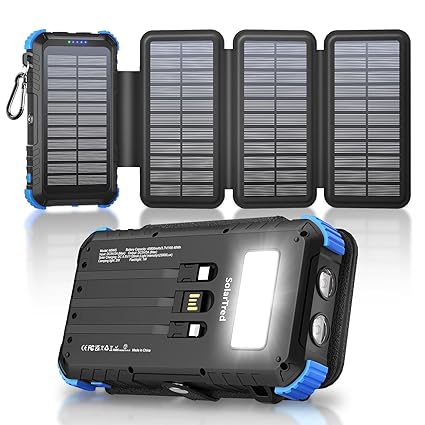
This model leans toward convenience. Built-in cables mean fewer things to forget or lose, which matters when you’re setting up camp or charging in the car. Solar charging is supplemental rather than primary, but the large battery compensates. It’s not as rugged as heavier-duty packs, so it’s better for managed outdoor use than rough backcountry trips.
Verdict: A good fit for road trippers and casual campers who value simplicity over extreme durability.
Portable Charger Solar Power Bank 20000mAh
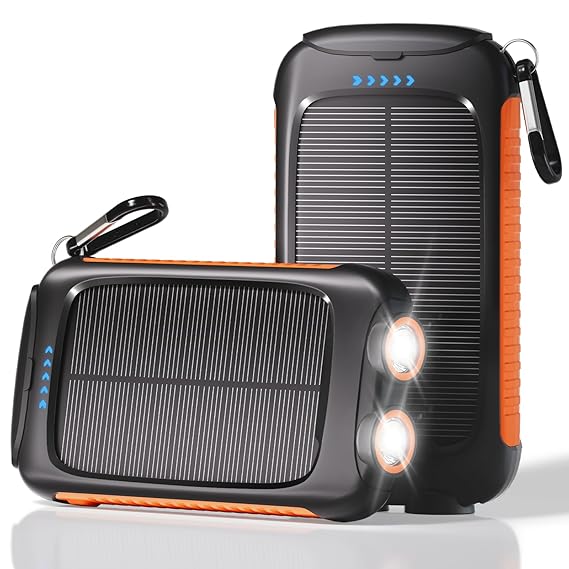
Smaller and easier to carry, this is closer to what many people call a “solar phone charger.” The single panel won’t refill the battery quickly, but it can stretch usage over several days. It’s waterproof and light enough for backpacks, making it practical for hiking or short camping trips.
Verdict: Best for hikers and light travelers who want solar backup without carrying a brick.
SOARAISE Solar Charger Power Bank 48000mAh Wireless
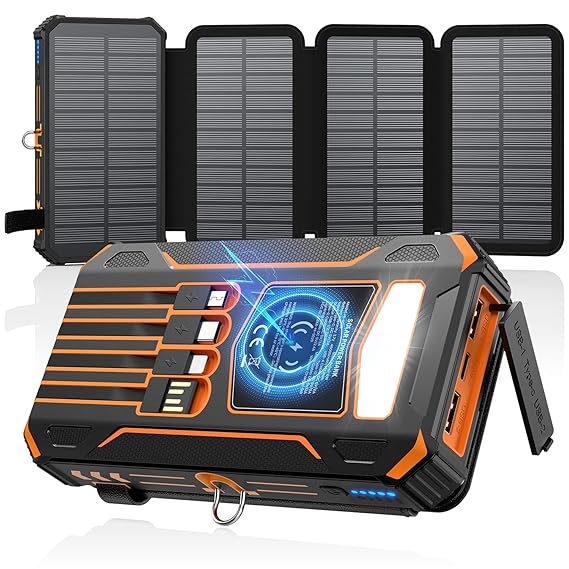
This is a full-featured outdoor power bank with wireless charging, multiple cables, and large fold-out solar panels. It’s heavy, but it can support multiple devices for days. Wireless charging is convenient at camp, though it’s less efficient than cables.
Verdict: Ideal for group trips, base camps, or families sharing one large power source.
BLAVOR Solar Power Bank 10,000mAh

This is the most compact option here. Think of it as a rugged pocket power bank with solar assist rather than a true solar charger. It’s tough, fast when plugged in, and easy to carry, but the small capacity limits multi-day use.
Verdict: Best for day hikes, emergency kits, or minimalist travelers.
Solar Charger Power Bank 49800mAh with 3 Foldable Panels
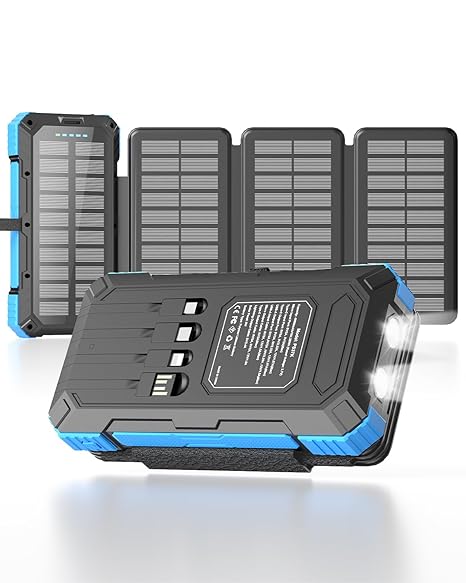
This one focuses on output power and flexibility. Fast charging, multiple panels, and high capacity make it suitable for phones, tablets, and other USB gear. It’s bulky, but effective when you actually need sustained power outdoors.
Verdict: Best for users who carry multiple devices and expect long periods away from outlets.
How outdoor users should choose a solar battery pack
For outdoor use, solar panels extend runtime—they don’t replace wall charging. Prioritize capacity, durability, and how you’ll carry it. Fold-out panels help on long stays, while smaller packs suit movement-heavy trips. Built-in cables reduce clutter, and water resistance is essential. Think about how many devices you actually charge, not the biggest number on the label.
Choosing with confidence outdoors
The best solar powered battery pack depends on how you spend time outside. Campers and emergency planners benefit from large, rugged packs. Hikers and travelers should keep their weight low. Once you match capacity and durability to your real usage, solar becomes a helpful safety net rather than a frustration.