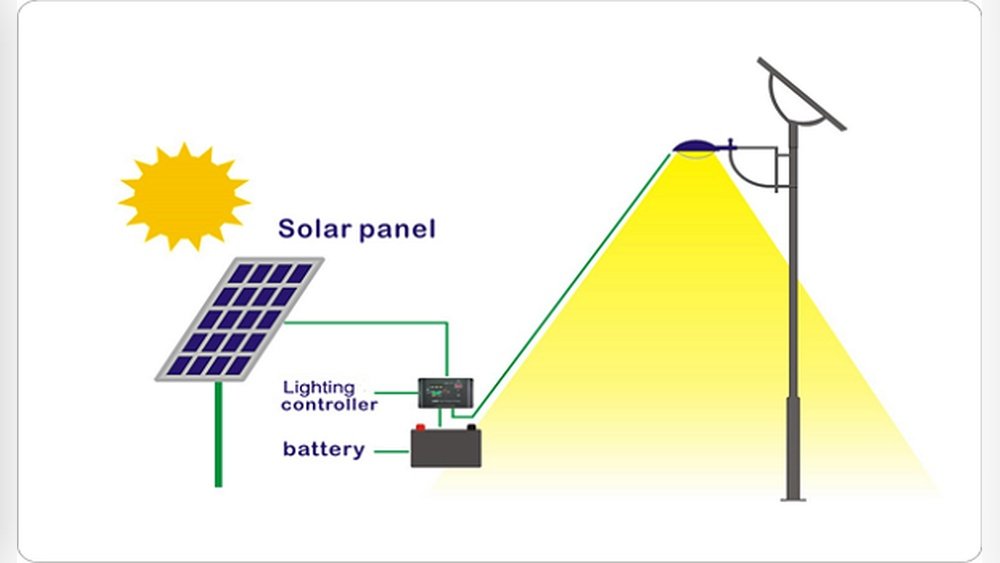

Shopping for a 2000-watt solar generator sounds simple until you’re staring at dozens of boxes that all claim to do the same thing. In reality, most buyers only need a few core traits—and anything outside that becomes wasted money or frustration later. This guide is not here to explore every feature or future-proof every scenario. It’s designed to help you quickly rule out the wrong options and narrow your choice to what actually fits how you’ll use power. If a product survives these filters, it’s worth considering. If it doesn’t, it’s better eliminated now than returned later.
Rule out options that don’t fit you
- Need to run full-size appliances or multiple AC devices at once? Skip units under true 2000W output.
- Want real emergency or home backup power? Avoid batteries under ~1500Wh.
- Planning solar recharging regularly? Eliminate models without strong MPPT or fast input.
- Care about long lifespan and safety? Rule out non-LiFePO4 batteries.
- Expect fast recharge from wall power? Skip slow-charging, 6–8 hour units.
Fast Scan Before Making a Decision
- High appliance load → ignore sub-2000W or peak-only ratings
- Home backup use → skip small-capacity camping batteries
- Solar reliance → avoid weak or undefined solar input systems
- Long-term ownership → eliminate short-cycle battery chemistry
- Time-sensitive outages → ignore slow recharge designs
Products that pass the filters
2000W Portable Power Station, 1500Wh MPPT Battery Backup (S2000)

This power station clears the basic elimination test for buyers who need true 2000W output with enough battery capacity to matter. The 1500Wh size works for short outages, RV use, or multi-device setups without constant recharging. MPPT support keeps solar input efficient, and four AC outlets make load sharing practical.
Skip this if you want rapid wall charging or future battery expansion.
OUPES Mega 1 Portable Power Station 2000W (Surge 4500W)
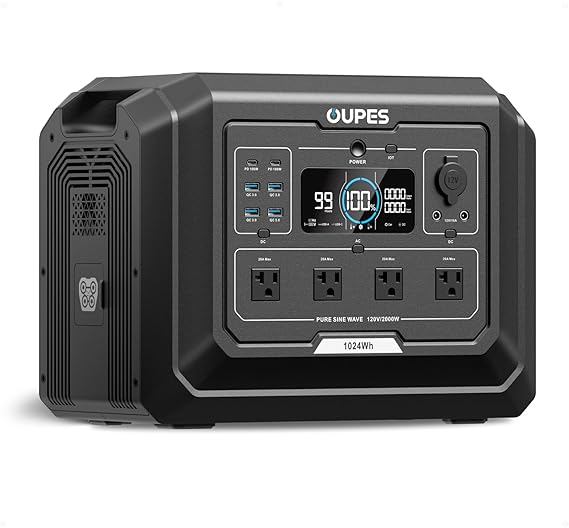
This unit survives filtering thanks to its expandable design and LiFePO4 battery. It’s one of the few options that makes sense if your power needs might grow later. The UPS function also keeps sensitive electronics protected during brief outages.
Skip this if you want maximum capacity out of the box without add-ons.
ABOK Ark2000 1536Wh 2000W Solar Generator with 200W Panel
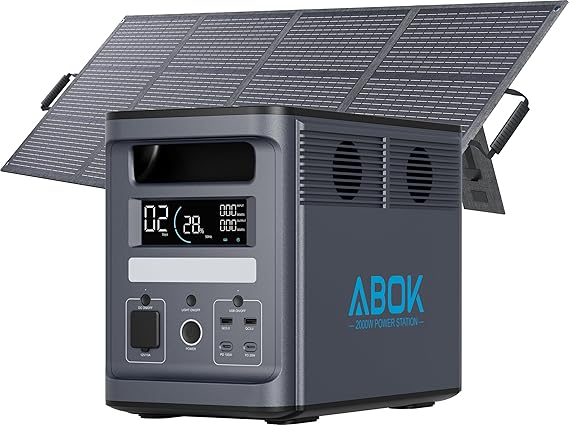
This setup passes filters by bundling usable capacity with fast recharge and solar readiness. The included panel and quick 0–100% recharge time reduce setup friction, making it practical for off-grid use without extra purchases. App control and UPS functionality add operational convenience.
Skip this if portability and compact storage matter more than bundled value.
DJI Power 2000 Portable Power Station
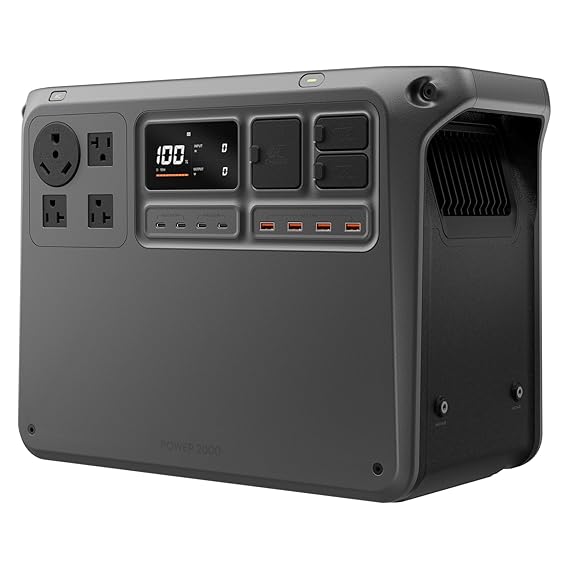
This is the most refined option that still clears the decision filters. High capacity, very fast recharge, and a stable 3000W output make it suitable for demanding home backup scenarios. The compact design also avoids the bulk typical at this power level.
Skip this if budget efficiency matters more than performance polish.
Portable Power Station (Peak 2kW)
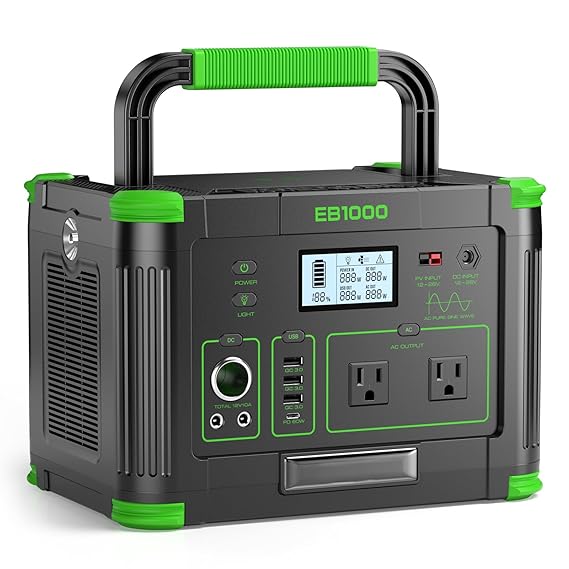
This unit barely survives the filter and is only for very specific users. While it claims 2000W peak, the lower continuous output and smaller battery limit real-world usefulness. It works for light-duty camping or short runtime needs.
Skip this if you expect sustained appliance use or outage coverage.
What to do if more than one option still fits
If two models still make sense, stop comparing specs. Decide whether capacity or recharge speed matters more to you. Pick one priority and ignore the rest. Overthinking beyond that usually leads to overspending without better results.
Fewer choices, better power decisions
The best 2000 watt solar generator isn’t the one with the longest feature list. It is the one that survives honest filtering. By cutting out what doesn’t fit, you avoid paying for power you’ll never use and end up with a generator that actually delivers when it matters.