
Forget the baking soda volcano. If you want a project that grabs attention at the science fair, these solar kits are the “real deal.” They teach renewable energy and basic engineering without needing a single AA battery. While some are a bit “fiddly” for small hands, they’re the perfect way to turn a sunny afternoon into a brain-boosting win.
Best School Science Solar Project Kit Selection
| Kits Name | Models to Build | Power Source | Piece Count | Best For |
| Thames & Kosmos | 8 | Solar Only | Varies | Quick Builds |
| AOHU STEM Set | 15 | Solar + Battery | 212 | Variety Seekers |
| COBFDHA Space | Varies | Solar Only | 120 | Space Enthusiasts |
| STEM Educational | 14 | Solar + Battery | 191 | Balanced Difficulty |
| Discovery Mindblown Robot | 12 | Solar Only | 197 | Gear Mechanics |
Top 5 School Science Solar Project Kits for STEM Students
Snagging the right kit means picking a challenge that matches your kid’s patience level. These sets move the needle from “just a toy” to a legitimate classroom-ready demonstration that’s sure to impress any judge.
Thames & Kosmos SolarBots Science Kit
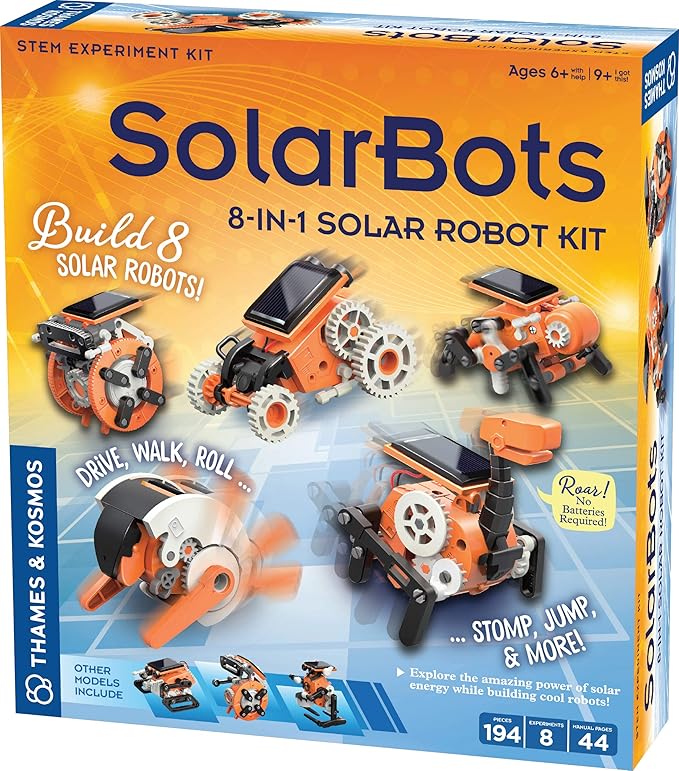
This kit is a “no-brainer” for students who want to get moving fast. It lets you whip up 8 different bots that crawl, walk, and roll using a compact solar cell. It’s a solid entry-level “rig” for exploring how light converts to motion without getting bogged down in hundreds of tiny parts.
The set includes a dedicated solar panel and a detailed manual that explains the tech behind the fun. It’s designed for ages 8 and up, focusing on quick assembly times so the learning doesn’t get lost in the frustration of a long build.
AOHU 15-in-1 Solar Building Kit
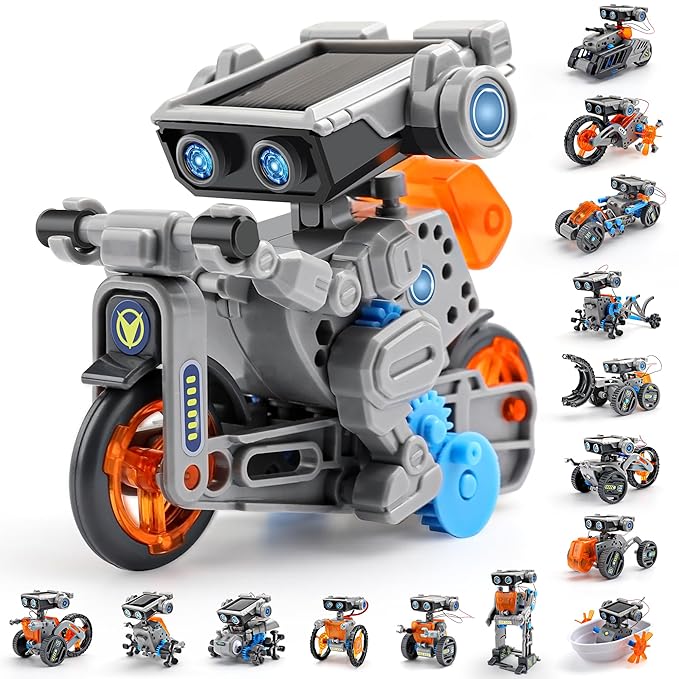
This is the “jack-of-all-trades” of the solar world. With 212 pieces, it’s a beefy set that allows for 15 different designs, from surfers to walking crabs. Since it offers a battery backup option, it won’t “conk out” if the clouds roll in during your presentation.
The kit features two levels of building difficulty, making it a great “hand-me-down” project for siblings. It covers complex mechanical movements through gears and a motorized engine, providing a deep dive into engineering basics.
COBFDHA Space Solar Project Kit
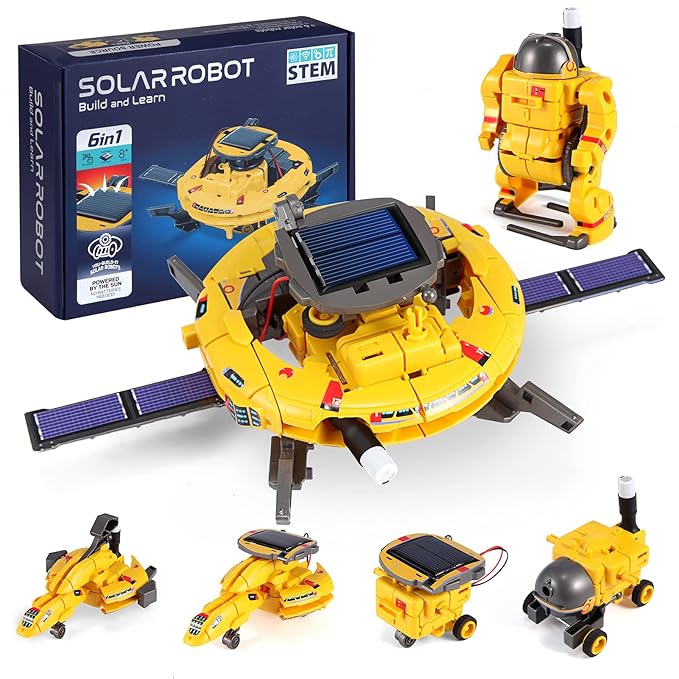
If your student is a total “space cadet,” this 120-piece kit is their speed. It focuses on galactic designs like rovers and shuttles. It’s a bit more streamlined than the massive kits, making it a “smooth ride” for kids who might get overwhelmed by too many components.
This yellow-themed kit is designed for ages 8-14 and emphasizes the basics of solar energy collection. It’s lightweight and portable, which is “clutch” for bringing it back and forth to school for science lab days.
STEM Educational 14-in-1 DIY Solar Robotic Kit
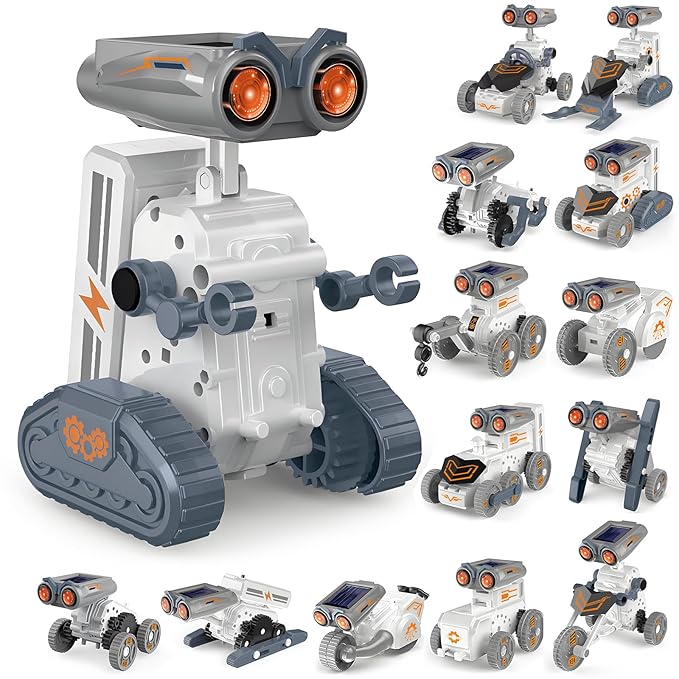
This 191-piece “erector set” style kit is a middle-ground powerhouse. It provides 14 different configurations that function on land or water. It’s built for the 8-12 age range and includes a hybrid power system so you can test your “wheels” indoors under a bright lamp or outside in the sun.
The kit includes a transparent housing for the gearbox, allowing kids to actually see the gears turning in real-time. It’s a high-value pick for those who want to see the “guts” of how their machine actually works.
Discovery Mindblown 12-in-1 Solar Robot Kit for STEM Projects
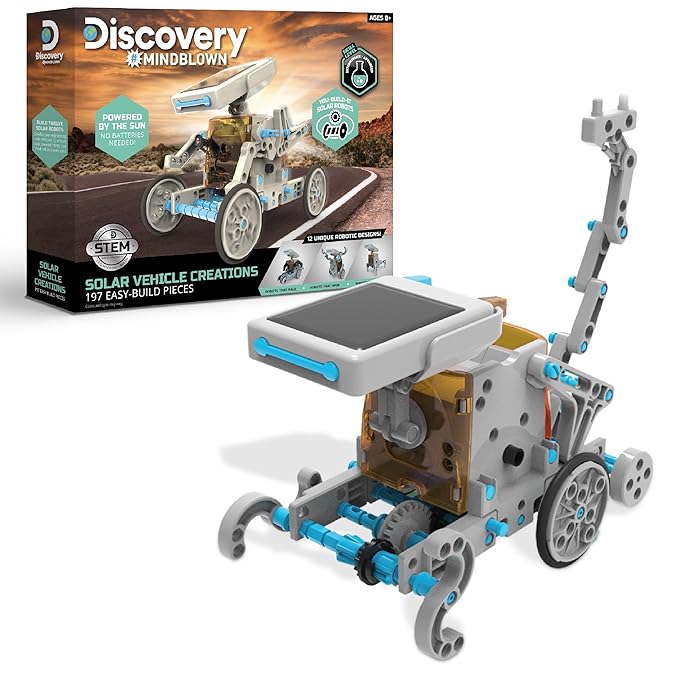
Discovery is a household name for a reason—this 197-piece kit is built like a “tank.” It focuses heavily on the motorized engine and intricate gear systems. It’s perfect for the student who wants a polished, professional-looking solar project that won’t fall apart when the teacher touches it.
This set features 12 distinct builds and emphasizes construction engineering. It’s geared toward ages 8 and up, offering a working motorized engine that serves as a fantastic visual aid for renewable energy lessons.
Buying Tips for Solar Robotic Project Kits
- Check the “Piece Count”: If your kid gets frustrated easily, start with a kit under 150 pieces; if they are a “Lego pro,” go for 200+.
- Power Flexibility: Hybrid kits (solar + battery) are better for school indoor presentations where sunlight is “MIA.”
- Gear Visibility: Kits with clear gearboxes help students explain the “how it works” part of their science project.
- Tool Requirements: Most kits claim “no tools,” but a pair of side cutters (or nail clippers) is “golden” for removing plastic parts cleanly.
When shopping, avoid “ghost kits”—those generic, off-brand sets that come with zero instructions or missing panels. If the box looks like it was translated by a robot with a glitch, your project is likely to stay “stuck in the mud.” Stick to brands with solid manuals, or you’ll spend more time “troubleshooting” than actually learning.