
Standard kitchen fridges are “death traps” for sensitive meds like insulin or biologics—they’re either too warm or they accidentally freeze your expensive supply.
If you’re tired of packing ice bricks or worrying about power outages during a road trip, you need a dedicated unit. We’ve collected five top mini fridge options, that ranging from pocket-sized insulin pens vaults to desktop units that look sleek in a home office.
Best Mini Fridge For Medicine Storage Essentials
| Mini Fridges | Best For | Capacity | Temp Range | Power Sources |
| CGOLDENWALL 12H | Solo Travelers | 3-5 Pens | Fixed (Cooling) | AC, Car, Power Bank |
| CGOLDENWALL Max | Long Hauls | 10-12 Pens | 32-64°F | 13600mAh Battery |
| Essential Cooler | Herbs & Oils | 4 Liters | Digital Control | AC / USB |
| Cooluli 20L | Bulk Storage | 20 Liters | Dual Temp | AC/DC / USB |
| Frigidaire 10L | Heavy Duty | 15 Cans | Thermoelectric | AC/DC |
How To Choose The Best Mini Fridge For Medicine Storage
Selecting the right rig depends on whether you’re staying put or hitting the pavement. For daily commuters, battery life is king. For homebodies, precise digital thermostats beat “basic” cooling every time.
CGOLDENWALL 12-Hour Insulin Travel Case
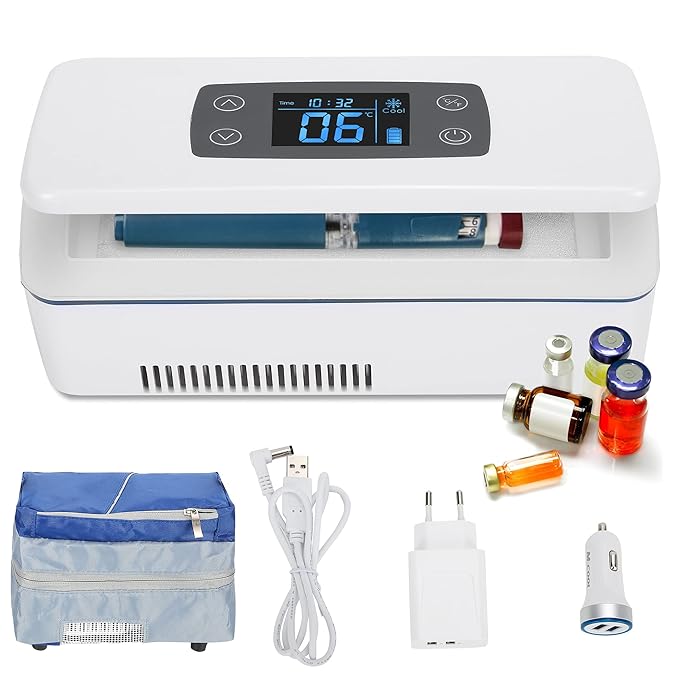
This “pint-sized” lifesaver is built for the person who refuses to stay home. It’s a dedicated drug reefer that fits in a backpack, ensuring your insulin stays at the sweet spot even when you’re 30,000 feet in the air or stuck in a traffic jam.
It features an intelligent alarm system that yells at you if the temp gets wonky or the battery dips. The multiple power options mean you can juice it from a laptop, a car cigarette lighter, or a wall outlet.
Why It Rocks & What Bites
Pros:
- Super lightweight and TSA-friendly for flights.
- Alarm system prevents “refrigerator anxiety.”
- High-definition LED display is easy on the eyes.
Cons:
- Only holds about 3 to 5 pens; not for bulk storage.
- Internal space is tight for oddly shaped vials.
If you’re a frequent flyer who needs a “set it and forget it” solution for a few pens, grab this. Skip it if you’re trying to store a month’s worth of biologics.
CGOLDENWALL High-Capacity Insulin Vault
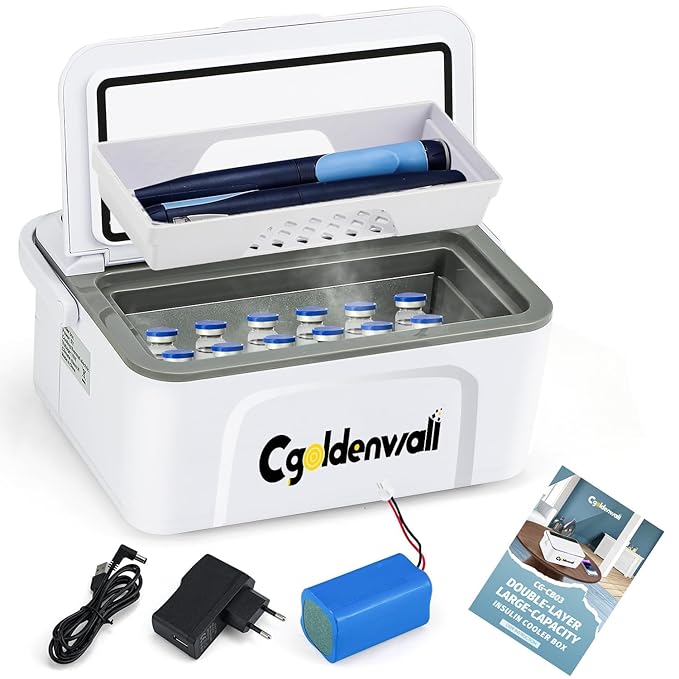
Think of this as the “big brother” cooler. It’s designed for the long haul, packing a massive 13600mAh battery that keeps things chilly for hours without being tethered to a wall.
The internal bay is surprisingly roomy for a portable unit, fitting up to 12 pens comfortably. The 32-64°F range gives you granular control over the environment, which is vital for high-stakes meds.
The Good & The Meh
Pros:
- Massive battery life for off-grid use.
- Fits a dozen pens—perfect for long vacations.
- Rapid cooling tech gets down to temp fast.
Cons:
- Bulkier than the 12-hour model; won’t fit in a pocket.
- Fan noise can be slightly noticeable in a quiet room.
Perfect for road trippers or campers who need a “heavy-duty” portable locker. If you only carry one pen, this is probably overkill.
Essential Cooler Compact UV Fridge

This isn’t just a fridge; it’s a high-tech humidor for your apothecary. Featuring UV-protected glass and humidity control, it’s built for sensitive oils, tinctures, and compounded meds that can’t stand the light.
The smoked glass door keeps your business private while the digital interface lets you micromanage the climate. It even has USB ports to charge your phone while it chills your stash.
Perks & Pitfalls
Pros:
- UV-lock glass prevents light degradation of meds.
- Humidity control is a rare, premium feature.
- Sleek aesthetic looks great on a nightstand.
Cons:
- Glass door is fragile compared to plastic models.
- Not designed for rugged outdoor travel.
Buy this for your bedside table if you have expensive light-sensitive meds. Avoid it if you’re looking for something to toss in a gym bag.
Cooluli 20L Large Capacity Cooler
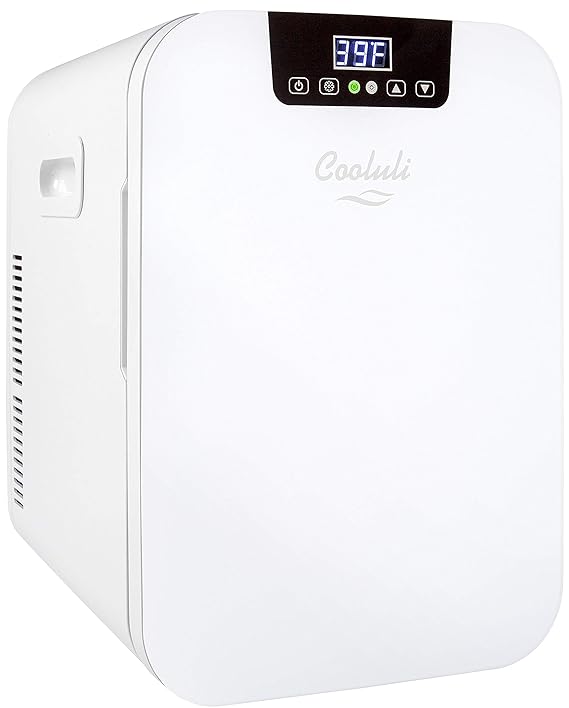
When “mini” isn’t quite enough, the Cooluli 20L steps in. This is the “beater” of medicine fridges—it’s big, reliable, and handles everything from vials to full-sized bottles of liquid meds.
It uses advanced thermoelectric cooling that is whisper-quiet, making it ideal for a bedroom or office. The digital thermostat is precise, so no more guessing if your meds are at the right degree.
Highs & Lows
Pros:
- Massive 20-liter interior fits the whole family’s meds.
- Dual-voltage works globally (100-240V).
- Sleek, modern design with a carry handle.
Cons:
- Too heavy for casual “on-the-go” carrying.
- Takes longer to reach target temp than small metal cases.
If you have a large stockpile of medication at home, this is your best bet. If you’re looking for “portable,” move along.
Frigidaire Rugged 10L Mini Fridge

Frigidaire brought the “tank” build to the mini-fridge world. With a brushed stainless finish and a rugged handle, this 10L unit is meant to survive a dorm room or a busy workshop while keeping your supplies cold.
It’s a straightforward thermoelectric cooler. No fancy apps or touchscreens here—just consistent cooling in a frame that can take a literal beating.
Solid Hits & Misses
Pros:
- Very durable stainless steel exterior.
- Decent 10-liter capacity for mid-sized storage.
- Extremely simple operation.
Cons:
- No precise digital temperature display.
- Relies on ambient temperature (only cools ~20 degrees below room temp).
A solid choice for a garage or a workshop where you need a “no-frills” cooler. Skip it for high-precision insulin needs where every degree counts.
Level Up Your Med Storage
- Calibrate First: Put a separate digital thermometer inside for 24 hours before trusting it with your meds.
- Airflow is King: Never shove the back of the fridge flush against a wall; the fan needs room to breathe or it will overheat.
- Battery Prep: If using a battery-powered model, always keep a backup “dumb” ice pack in the freezer for emergencies.
Avoid “toy” fridges marketed for soda cans unless they specifically mention temperature stability—most cheap units fluctuate too much for medical use.