
In a real-deal disaster, your iPhone is useless once the towers drop or the juice runs out. You need a “forever” battery. These solar-crank hybrids are the ultimate insurance policy.
They pull news from thin air (AM/FM/NOAA) and keep your flashlight humming. Whether you want a pocket-sized backup or a massive 20,000mAh “tank” to charge your gear, we’ve filtered the junk to find the rigs that actually work when the sirens go off.
Best Solar Radio For Disaster Zones
| Model | Battery Capacity | Band Support | Bonus Feature | Best For |
| Mini Survival | 2000mAh | AM/FM/NOAA | Ultra-Compact | Bug-out Bags |
| The Beast | 20000mAh | SW/AM/FM/NOAA | Massive Power | Long Outages |
| Storm Guard | 5000mAh | AM/FM/NOAA | Reading Light | Home Use |
| Raynic Pro | 5000mAh | SW/AM/FM/NOAA | Headphone Jack | Quiet Listening |
| R11 Explorer | 4000mAh | SW/AM/FM/NOAA | Bluetooth/Compass | Campers |
| Max Panel | 12000mAh | AM/FM/NOAA | Large Solar Array | Rapid Charging |
| High Capacity | 10000mAh | AM/FM/NOAA | Bright SOS | General Prep |
Choosing The Best Solar Radio For Disaster Zones To Stay Safe
When the storm hits, you need a rig that won’t quit. A solid emergency radio isn’t just a gadget; it’s your only link to the outside world. Look for high mAh ratings if you plan to charge phones, and Shortwave (SW) if you want to hear broadcasts from states away.
Compact NOAA Survival Radio

This is the classic “just in case” beater. It’s small enough to toss in a glove box or a hiking pack without weighing you down. While the battery is smaller than the monsters on this list, it’s efficient for radio use and provides a bright LED beam when you’re digging through a dark basement.
Key Features: 2000mAh internal battery, 3-LED flashlight, and three-way charging (solar, crank, USB). It features a standard SOS alarm and a dedicated smartphone charging port for emergency boosts.
High Points & Hiccups
Pros:
- Featherlight and highly portable.
- Simple controls even a kid can use.
- Reliable NOAA weather alerts.
Cons:
- 2000mAh won’t fully charge a modern smartphone.
- Smaller solar panel takes longer to prime.
Grab this if you need a budget-friendly backup for your car or a lightweight kit addition. Skip it if you’re looking for a primary power bank.
The 20000mAh Power Tank Weather Radio
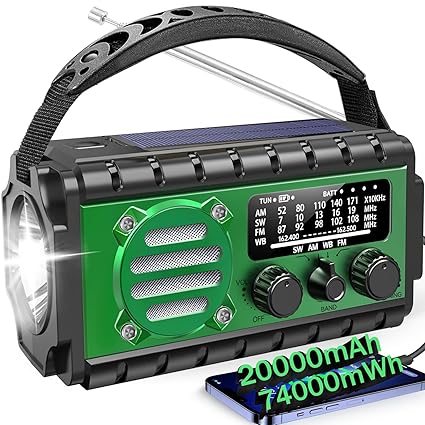
This is the heavy hitter of the group. With a massive 20,000mAh reservoir, it’s more of a power station that happens to have a radio. It picks up Shortwave (SW) signals, which is a total game changer if local FM stations go off the air. It’s built like a tank for those who don’t want to worry about power for a week.
Key Features: Massive 20k battery capacity, Shortwave band support, high-output flashlight, and SOS siren. Includes a rugged casing designed for rough handling in disaster zones.
The Good & The Bad
Pros:
- Can charge a phone multiple times.
- Shortwave bands provide international/long-range news.
- Heavy-duty build quality.
Cons:
- Heavier than standard emergency radios.
- Takes a long time to charge via solar alone due to battery size.
Buy this if you are prepping for a long-term power outage or a grid-down scenario. It’s the ultimate “peace of mind” machine.
Storm Ready LED Navigator
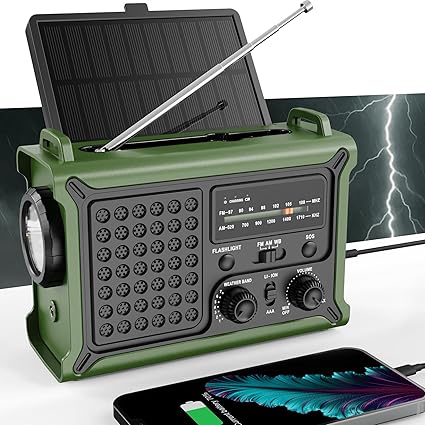
Designed for the homebody who wants to stay informed during a hurricane or blizzard. It balances size and power perfectly. The addition of a reading light makes it much more practical for hunkering down in the living room when the lights flicker out.
Key Features: AM/FM/NOAA coverage, dual light sources (spotlight and floodlight), and USB charging. Features a robust hand crank that feels solid, not flimsy.
Wins & Fails
Pros:
- Excellent reading light for indoor use.
- Very ergonomic hand crank.
- Crystal clear NOAA reception.
Cons:
- No Shortwave (SW) support.
- Moderate battery capacity compared to “The Beast.”
This is the perfect middle-ground option for a family emergency kit. It’s reliable, easy to grip, and the lighting options are top-tier.
Raynic 5000mAh Professional Hand Crank Radio
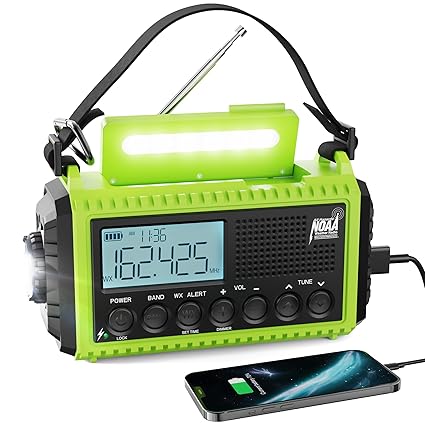
A versatile “Swiss Army Knife” of radios. It includes a headphone jack, which is surprisingly rare and vital if you’re in a crowded shelter and need to hear the news without bothering everyone else. The 5000mAh battery is the “sweet spot” for size versus utility.
Key Features: 5000mAh battery, Shortwave (SW) bands, 3.5mm headphone jack, and a loud SOS siren. Comes with multiple power options including AAA battery support.
The Upside & Downside
Pros:
- Headphone jack for private listening.
- Can run on AAA batteries as a backup to the internal cell.
- Broad frequency range (AM/FM/SW/NOAA).
Cons:
- Interface can be slightly more complex than basic models.
- Solar panel is fixed (doesn’t tilt).
If you want the flexibility of using store-bought batteries along with solar/crank power, this is your best bet.
R11 Bluetooth Survivalist Radio
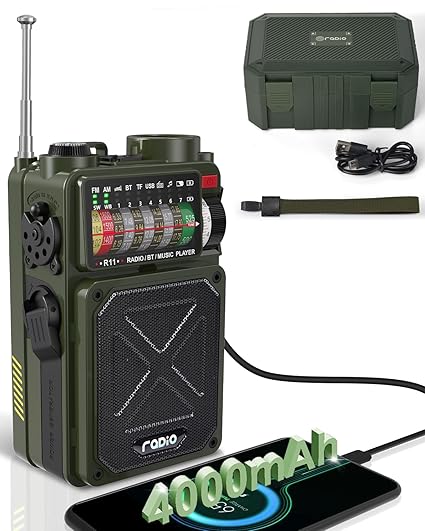
This green machine is built for the “weekend warrior” who wants disaster prep that doubles as a camping speaker. It features Bluetooth, so you can stream music when things are calm and switch to NOAA when the clouds turn gray. The built-in compass is a nice “old school” touch for navigation.
Key Features: Bluetooth receiver, TF card playback, compass, 4000mAh battery, and SW/AM/FM/NOAA bands. Ruggedized exterior for outdoor use.
Perks & Pitfalls
Pros:
- Doubles as a great camping speaker.
- Compass helps if you’re on the move.
- Compact and very easy to stow.
Cons:
- Bluetooth drains battery faster if you aren’t careful.
- Compass is basic (don’t rely on it for deep-woods nav).
Perfect for hikers and campers who want an emergency radio that they will actually use during the “good times” too.
Large Panel Efficiency Radio

The standout feature here is the oversized solar panel. Most solar radios have tiny strips that take forever to charge; this one is designed to actually catch some rays. With a 12,000mAh “real” capacity, it’s a significant step up in energy storage for charging your devices.
Key Features: High-efficiency large solar panel, 12,000mAh battery, reading lamp, and loud SOS alarm. Built with a focus on faster solar recovery.
Hits & Misses
Pros:
- Best-in-class solar charging speed.
- Large battery for multiple phone charges.
- Very bright dual-mode lighting.
Cons:
- Slightly bulkier due to the panel size.
- No Bluetooth or Shortwave.
Choose this if you live in a sunny area like Florida or Arizona. The extra solar real estate makes a massive difference in long-term outages.
10000mAh Outdoor Workhorse NOAA Weather Radio with AM/FM
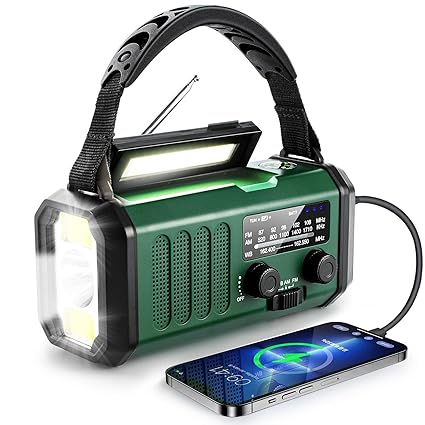
A straightforward, high-capacity tool that cuts the gimmicks. It focuses on big power (10,000mAh) and clear reception. It’s often marketed as a great gift because it’s so intuitive—just turn the dial and you’re set.
Key Features: 10,000mAh battery, AM/FM/NOAA, bright flashlight, and reading light. Heavy-duty crank handle for manual charging.
Strengths & Weaknesses
Pros:
- Excellent value for the battery size.
- Very loud SOS siren for rescue.
- Simple, no-nonsense interface.
Cons:
- Lacks Shortwave (SW) bands.
- Plastic casing feels a bit less “tactical” than others.
A great choice for a “set it and forget it” home emergency kit. It’s got the juice to keep your phone alive until the power comes back.
Vital Strategies For Smart Prep
- Cycle the Battery: Every 3 months, drain and recharge your radio. Lithium batteries hate sitting at 0% or 100% for a year.
- Test the NOAA: Don’t wait for a tornado. Tune in on a clear day to ensure your area actually gets a signal.
- Crank Comfort: If you have hand issues, look for models with larger, rounded crank handles; thin ones will chew up your palms.
Don’t bet your life on “solar only” charging. In a disaster, it might be cloudy or smoky for days. Treat the solar panel as a “trickle charger” and rely on the hand crank or pre-charged USB for the heavy lifting.