

When the grid goes down, a “beater” generator won’t cut it. You need a powerhouse that can handle the AC, the fridge, and the lights without breaking a sweat. We’ve narrowed down the heavy hitters that deliver massive wattage without the headache.
Top 12kW Powerhouse Comparison
| Generator Model | Fuel Type | Start Type | Best For |
| DuroMax XP12000E | Gasoline | Electric/Recoil | Pure Power Output |
| Pulsar PG12000B | Dual Fuel | Electric Push | Fuel Flexibility |
| Green-Power 12000 | Gasoline | Electric/Recoil | Budget Backup |
| JD Engine 12000 | Gasoline | Electric Start | Job Site Utility |
The Best 12000 Watt Generators for 2026
If you’re looking to juice up your entire spread, these 12,000-watt beasts are the gold standard. They bridge the gap between small portable “kicks” and expensive permanent standby units, giving you enough “oomph” to run high-amperage tools and central air units simultaneously.
DuroMax XP12000E Portable Powerhouse

This DuroMax is a total beast for anyone needing serious “juice” during a hurricane or deep freeze. It’s built like a tank and handles high-draw appliances like a pro, making it a top-tier choice for home backup or a heavy-duty job site.
Key Features: 457cc OHV engine, MX2 Power Boost for max 120V output, and 50-state EPA/CARB approval.
Fast Fact: Features an all-metal construction and 100% copper windings for a longer lifespan than cheaper plastic-heavy units.
Why It Rocks (or Doesn’t)
Pros:
- Massive 9,500 running watts handles central AC easily.
- MX2 technology lets you get full power from 120V outlets.
Cons:
- Gasoline only; no propane option for long-term storage.
Buy this if you want the most reliable “pure power” for your money. Skip it if you need the flexibility of dual-fuel sources.
Pulsar Dual Fuel Hybrid
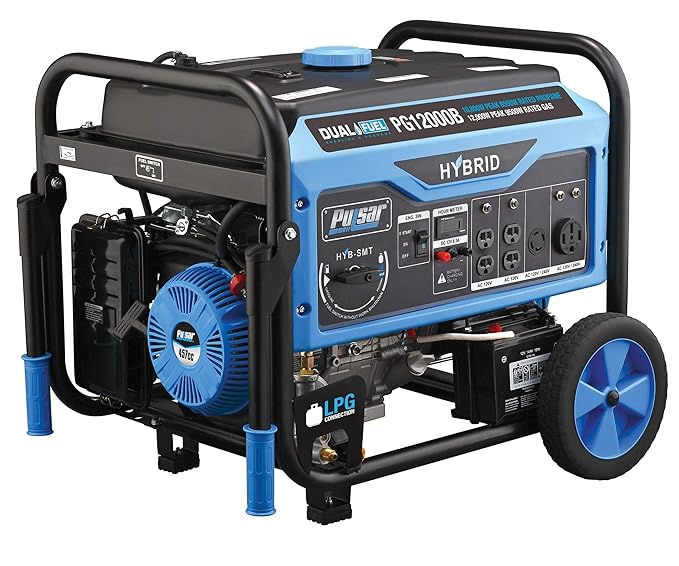
The Pulsar is the “Swiss Army Knife” of generators. With “Switch & Go” tech, you can swap from gas to propane while the engine is humming. It’s the ultimate “peace of mind” rig for when gas stations are tapped out after a storm.
Key Features: 12,000 peak watts, propane/gas hybrid, and a 3-in-1 digital meter for tracking output.
Fast Fact: Runs for up to 12 hours at half-load on a single tank of gas.
The Highs and Lows
Pros:
- Dual-fuel capability is a lifesaver during fuel shortages.
- Easy electric push-button start.
Cons:
- Slightly louder than some competitors at 74 dB.
Grab this if you have a propane tank sitting by your grill and want a backup for your backup.
JD Engine Electric Start Pro
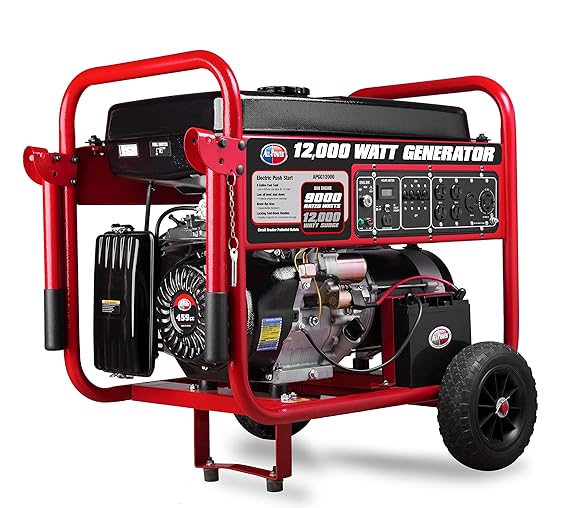
A straight-shooter that gets the job done without the fancy bells and whistles. It’s a rugged gasoline unit designed for those who just want the lights back on without a complicated setup.
Key Features: Heavy-duty JD engine, included wheel kit, and multiple high-capacity outlets.
Fast Fact: Designed with a reinforced frame to survive being bounced around in a truck bed.
The Good and Bad
Pros:
- Simple, no-nonsense interface.
- Rugged wheel kit makes moving this 200lb+ beast manageable.
Cons:
- Lacks some of the advanced CO-sensing tech found in newer models.
Pick this up if you need a workhorse for the farm or job site. Skip it if you’re tech-obsessed and want digital monitoring.
Green-Power America Home Ready
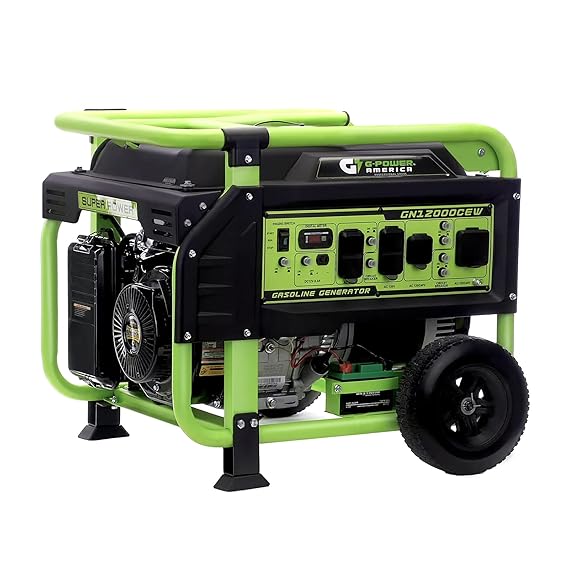
This is the value play for the prepared homeowner. It’s got the electric start you want and the outlets you need (including 12V DC for charging batteries) at a price point that won’t drain your savings.
Key Features: 6.6-gallon fuel tank, 12V-8.3A charging outlets, and 49-state approval.
Fast Fact: Features a low-oil shutoff to prevent you from “bricking” the engine accidentally.
Hits and Misses
Pros:
- Very competitive price for 12,000 watts.
- Compact frame relative to its massive output.
Cons:
- Not for sale in California (not CARB compliant).
Buy this for reliable, occasional emergency use on a budget. Skip it if you live in CA or need a 24/7 industrial machine.
Smart Moves Before You Buy
- Check the Plug: Ensure your transfer switch matches the 30A or 50A outlet on the generator.
- Fuel Prep: If buying gas-only, always use fuel stabilizer to keep the “gunk” out of the carb.
- Battery Maintenance: These electric starts use small lead-acid batteries; keep them on a tender during the off-season.
Pro Tip: The “Dry Carb” Trap
Avoid leaving gas in the tank for more than 3 months. Stale gas is the #1 reason generators won’t start when the storm actually hits. If you aren’t going to use it, drain the bowl or run it dry.