

Power outages happen. Whether it’s a storm or a grid failure, you need reliable juice to keep the fridge running and the lights on. We’ve rounded up the top contenders to keep your home running smoothly when the grid goes down.
Compare the best backup generator for home
| Generator Name | Type | Output | Capacity | Best For |
| Jackery HomePower 3600 Plus | Solar/Battery | 3600W | 3584Wh | Expandable Power |
| GROWATT HELIOS 3600 | Solar/Battery | 7200W (240V) | 3600Wh | Heavy Appliances |
| EcoFlow DELTA Pro | Solar/Battery | 3600W | 3600Wh | Fast Charging |
| A-iPower 7600W | Dual Fuel (Gas/LPG) | 7600W | N/A | Max Raw Power |
| GRECELL Solar Kit | Solar/Battery | 600W | 230Wh | Small Essentials |
Reviews of the best backup generator for home
These units are the real deal for keeping your household operational. From silent solar beasts to heavy-duty dual-fuel workhorses, here is exactly what you need to survive the next blackout.
Jackery HomePower 3600 Plus
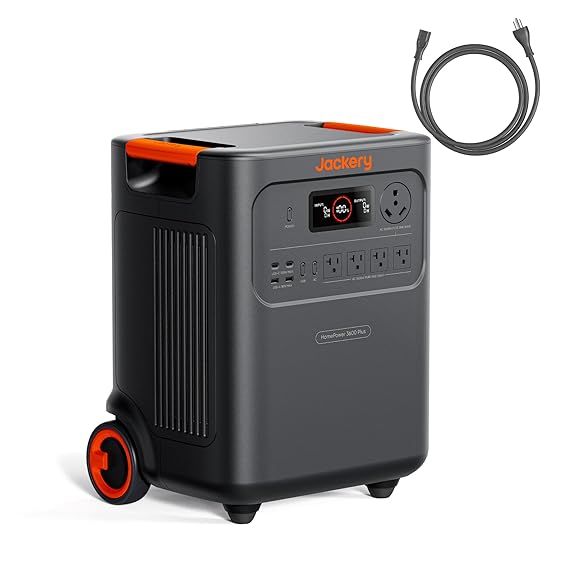
This Jackery setup is a total beast for home defense against outages. It’s not just a battery; it’s a modular system that lets you stack more juice if you need it later. It runs silent and clean, making it perfect for indoor use without dealing with gas fumes. If you want a “plug and play” solution that covers the essentials and then some, this is your guy.
Key Features: It rocks a massive 3600W AC output and 3584Wh capacity, easily handling 99% of appliances. The LiFePO4 battery is built for the long haul with a 10-year lifespan, and it’s expandable all the way up to 21kWh if you buy extra packs.
GROWATT HELIOS 3600
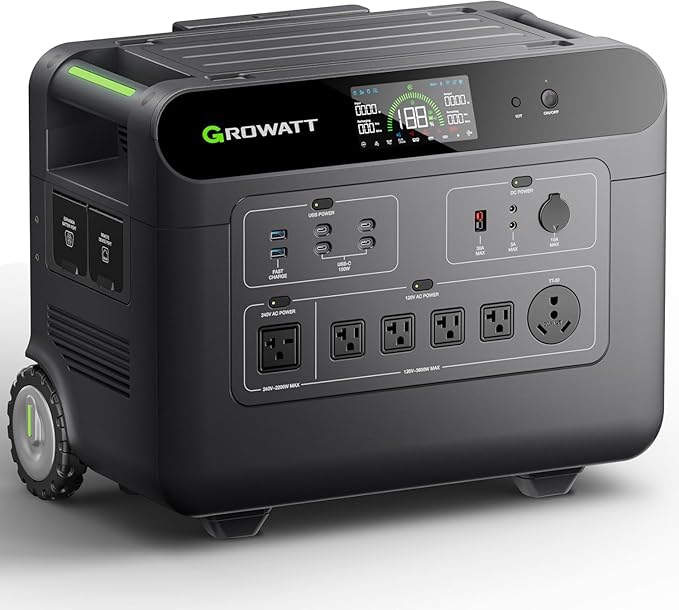
The Growatt Helios stands out because it can handle the heavy hitters right out of the box. Unlike smaller units, this thing is ready for 240V appliances, meaning it can actually power heavy-duty gear without breaking a sweat. It’s a solid choice if you have specific high-voltage needs during a storm and don’t want to mess around with converters.
Key Features: Delivers a whopping 3600Wh capacity and expandable output up to 7200W/240V for whole-house application. It features ultra-fast switching (UPS) to keep sensitive electronics from crashing and supports solar charging to keep you off-grid longer.
EcoFlow DELTA Pro
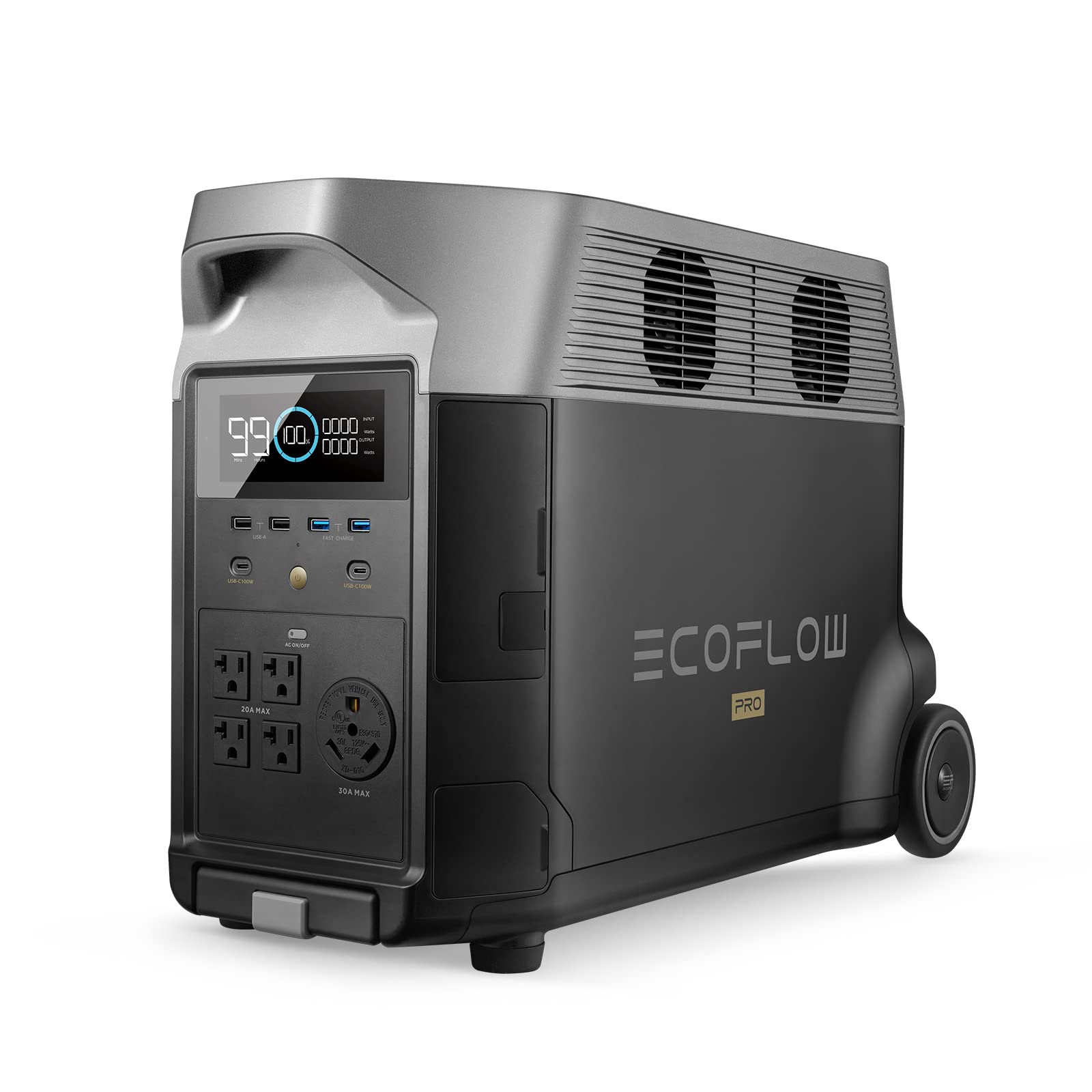
EcoFlow is famous for charging insanely fast, and the DELTA Pro is their flagship for a reason. This unit is incredibly versatile, sporting a ton of outlets so you can plug in everything from your router to your microwave simultaneously. It’s a favorite for RVers and homeowners alike because it integrates easily into a smart home ecosystem.
Key Features: Features a 3600Wh LFP battery that charges fully in under 3 hours via wall outlet, which is a game-changer. It has 5 AC outlets, supports 1600W solar input, and the wheels/handle make this 99lb unit surprisingly easy to move around the garage.
A-iPower 7600W Dual Fuel
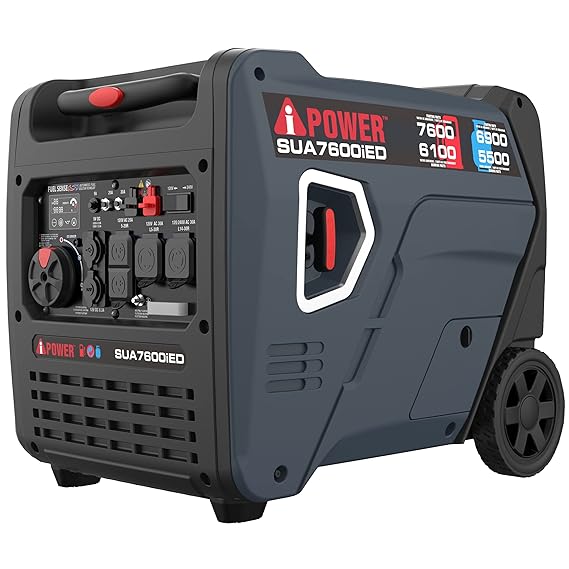
If you prefer old-school raw power over batteries, this inverter generator is the way to go. It runs on gas or propane, giving you flexibility when fuel is scarce. It provides significantly more wattage than the battery options for a fraction of the price, provided you have a safe outdoor spot to run it. It’s the heavy lifter for long-term outages.
Key Features: Pushes 7600 starting watts and runs quietly for a gas generator (under 60 dBA). The dual-fuel capability is a lifesaver, and the telescopic handle makes it easy to drag into position when the storm hits.
GRECELL Solar Generator Kit

This isn’t a whole-house backup, but it’s a clutch little lifesaver for the bare essentials. If you just need to keep phones charged, a lamp on, and a CPAP running for a night, this budget-friendly kit does the trick. It comes with a solar panel, making it a great “bug out” bag addition or emergency backup for small apartments.
Key Features: Lightweight and portable with a 230Wh capacity and 600W surge output. It includes a 40W solar panel for off-grid recharging and uses safe LiFePO4 battery chemistry for peace of mind.
Buying Tips
- Calculate Your Watts: Check the labels on your fridge and heater. Sum up the watts to know what size generator you actually need.
- Fuel vs. Battery: Gas generators are cheaper for high power but noisy and require maintenance. Battery stations are silent, safe indoors, but cost more upfront.
- Expansion Matters: If you buy a battery generator, look for “expandable” models so you can add extra batteries later if 3600Wh isn’t enough.
Pro Tips: Avoid buying a generator during the power outage. Prices spike, inventory vanishes, and you won’t have time to do the initial charge or break-in period properly. Buy it now, test it, and be ready.