

There is nothing quite like that sinking feeling when the lights flicker and then stay off. Whether it’s a summer storm or a winter grid failure, you’re suddenly left wondering if your phone will stay charged or if the food in the fridge is on a countdown to the trash can. Relying on luck isn’t a strategy.
In this guide, I’ve broken down the best home emergency generators ranging from silent, indoor-safe battery banks to heavy-duty gas inverters. You’ll get the honest truth on which models can actually handle a refrigerator and which ones are basically just oversized phone chargers.
Compare The Best Home Emergency Generators
| Brand | Capacity/Output | Best For | Fuel Type |
| DECOMIL LFP700 | 504Wh / 700W | Rapid Charging | LiFePO4 Battery |
| Togo POWER A1000 | 1037Wh / 1000W | Best All-Rounder | LiFePO4 Battery |
| Solar Gen 500W | 512Wh / 500W | Budget CPAP Use | Battery |
| SinKeu 256Wh | 256Wh / 300W | Ultra-Portability | LiFePO4 Battery |
| PowerSmart 4300 | 4300W / 3500W | Heavy Appliances | Gasoline |
5 Best Home Emergency Generators for Power Outages
Before buying: you need to know if you’re buying a “battery” or a “generator.” Most people today opt for portable power stations because they don’t smell like a lawnmower, but if you need to run a heater, gas is still king.
DECOMIL LFP700 (Best for Fast Recharge)
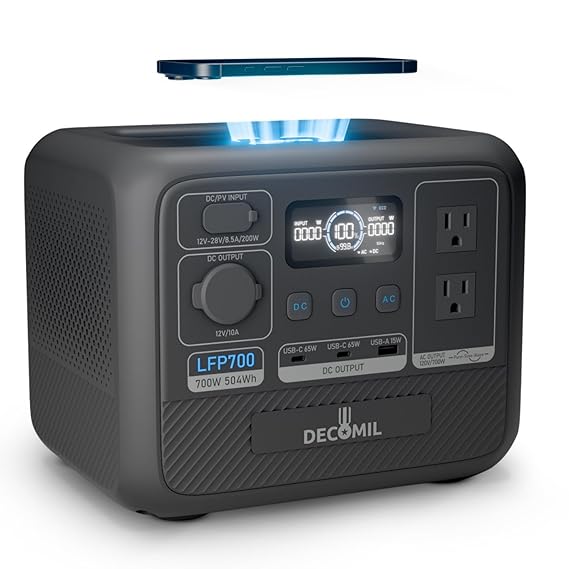
If you’re the type of person who forgets to charge their gear until the storm clouds are literally overhead, this DECOMIL unit is your best friend. It hits an 80% charge in about 50 minutes. That is insanely fast for a 504Wh unit. It’s built with LiFePO4 cells, which basically means it won’t lose its “health” after a few years of sitting in a closet.
I really like the inclusion of a wireless charging pad on top. It’s one of those “nice to have” features that makes it feel less like a piece of industrial equipment and more like a modern tech gadget. It’ll run your router, laptop, and some LED lights for a full evening without breaking a sweat.
- Pros: Charges faster than almost anything in its price bracket; very lightweight at around 14 lbs.
- Cons: Just a heads up, the 700W output is a bit limiting; don’t even try to plug in a coffee maker or a hair dryer, or it’ll pop the internal breaker immediately.
Togo POWER Home Emergency Generator (Best Capacity for the Money)
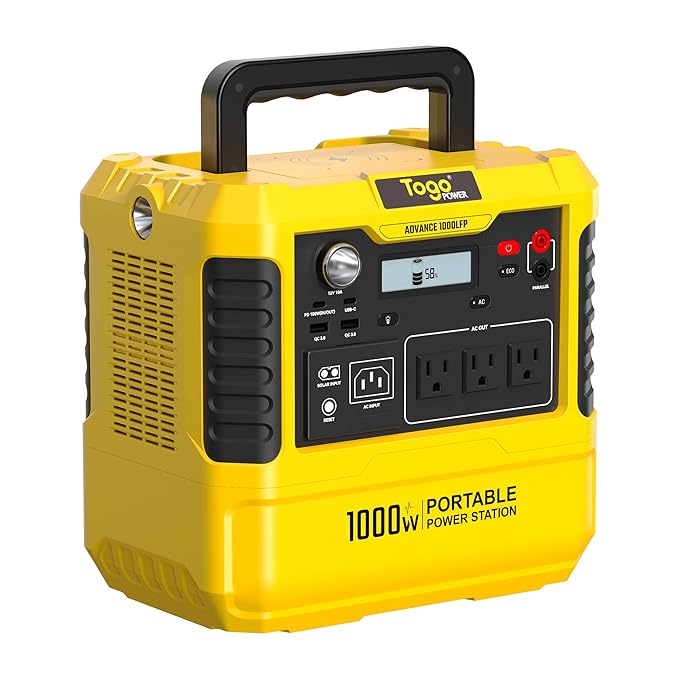
Unlike the DECOMIL above, the Togo POWER A1000LFP is actually beefy enough to keep a modern full-sized refrigerator running for a decent stretch. With over 1000Wh of capacity, it has double the “gas in the tank” compared to the smaller units on this list. It’s a bit of a “game-changer” if you’re worried about food spoilage during a 24-hour blackout.
It’s built like a tank and features a very clear display that tells you exactly how many hours of juice you have left based on what’s plugged in. It’s the sweet spot for someone who wants more than a phone charger but doesn’t want to deal with a gas engine.
- Pros: Massive capacity for the price; 1.5-hour fast charging is impressive for a battery this large.
- Cons: The only downside is the weight—at nearly 25 lbs, it’s not something you want to carry on a long hike, even if it has a handle.
512Wh Portable Power Generator (Best for CPAP Users)
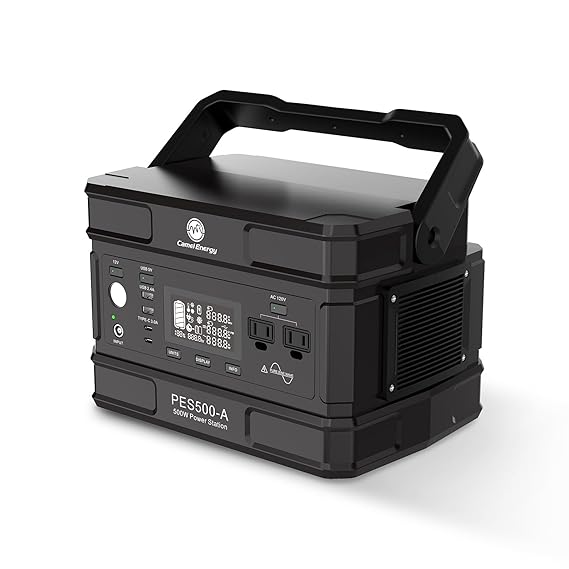
This is a no-frills, generic-style workhorse. While it lacks the flashy branding of the bigger names, it hits the 512Wh mark perfectly. I’d specifically point this one out for CPAP users. It’s quiet, it doesn’t have annoying bright lights that stay on all night, and it provides a steady sine wave that won’t fry sensitive medical electronics.
Compared to the Togo POWER, this is much more manageable in size. It’s designed to sit on a nightstand and just do its job. It’s a great entry-level “insurance policy” for your bedroom.
- Pros: Very affordable “bang for your buck”; includes all the standard ports (USB-C, AC, DC).
- Cons: Just a heads up, the build quality feels a bit more “plasticky” than the DECOMIL or PowerSmart units.
SinKeu 256Wh (Best Budget Emergency Kit)
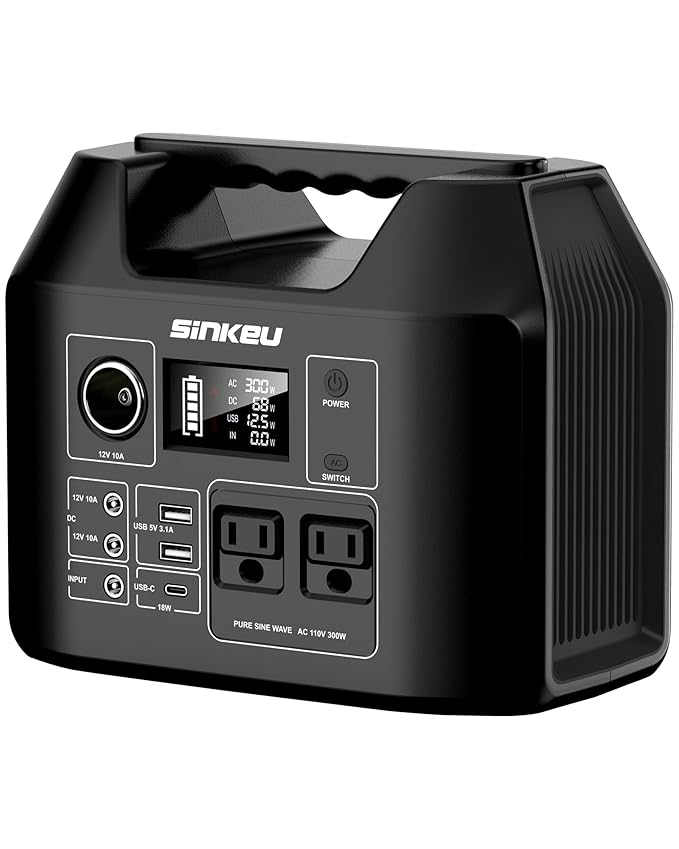
Let’s be real: not everyone needs to power a fridge. If you just want to make sure your phone doesn’t die and you can keep a lamp on so you don’t trip over the cat, the SinKeu is the way to go. It’s basically a high-capacity power bank with an AC outlet slapped on it.
Unlike the larger 1000Wh units, this fits in a backpack. It uses LiFePO4 tech, which is a huge plus because cheap small batteries usually cut corners with older, less stable lithium chemistry. This one is rated for over 3,500 cycles.
- Pros: Extremely portable; the 300W output is plenty for tablets, laptops, and fans.
- Cons: The capacity is small; if you’re charging multiple phones at once, don’t expect it to last more than a day.
PowerSmart 4300-Watt (Best for “Real” Backup)
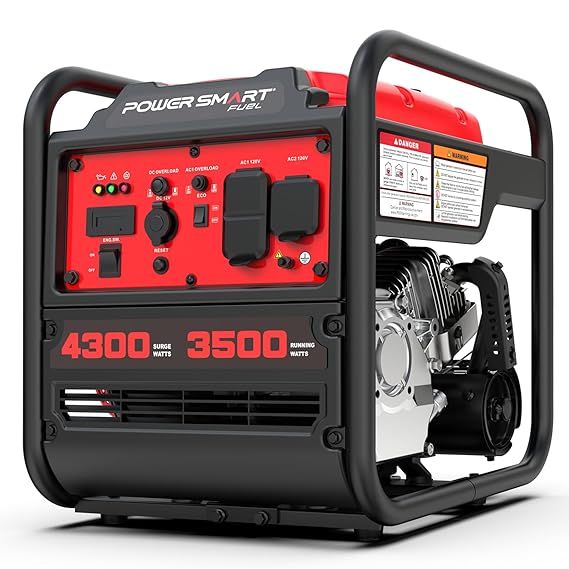
If the power goes out for three days, those batteries above are eventually going to run dry. That’s where the PowerSmart 4300 comes in. This is a gas-powered inverter, meaning it produces “clean” power safe for your MacBook but has the muscle to run an AC unit or a sump pump.
Unlike the silent battery boxes, this makes noise. However, because it’s an inverter, it’s much quieter than those old-school open-frame generators that sound like a freight train. It’s the only thing on this list that can truly keep your “whole house” (or at least the important parts) humming.
- Pros: Massive 4300W surge power; can run for over 6 hours on a single gallon of gas.
- Cons: It’s a gas engine, so you cannot run this indoors. You also have to deal with oil changes and fuel stabilizers, which is a bit of a chore.
Buying Guide:
If you want the most power for the least money and don’t mind the noise, buy the PowerSmart 4300-Watt.
If you live in an apartment and just need to keep your gadgets alive, buy the DECOMIL LFP700 for its crazy fast recharge time.
If you have a medical device like a CPAP, the 512Wh Portable Power Generator is the most logical, quiet choice.
If you’re on a tight budget and just need “emergency light” insurance, grab the SinKeu 256Wh.