

You need power, not a lecture. Whether you’re staring down a hurricane or just want to run a coffee maker at the campsite, a solid portable gas generator is your lifeline. We’ve stripped away the marketing noise to bring you the top 5 “grab-and-go” power plants that deliver clean juice without breaking your back or your bank account (Ha haa haaa…).
Top Portable Gas Generators Comparison
| Model | Starting / Running Watts | Weight | Best For |
| WEN 56235i | 2350W / 1900W | 39 lbs | Portability & Quiet |
| 4400W Inverter (Gen) | 4400W / 3500W | ~60 lbs | Budget Power |
| ERAYAK 2400W | 2400W / 1800W | 42 lbs | Camping Trips |
| PowerSmart 4400W | 4400W / 3500W | 63 lbs | Home Backup |
| 2500W Inverter (Gen) | 2500W / 1900W | 40 lbs | Basic Essentials |
Reliable Portable Gas Generators: Your Power Safety Net
Don’t wait until the lights flicker to think about backup power. A modern portable inverter generator isn’t just a loud, clunky box anymore; it’s a precision tool. These units sip gas, protect your sensitive electronics (phones, laptops) with “clean power” technology, and are quiet enough not to annoy the neighbors. Whether for tailgating or keeping the fridge cold during a blackout, these are the top picks to keep you cranking.
WEN Super Quiet 2350-Watt Inverter
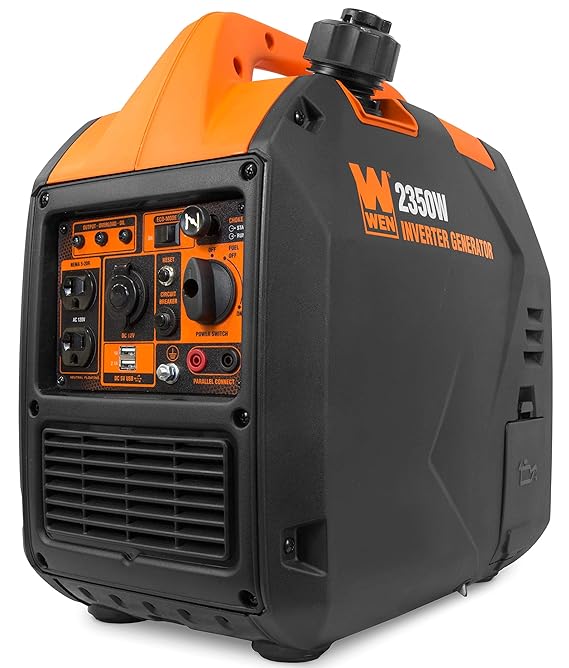
This is the featherweight champ of the group. If you need something you can carry with one hand while holding a beer in the other, this is it. It’s legendary for being whisper-quiet—perfect for campsites with strict noise rules. The fuel shut-off feature is a game-changer; it drains the carb so you don’t get gunked up fuel lines after storage.
Key Features:
- Ultralight Build: Weighs only 39 lbs, making it effortless to stow in a trunk or RV bay.
- Fuel Shut-Off: Automatically burns remaining fuel in the carburetor before shutting down to prevent clogs.
- Quiet Operation: Operates around 51 decibels (quarter load), quieter than a normal conversation.
The Good & The Bad
Pros:
- Extremely lightweight and portable.
- Reliable cold-start performance.
- Fuel shut-off extends engine life significantly.
Cons:
- Oil changes can be a bit messy due to the access panel design.
Buy this if you want zero hassle. It’s the perfect “grab-and-go” unit for camping or powering a few essentials during a storm.
4400-Watt Portable Gasial Generator (Eco Mode)
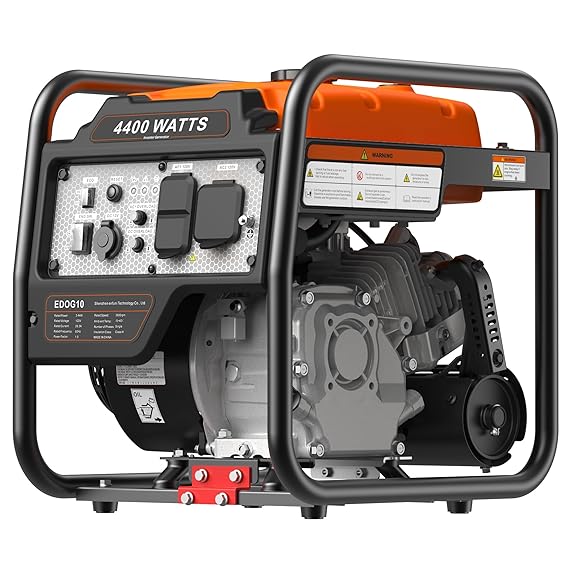
Need more muscle? This unit cranks out 4400 starting watts, enough to jump-start a 15,000 BTU RV air conditioner or run a large fridge and lights at home. It’s an open-frame inverter, meaning you get the raw power of a traditional generator but the clean energy of an inverter. It’s a workhorse for those who need to run bigger appliances.
Key Features:
- High Output: 4400 surge watts handles heavy loads like freezers and AC units easily.
- Eco Mode: Automatically adjusts engine speed to save gas and reduce noise when loads are light.
- RV Ready: Comes with the necessary grunt to be a primary power source for RV boondocking.
The Good & The Bad
Pros:
- Great power-to-price ratio.
- Runs larger appliances that smaller suitcase units can’t.
- Decent run time on a full tank.
Cons:
- Louder than the fully enclosed suitcase models (like the WEN).
The Verdict: A solid mid-range beater. If you need to run an RV AC unit or a sump pump, skip the small stuff and grab this.
ERAYAK 2400W Portable Inverter Gas Generator
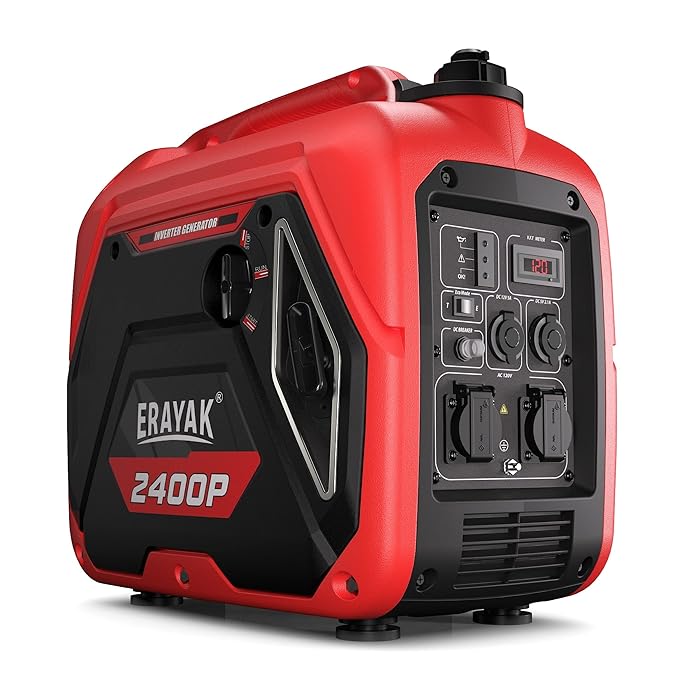
ERAYAK is a solid contender for the budget-conscious camper. It offers a slight power bump over standard 2000W units, giving you just enough extra overhead for power tools or a microwave. It’s built for the outdoors, with a rugged case and a straightforward control panel that doesn’t require an engineering degree to operate.
Key Features:
- 2400W Peak Power: punches above its weight class for its physical size.
- Cold Start Tech: Designed to fire up easily even on chilly mornings.
- Parallel Ready: Can be linked with another unit to double your power output (kit sold separately).
The Good & The Bad
Pros:
- Compact design fits tight storage spaces.
- Very intuitive, user-friendly control panel.
- Good fuel efficiency in Eco mode.
Cons:
- Brand is less recognized than Honda or WEN, but performance holds up.
The Verdict: The “Weekend Warrior” special. Perfect for tailgating or DIY projects where you need portable electricity without the bulk.
PowerSmart 4400-Watt Inverter (CO Sensor with limiting Gas)
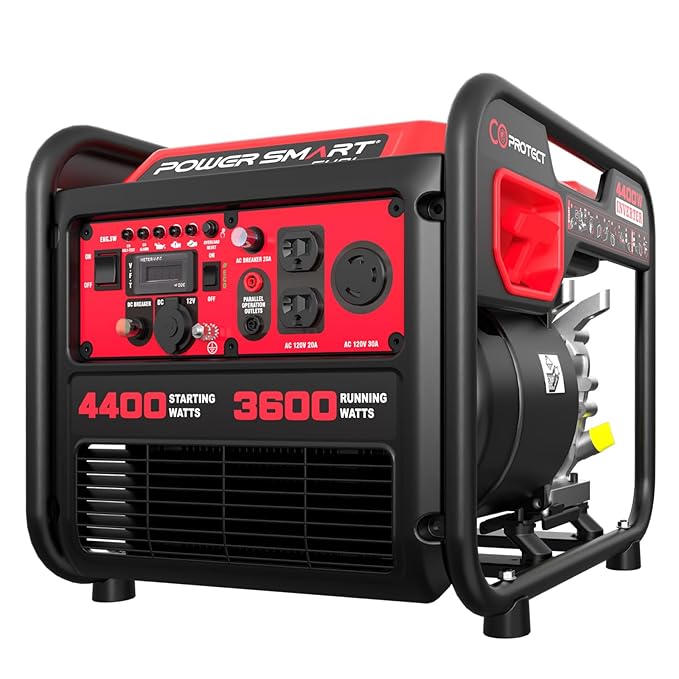
Safety is the headline here. This PowerSmart unit mirrors the specs of other 4400W units but prominently features a Carbon Monoxide (CO) sensor, which shuts the unit down if dangerous fumes build up—a massive plus for home safety. It’s a beast that bridges the gap between a massive home standby unit and a portable carry-on.
Key Features:
- CO Sensor Safety: Automatically kills the engine if unsafe carbon monoxide levels are detected.
- Clean Sine Wave: Safe for charging laptops, drones, and sensitive medical equipment.
- Extended Run Time: Efficient engine management allows for long overnight runs on a single fill.
The Good & The Bad
Pros:
- Added peace of mind with CO detection.
- High wattage capability for home backup.
- Sturdy frame protects the engine during transport.
Cons:
- Heavier than the 2000W class; you won’t want to carry it far by hand.
The Verdict: The smart choice for families. If this is sitting in your garage for emergencies, the CO sensor and high wattage make it a no-brainer.
2500W Gas Powered Inverter (Long Runtime)
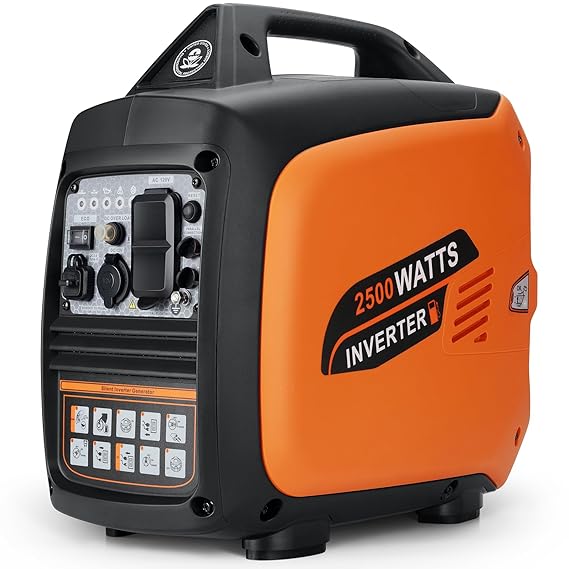
This is your straightforward, no-frills power box. It offers a sweet spot of 2500 watts, enough to handle high start-up surges from things like refrigerators, while keeping the form factor small. It’s designed for long runtimes, making it ideal for overnight camping trips or keeping the lights on during a long winter night.
Key Features:
- 2500W Surge: Handles startup spikes better than standard 2000W models.
- Quiet Tech: Enclosed casing significantly dampens engine noise.
- User Friendly: Simple pull-start mechanism and clear LED status indicators.
The Good & The Bad
Pros:
- Excellent balance of power vs. weight.
- Quiet enough for residential neighborhoods.
- Great fuel economy for extended use.
Cons:
- Generic branding can make finding specific aftermarket parts tricky.
The Verdict: A reliable utility player. Good for budget buyers who want a bit more “oomph” than the base models offer.
Expert Tips For Buying Your Generator
- Calculate Your Watts: Don’t guess. Add up the running watts of your must-have items (fridge: 700W, lights: 100W) and multiply the highest starting watt item by 1.5 to find your minimum requirement.
- Elevation Matters: If you live high up (over 3,000 ft), your generator loses power. You might need a “high altitude kit” (re-jetting the carb) to keep it running smooth.
- Fresh Gas Only: 90% of generator “failures” are just bad gas. Always use fresh fuel with a stabilizer if it sits for more than 30 days.
Pro Tip: Do the Break-In! Don’t just unbox it and run it at 100% load. Run the generator for the first 5 hours at varying light loads and then change the oil immediately. This flushes out metal shavings from the factory and will double your engine’s life.