

You’re miles into the woods, the stars are out, and you realize your phone. Your only map and emergency line is at 2%. Or maybe you’re trying to sleep, but your CPAP machine is blinking “low battery.” It’s a total vibe-killer. The “old school” gas generators are too loud and heavy for a casual weekend trip, which is why everyone is moving toward portable power stations.
I’ve looked into the latest compact units to find the best portable generator for camping that won’t break your back or your bank account. In this guide, you’ll get the straight truth on which ones actually hold a charge and which ones are just glorified paperweights.
Best Portable Power Stations Comparison
| Power Station | Capacity | Peak Watts | Battery Type | Weight |
| Bailibatt 300W | 257Wh | 300W | Lithium-Ion | 4.6 lbs |
| Solar Recharge 100W | 89.6Wh | 100W | Lithium | 2.54 lbs |
| SinKeu 300W | 256Wh | 300W | LiFePO4 | 4.0 lbs |
| Tenergy T320 | 300Wh | 200W | LiFePO4 | 8.4 lbs |
| Flashfish 200W | 151Wh | 200W | Lithium-Ion | 4.0 lbs |
Best portable generator for camping
You don’t need a massive unit to keep your essentials running. Whether you’re a weekend warrior or a remote worker taking the van out, these units bridge the gap between a pocket power bank and a full-blown gas generator.
Bailibatt 300W (Best All-Rounder for Backpackers)
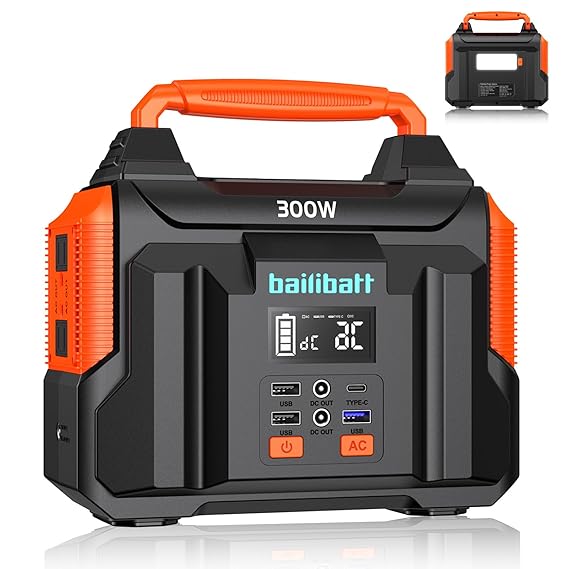
If you’re looking for a balance between weight and “oomph,” the Bailibatt is a solid contender. It’s got enough juice (257Wh) to charge a standard laptop about 4-5 times, which is perfect for a long weekend. It feels surprisingly sturdy for something that weighs less than a 5-pound bag of flour.
I’d recommend this for the solo camper who needs to keep a laptop, phone, and maybe a small fan running overnight. It’s quiet enough that you won’t annoy your neighbors at the campsite.
- Pros: Very lightweight for the capacity; includes a pure sine wave AC outlet, which is safer for sensitive electronics like high-end cameras.
- Cons: Just a heads up, the 300W limit is strict—don’t even think about plugging in a coffee maker or a hair dryer, or it’ll trip immediately.
Solar Recharge 100W (The “Light & Fast” Specialist)
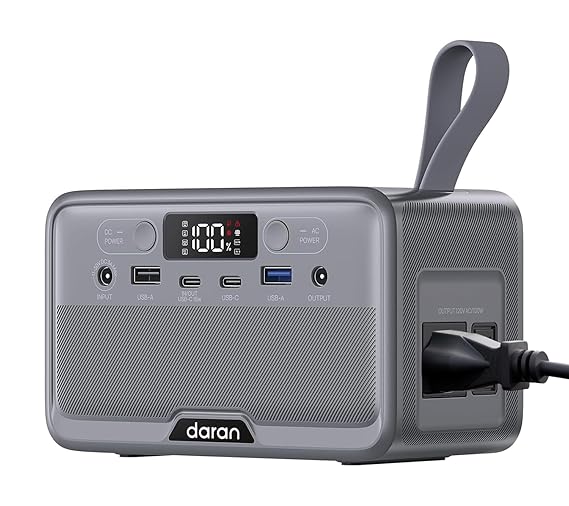
Unlike the Bailibatt above, this model is built for the minimalist. At 2.54 lbs, you’ll barely notice it in your trunk or a large daypack. It’s strictly for the small stuff—phones, drones, and tablets. It’s basically a massive power bank with an AC outlet slapped on the side.
I like this for drone pilots who need to top off batteries in the field. It’s not going to run your life, but it’ll keep your gear from dying when you’re chasing the perfect sunset shot.
- Pros: Insanely portable; multiple USB-C and USB-A ports make it easy to charge the whole family’s phones at once.
- Cons: The 89.6Wh capacity is tiny. If you’re running a CPAP or anything that pulls steady power, this will be dead before you wake up.
SinKeu 300W (The Long-Term Lifespan Choice)
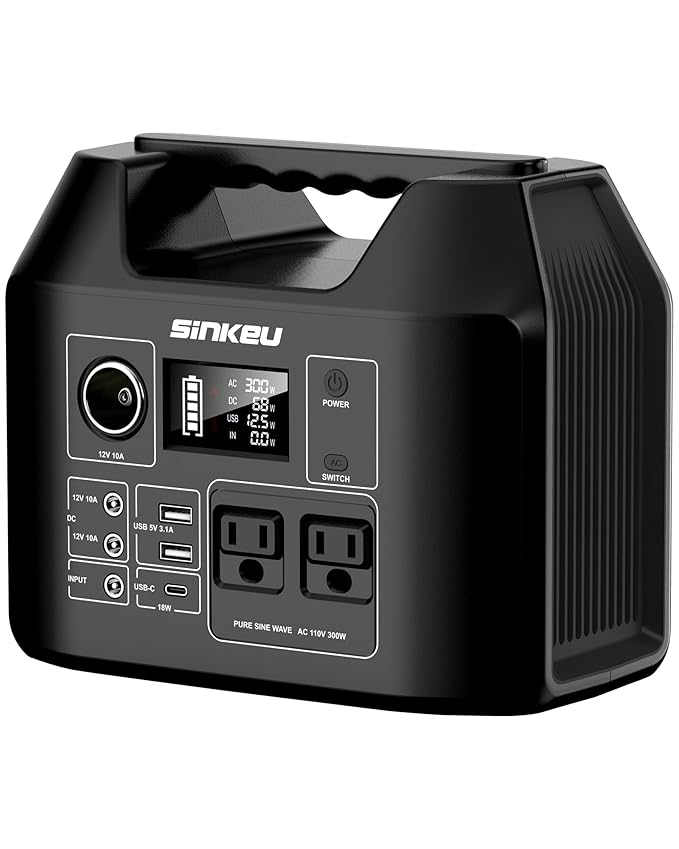
The SinKeu uses LiFePO4 (Lithium Iron Phosphate) battery tech. This is a game-changer because these batteries can be charged and drained thousands of times before they start to lose capacity. Compared to the first two lithium-ion models, this one is built to last for years of regular use.
This is my pick for someone who camps every other weekend. It’s a workhorse that won’t give up the ghost after one season.
- Pros: LiFePO4 battery lasts way longer (cycle-wise) than standard lithium; great for long-term emergency kits too.
- Cons: The plastic casing feels a bit “budget” and could probably use some extra care if you’re tossing it around in the back of a truck.
Tenergy T320 (The Premium Reliability Pick)

The Tenergy T320 is the heavyweight in this group—literally. At 8.4 lbs, it’s double the weight of the SinKeu, but you get 300Wh of actual, usable energy. Tenergy has been in the battery game forever, and it shows in the build quality.
Unlike the cheaper brands that cut corners on the inverter, the T320 handles surges better. If you have a device that pulls a bit more on startup, this one is less likely to quit on you.
- Pros: Excellent power management; the 45W USB-C PD port is fast enough to charge a MacBook Pro at a decent clip.
- Cons: It’s heavy. This isn’t something you want to carry more than a few hundred feet from the car.
Flashfish 200W (The Budget-Friendly Backup)
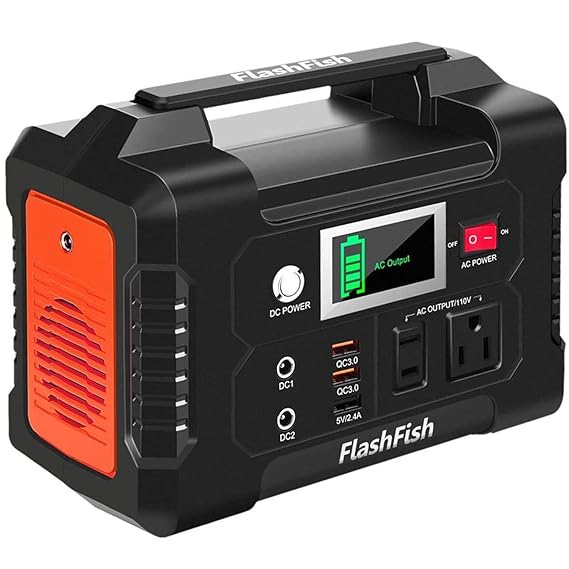
Flashfish is the “bang for your buck” king. It’s been around for a while and has a massive following because it’s cheap and it works. It doesn’t have the fancy LiFePO4 cells or a massive display, but for under $150 (usually), it’s hard to complain.
It’s great as a secondary backup or for someone who only camps once or twice a year and doesn’t want to invest $300 in a battery.
- Pros: Very affordable; has three USB ports and two DC ports, which is plenty for a basic setup.
- Cons: The “modified” sine wave (on some older versions) or lower-end inverter can make a buzzing sound with certain electronics. Also, the charging time is pretty slow compared to newer units.
Buying Guide: Which one should you grab?
- If you want the best overall balance of weight and power, buy the Bailibatt 300W.
- If you want a battery that lasts for 10 years, buy the SinKeu 300W.
- If you are on a tight budget and just need a backup, buy the Flashfish 200W.
- If you need to charge a laptop via USB-C quickly, buy the Tenergy T320.
- If you are hiking and every ounce counts, buy the Solar Recharge 100W.