

Finding the best portable generators for house use can be the difference between a stressful blackout and a comfortable evening at home.
Whether you need to keep your refrigerator running during a storm or simply want to keep your phones and laptops charged, the right power source provides peace of mind. With options ranging from silent lithium power stations to heavy-duty dual-fuel engines, choosing the right model depends on your specific wattage needs and where you plan to store it.
Top Rated Portable Generators for House Comparison
| Generator name | Wattage | Fuel/Power Source | Best For |
| AIVOLT 8000W | 8000W | Gas / Propane | Whole House Backup |
| Honda EU2200i | 2200W | Gasoline | Quiet Efficiency |
| Anker SOLIX C300 | 300W | Battery / Solar | Small Electronics |
| Tenergy T320 | 200W | Battery / Solar | Budget Portability |
| PROGENY 300W | 300W | Battery / Solar | CPAP & Camping |
| Portable Power Station 100W | 100W | Battery / Solar | Ultra-Light Tasks |
AIVOLT 8000W Dual Fuel Inverter Generator

If you need serious muscle to run high-draw appliances like your AC unit or well pump, this AIVOLT model is a top contender for the best portable generator for house backup. The dual-fuel capability is a lifesaver during extended outages because it allows you to switch between gasoline and propane, which is easier to store long-term. Its inverter technology ensures the power is “clean” enough for sensitive electronics, and the electric start makes it accessible for anyone to operate without struggling with a pull-cord.
Pros
- Massive 8000W output handles large appliances easily.
- Dual-fuel versatility offers better fuel availability during emergencies.
- Electric start and remote control simplify operation.
Cons
- Considerably heavier than smaller portable units.
- Requires outdoor ventilation and fuel maintenance.
Honda EU2200i 2200 Watt Inverter Generator
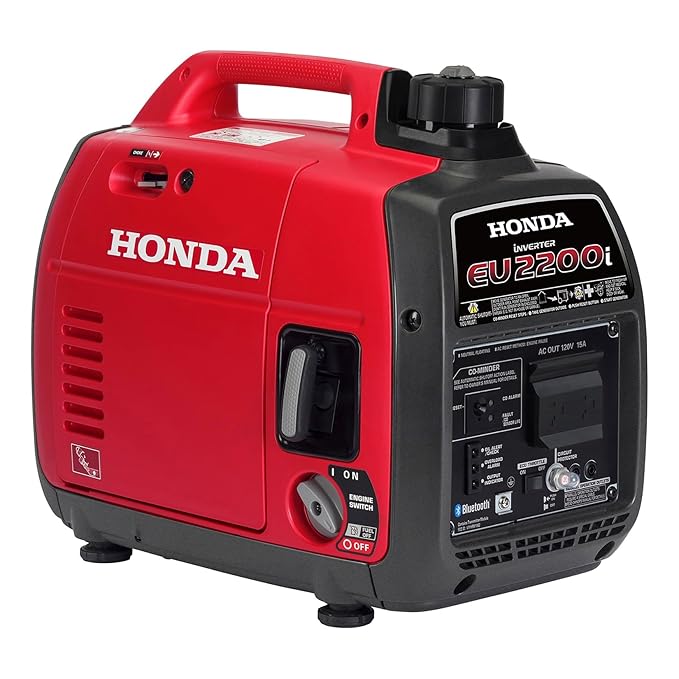
The Honda EU2200i is the gold standard for those who value quiet operation and legendary reliability. It is perfect for powering a fridge, a few lights, and your Wi-Fi router without waking up the entire neighborhood. The built-in Co-Minder system is a critical safety feature that automatically shuts the unit down if carbon monoxide levels get too high. This is the best portable generator for house owners who want a “set it and forget it” tool that starts on the first pull every time.
Pros
- Extremely quiet operation is neighbor-friendly.
- High fuel efficiency for long run times on a small tank.
- Co-Minder safety sensor provides extra protection.
Cons
- Higher price point compared to similar wattage brands.
- Limited to 2200 watts; won’t power heavy machinery.
Anker SOLIX C300 Portable Power Station

For a modern, indoor-safe solution, the Anker SOLIX C300 is an incredible choice. Since it uses LiFePO4 batteries, it can last for over a decade of regular use. The 140W fast charging is a standout feature, allowing you to top off the battery quickly before a storm hits. It’s compact enough to sit on a kitchen counter to keep your phones, tablets, and LED lights running through the night without any noise or fumes.
Pros
- Long-lasting LiFePO4 battery chemistry.
- Ultra-fast two-way charging via USB-C.
- Compact design with a built-in handle for easy carrying.
Cons
- Not designed for heating elements or large motors.
- Solar panels are sold separately.
Tenergy T320 Portable Power Station

The Tenergy T320 offers a balanced mix of ports and capacity for the average household. With two pure sine wave AC outlets, you can safely plug in a laptop and a small fan simultaneously. It is particularly useful for van life or RV enthusiasts who also want a backup battery for their home office. The 300Wh capacity provides plenty of “buffer” power for small gadgets during a 24-hour power dip.
Pros
- Pure sine wave output protects sensitive laptop power bricks.
- Multiple output types, including USB-C and 12V DC.
- Lightweight and very easy to store in a closet.
Cons
- Slower recharge time compared to premium models.
- 200W continuous limit restricts it to small electronics.
PROGENY 300W Solar Generator

The PROGENY 300W is specifically designed with versatility in mind, featuring a regulated DC output which is a huge plus for CPAP machine users. This ensures a steady flow of power that won’t fluctuate and shut off your medical device in the middle of the night. It supports pass-through charging, meaning you can charge the battery via a solar panel while it simultaneously powers your devices.
Pros
- Regulated DC output is perfect for CPAP stability.
- Supports pass-through charging for continuous use.
- Bright built-in LED light for visibility during blackouts.
Cons
- The interface display is basic compared to newer tech.
- Limited peak surge capacity for high-startup tools.
Portable Power Station 100W (Ultra-Lightweight)
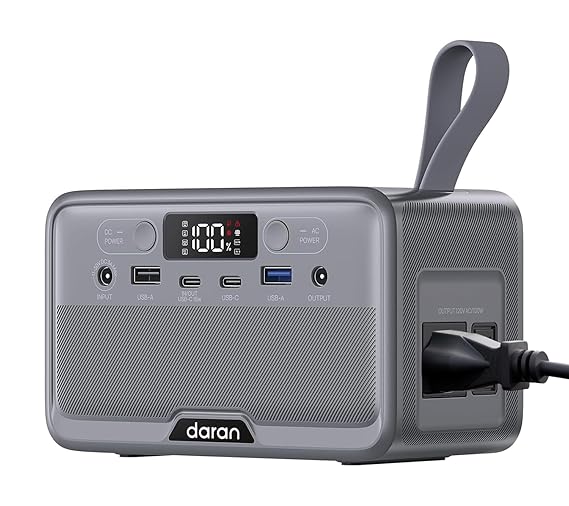
If your goal is just to keep your phone alive and maybe run a small USB fan, this 100W unit is the most portable option on the list. Weighing in at just 2.54 lbs, it’s basically a giant power bank with an AC outlet. It is the best portable generator for house users who live in apartments or small spaces where a full-sized generator isn’t practical, providing just enough juice to stay connected during a short emergency.
Pros
- Extremely affordable and budget-friendly.
- Fits easily in a backpack or emergency kit.
- Simple operation with no complicated settings.
Cons
- Very low capacity; won’t run much beyond a laptop.
- Not suitable for appliances like coffee makers or toasters.
Buyer’s Guide: Choosing the Best Portable Generator for House Use
Choosing a generator isn’t just about picking the most powerful model; it’s about matching the “load” of your home to the capacity of the machine. If you buy too small, you’ll trip breakers; too large, and you’ll waste fuel and money.
1. Calculate Your Wattage Needs
To find the right size, you need to distinguish between Running Watts (what it takes to keep a light on) and Starting Watts (the extra “surge” needed to kick-start a refrigerator motor).
The Calculation Formula:
- List everything you want to run at the same time.
- Add up all their Running Watts.
- Identify the single highest Starting Wattage requirement on your list.
- Add that highest Starting Wattage to your total Running Watts.
Example:
- Fridge: 200W (Running) / 1200W (Starting)
- LED Lights (x5): 50W (Running)
- TV: 100W (Running)
- Total: (200 + 50 + 100) + 1200 = 1,550 Watts Minimum
2. Common Household Wattage Reference
Use this table as a general estimate for common U.S. household items:
| Appliance | Running Watts | Starting Watts (Surge) |
| Refrigerator (Energy Star) | 150 – 200W | 1,200W |
| Window AC (10,000 BTU) | 1,200W | 2,200W |
| Sump Pump (1/2 HP) | 1,050W | 2,200W |
| Microwave Oven | 1,000W | 1,000W |
| Coffee Maker | 1,000W | 1,000W |
| Laptop / Tablet | 50 – 100W | 50 – 100W |
| LED Light Bulb | 10W | 10W |
3. Fuel Type & Safety Features
- Gasoline: Most common and highest power, but the fuel goes bad after 3–6 months. Requires outdoor operation.
- Propane (Dual Fuel): Cleaner and has an indefinite shelf life. Ideal for long-term storage.
- Solar/Battery: Safe for indoor use and silent, but with limited capacity. Great for phones and CPAP machines.
- CO-Minder/Safety Sensors: Always look for models with automatic carbon monoxide shut-off sensors if you are using a combustion-engine model.
4. The 20% Safety Rule
Never run a generator at 100% capacity for long periods. It increases wear and risks overheating. Always add a 20% buffer to your final calculation to ensure your generator runs efficiently and can handle unexpected surges.