

Whether you are scaling a remote peak or trekking through dense forests, a reliable connection to the world is non-negotiable. Modern technology has moved beyond simple maps, offering tools that can literally save your life when cell towers vanish. Finding the best Satellite GPS Messenger and Handheld Navigator ensures you never have to guess your coordinates or lose contact with emergency services.
In this guide, we break down top-rated devices that offer everything from precise topographic mapping to two-way satellite texting. These tools are built for the rugged reality of the outdoors, prioritizing battery life and durability over flashy, fragile smartphone screens.
Best Satellite GPS Messenger and Handheld Navigator
| GPS Tracker | Best For | Battery Life | Key Feature |
| Garmin eTrex 22x | Budget Navigation | 25 Hours | Preloaded TopoActive Maps |
| Spot Gen 4 | Simple Tracking | 17 Days (Approx) | One-way SOS & Check-in |
| Generic Rugged GPS | Screen Visibility | 20+ Hours | 3.2″ Sunlight Readable Screen |
| A6 Handheld GPS | Versatility | 20 Hours | Moon Phase & Compass |
| Garmin eTrex 32x | Advanced Mapping | 25 Hours | Altimeter & 3-Axis Compass |
Garmin eTrex 22x GPS Navigator
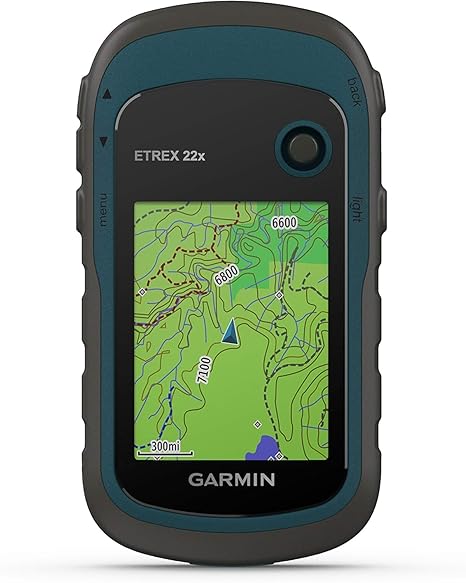
The Garmin eTrex 22x is a staple for hikers who want dependable navigation without a steep learning curve. It features a 2.2-inch color display that remains perfectly readable even under direct midday sun. With preloaded TopoActive maps, you can start your journey immediately, following routable roads and trails for cycling and hiking. It supports both GPS and GLONASS satellite systems, which helps maintain a fix in deep canyons or under heavy tree cover where GPS alone might struggle.
This device is remarkably portable and rugged, boasting an IPX7 water rating to handle rain or accidental splashes. Since it runs on two AA batteries, you can easily carry spares for multi-day trips without worrying about finding a USB port. It is an excellent choice for geocaching or weekend backpacking where you need a dedicated tool that won’t drain your phone battery.
Pros
- Affordable entry point for high-quality Garmin mapping.
- Dual satellite support (GPS and GLONASS) for better accuracy.
- Compact, pocket-friendly design.
Cons
- Lacks a barometric altimeter.
- Interface can feel slow compared to modern smartphones.
Spot Gen 4 Satellite GPS Messenger
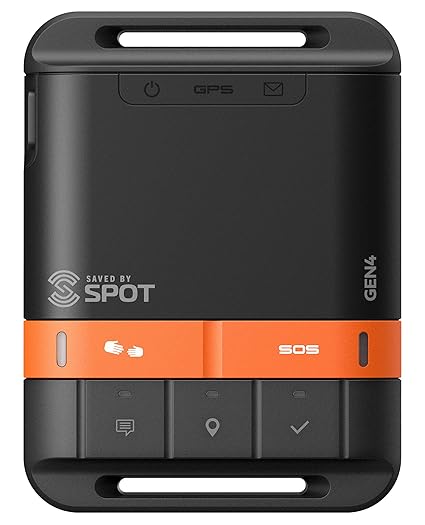
If your primary concern is safety and letting loved ones know you are okay, the Spot Gen 4 is a top contender. Unlike traditional navigators, this is a dedicated messenger focused on tracking and emergency alerts. With the push of a button, you can send pre-programmed text messages or your precise GPS coordinates to your contacts. In a true emergency, the dedicated SOS button connects you to the FocusPoint International Inc. search and rescue coordination center.
The design is sleek and highly portable, intended to be clipped to a backpack or harness. It operates on the Globalstar satellite network, providing reliable coverage across most of the globe. While it does not offer on-screen mapping, its tracking feature allows friends and family to follow your progress in near real-time via a web-based map. It is perfect for solo adventurers who prioritize a “safety first” mindset.
Pros
- Long battery life for extended expeditions.
- Dedicated SOS button for rapid emergency response.
- Compact and incredibly easy to use.
Cons
- Requires a paid subscription to function.
- One-way messaging only (cannot receive replies).
Rugged Hiking GPS Navigator

This rugged navigator is designed for users who struggle with small, cramped displays. It features a generous 3.2-inch sunlight-readable screen, making it much easier to read topographic details and contour lines at a glance. The device comes with USA Topo maps pre-installed and supports multi-GNSS, ensuring you stay connected to multiple satellite constellations for high-precision positioning in various environments.
Beyond basic navigation, this unit is built to survive the elements. It is waterproof and shock-resistant, catering to those who move through harsh terrain where equipment failure is not an option. The extra battery life is a significant benefit for long-distance trekkers who need a reliable screen active for several hours a day.
Pros
- Large 3.2-inch screen for superior visibility.
- Multi-GNSS support for fast satellite acquisition.
- Excellent battery endurance for long-haul trips.
Cons
- Larger footprint than the eTrex series.
- Generic interface may have a slight learning curve.
A6 Handheld GPS for Hiking
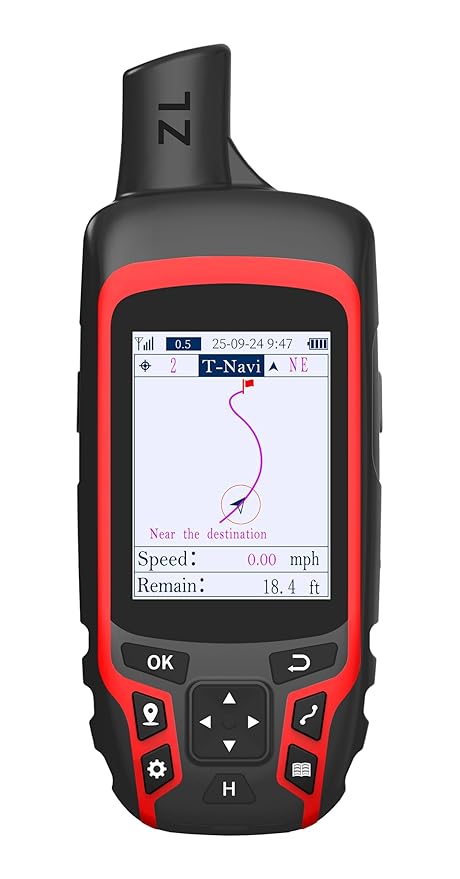
The A6 Handheld GPS is a versatile tool that combines standard navigation with helpful outdoor data. It provides 20 hours of battery life and features two distinct navigation modes to suit different styles of travel. One of its standout features is the inclusion of moon phase information and a built-in GPS compass, which are vital for hunters, anglers, or night hikers who need to understand their environment beyond just a blue dot on a map.
The 2.4-inch color display is crisp and handles outdoor glare well. Its rugged, waterproof construction ensures that even if you get caught in a downpour or drop the unit in a creek, your data remains safe. This is a solid mid-range option for those who want a few more environmental tools without jumping to the high price point of professional-grade equipment.
Pros
- Useful environmental data like moon phases.
- Rugged and fully waterproof build.
- Good balance of screen size and portability.
Cons
- 20-hour battery life is shorter than some competitors.
- Map detail may be less comprehensive than Garmin’s TopoActive.
Garmin eTrex 32x Rugged Handheld GPS Navigator
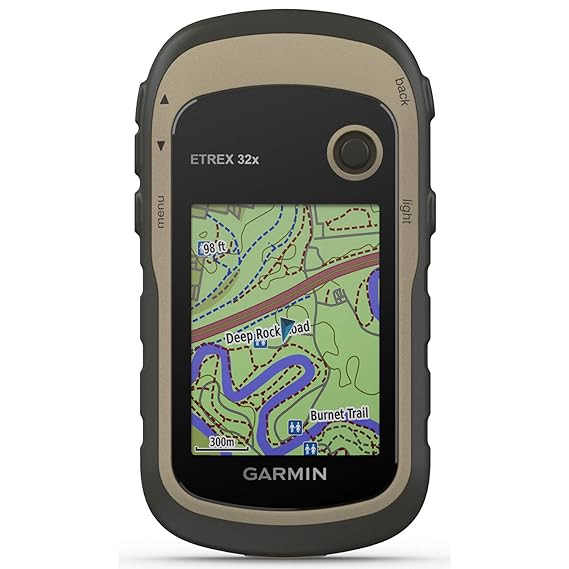
The Garmin eTrex 32x takes everything great about the 22x and adds professional sensors. It includes a built-in 3-axis compass and a barometric altimeter. These sensors allow you to maintain your heading even while standing still and provide much more accurate elevation data than GPS alone. For mountain climbers and serious backpackers, knowing your exact ascent and descent can be critical for pacing and safety.
Garmin eTrex Series Review
This video provides a practical look at the Garmin eTrex 22x and 32x, highlighting their rugged design and mapping capabilities for hikers.
Like its sibling, it comes with preloaded TopoActive maps and 8 GB of internal memory, plus a microSD card slot for additional map downloads. The 2.2-inch 65K color display is durable and clear. This model is the gold standard for hikers who want a compact, button-operated device that provides high-level data in any weather condition.
Pros
- Includes 3-axis compass and barometric altimeter.
- Reliable button interface works with gloves.
- Vibrant color screen for detailed mapping.
Cons
- Higher price point than the 22x.
- Small screen can make detailed route planning tedious.
Master Your Choice: Navigating Technical Trade-offs
Choosing the best Satellite GPS Messenger and Handheld Navigator requires looking past the brand name and focusing on your specific trip profile. If you are staying on well-marked trails, a simple navigator like the eTrex 22x is often plenty.
However, once you move into “off-trail” territory or high-altitude climbing, the barometric altimeter found in the eTrex 32x becomes essential for tracking weather changes and precise elevation.
Connectivity vs. Navigation
There is a major difference between a “messenger” and a “navigator.”
- Messengers (like Spot): Best for safety. They let you call for help or send “I’m okay” pings. They do not usually have maps on the device.
- Navigators (like eTrex): Best for finding your way. They show maps, trails, and terrain. They do not send messages unless they are “hybrid” models (which typically cost significantly more).
Battery Strategy
For long-distance hikers, the type of battery matters as much as the life. Devices using AA or AAA batteries are often preferred because you can swap them in seconds. Rechargeable internal batteries are convenient for short trips but require carrying a heavy power bank for anything lasting more than a few days.
Environmental Sensors
Don’t overlook the 3-axis compass. Basic GPS units require you to be moving for the compass to point in the right direction.
A 3-axis electronic compass works even when you are standing still, which is a massive help when you are trying to orient yourself at a confusing trail junction.