

Living off grid changes how air conditioning decisions work. Power is finite, solar systems are often modest, and surge loads can shut everything down fast. Traditional AC units are usually designed for stable grid power, not batteries and inverters. That makes choosing the right unit harder than simply picking the strongest cooler.
For off grid homes, cooling must balance comfort, energy draw, startup demand, and runtime expectations. Some options cool air directly, others rely on evaporation, and a few only work if the solar system is sized generously. Understanding these limits upfront helps avoid wasted money, inverter overloads, and unrealistic expectations about what off grid cooling can actually deliver.
Compare the Best Solar AC for Off grid Homes
| Solar AC | Cooling Type | Power Demand | Off Grid Suitability | Key Limitation |
| Portable Air Conditioner Air Conditioning Unit Tent AC | Compressor AC | Moderate | Conditional | Limited room coverage |
| AI Portable AC Unit with 1500ML Tank | Evaporative | Very low | High | No true temperature drop |
| Evaporative Air Cooler 2200+ CFM | Evaporative | Low | High | Works best in dry climates |
| 1700ml Evaporative Mini AC | Evaporative | Very low | High | Personal cooling only |
| DuraComfort 14,000 BTU Portable AC | Compressor AC | High | Low | Large solar system required |
| ROVSUN 8000 BTU Window AC with Heat | Compressor AC | High | Low | Needs strong inverter support |
Portable Air Conditioner Air Conditioning Unit Tent Air Conditioner
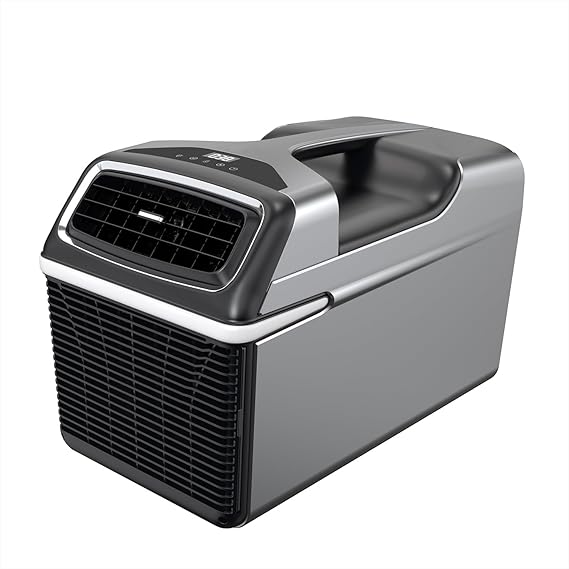
This unit targets mobile and small-space cooling rather than whole-home comfort. For off grid homes, its biggest advantage is controlled power use compared to full-size AC systems. It can work with a modest solar setup if battery capacity is planned carefully. Cooling performance is limited to small areas, and runtime depends heavily on sun availability.
This is best suited for cabins, vans, or sleeping zones where focused cooling matters more than whole-room coverage.
Portable Air Conditioners Fan, AI Portable AC Unit With 1500ML Water Tank

This evaporative cooler fits extremely well into low-power solar systems. Power draw is minimal, allowing long runtimes even on small battery banks. It does not lower room temperature like a compressor AC, but it improves comfort through airflow and moisture-based cooling.
In humid regions, results are modest. This option works best for off grid users prioritizing energy efficiency over temperature precision.
Evaporative Air Cooler with Remote & Timer, 2200+ CFM
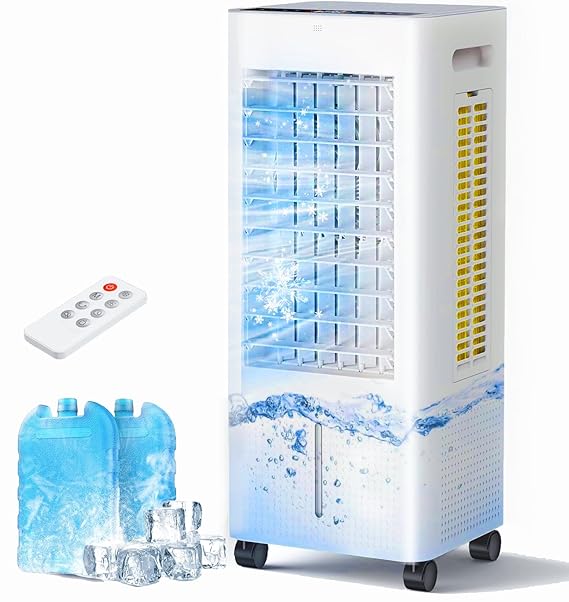
With higher airflow than most evaporative units, this model can move noticeable volumes of cooled air while staying solar-friendly. It performs well in dry climates where evaporation is effective. Power demand remains manageable for off grid setups, though water refills are part of daily use.
This is a strong choice for larger off grid living spaces that cannot support compressor-based AC.
Portable Air Conditioners, 1700ml Evaporative Air Cooler with Remote
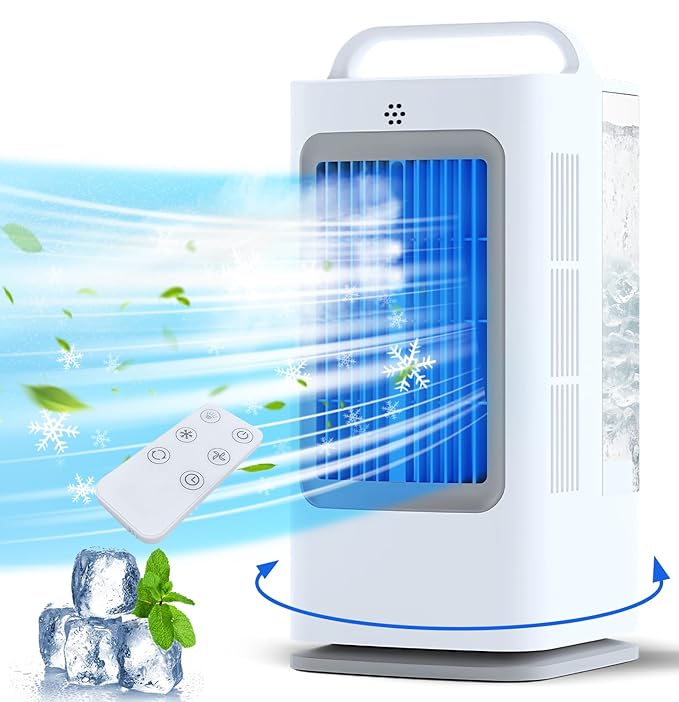
Designed for desks and small rooms, this unit is extremely gentle on solar power systems. It runs quietly and for long periods without draining batteries.
Cooling impact is localized rather than room-wide, making it best for personal comfort zones. For off grid homes with very limited power, this option offers predictable energy use without system strain.
DuraComfort Portable Air Conditioner, Dual Motors AC

This is a traditional high-output portable AC that delivers real temperature reduction. However, its power draw places it outside the reach of most small off grid systems. It can work only with large solar arrays, strong inverters, and substantial battery storage.
This model fits off grid homes that are essentially grid-level solar installations rather than minimal setups.
ROVSUN 8000 BTU Window Air Conditioner with Heat
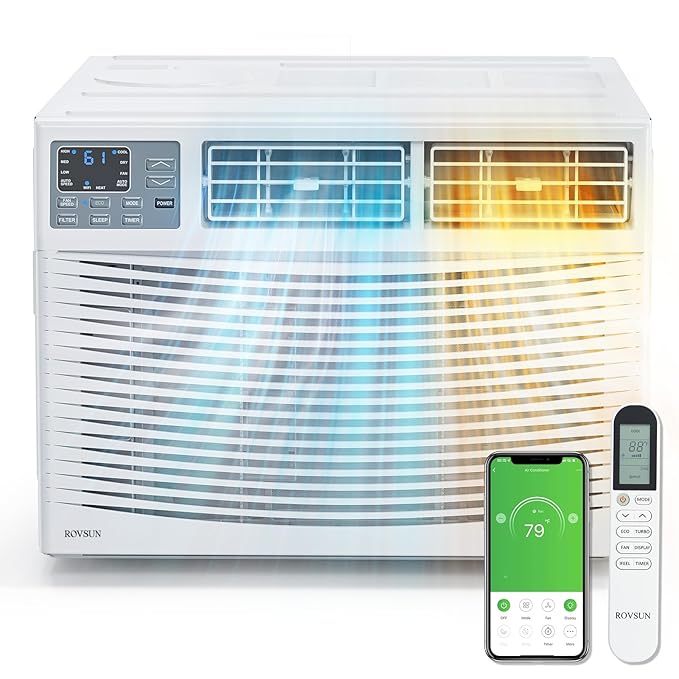
This window unit combines cooling and heating, but it demands consistent AC power. Off grid use requires a capable inverter and stable battery supply. Startup surge can be challenging for smaller systems.
It works best in off grid homes designed with robust electrical infrastructure rather than energy-constrained cabins.
Consider Before Buying a Solar Air Conditioner
Start by identifying how much continuous wattage the solar system can safely deliver. Prioritize low startup loads, long runtime efficiency, and realistic cooling expectations.
Evaporative cooling often makes more sense than compressor AC unless the solar system is oversized. Focus on cooling people, not entire buildings.
The safest approach to choosing the best solar ac for off grid homes is matching cooling expectations to available energy, not the other way around. Low-power evaporative units offer consistency and reliability, while compressor systems require significant investment in solar capacity.
Comfort off grid comes from balance, planning, and choosing equipment that works with limitations instead of fighting them.