

Gardens often sit far from wall outlets, extension cords are inconvenient, and weather exposure limits what electronics can handle outdoors. That makes choosing the best solar bug trap for garden use more complicated than it sounds. A zapper may look powerful on paper but fall short after cloudy days, struggle with battery life, or lack enough coverage for open spaces.
Others work well but only for small patios or short evening use. When power access is limited, reliability matters more than flashy specs. The right choice balances solar charging efficiency, usable coverage, and durability so insects are controlled without constant manual charging or repositioning.
Best Solar Bug Trap for Garden Use Without Electrical Outlets
| Bug Trap Name | Solar Charging Strength | Coverage Suitability | Weather Resistance | Best Use Case |
| TYPEC Bug Zapper 2 Pack | Moderate (multi-panel) | Small to medium gardens | High (IP65) | Multiple small zones |
| Solar Bug Zapper Outdoor 10W Panel | Strong | Medium gardens | High | All-day sun exposure |
| Solar Powered Cordless Bug Zapper | Light | Small areas | Moderate | Occasional use |
| PhatroyYee Solar Bug Zapper 4500V | Moderate | Medium gardens | High | Portable setups |
| Solar Bug Zapper with Panel Sensor | Moderate | Small patios | Moderate | Compact spaces |
| Rechargeable Mosquito Trap with Lamp | Moderate | Small areas | Moderate | Dual lighting needs |
| Large Solar Bug Zapper 4000 sq.ft | Very strong (18W) | Large gardens | High | Wide open yards |
TYPEC Bug Zapper 2 Pack, Solar Bug Zapper with 3 Solar Charging Panels
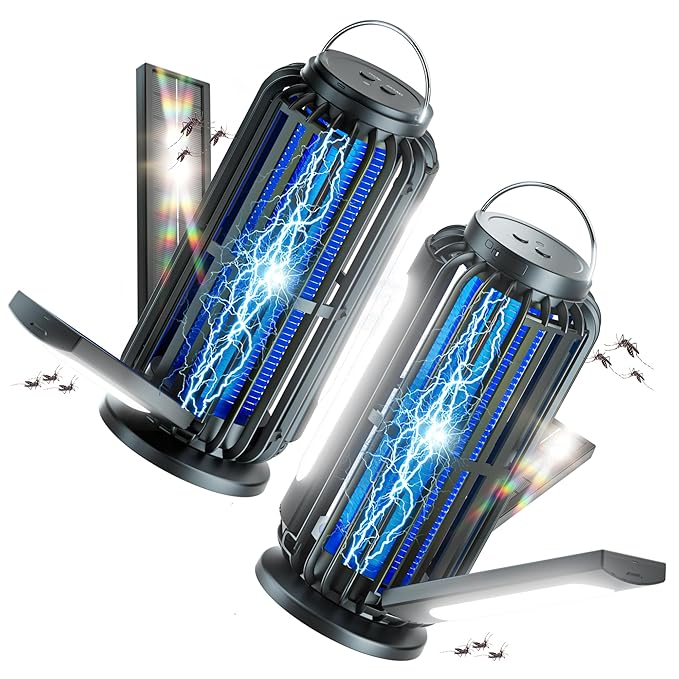
This option works well for gardens divided into sections, thanks to the two-unit setup. The three solar panels improve charging consistency when sunlight is partial rather than direct. It handles evening mosquito control reliably, though extended cloudy periods can shorten runtime. Coverage is better spread than concentrated.
Verdict: Best for gardeners needing flexible placement across multiple smaller areas.
Solar Bug Zapper Outdoor with 10W Solar Panel
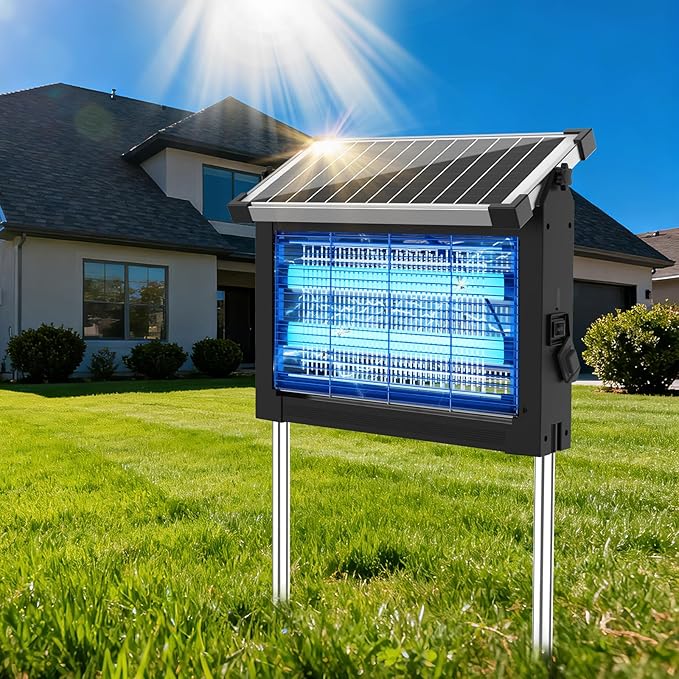
The larger solar panel gives this model a noticeable edge in charging speed. It performs consistently after full sun days and maintains strong output into late evening. It’s less forgiving in shaded gardens and performs best when positioned deliberately.
Verdict: Ideal for medium gardens that receive steady sunlight most days.
Bug Zapper, Mosquito Zapper Outdoor Indoor Solar Powered

This is a simpler, lightweight option that works when expectations are modest. It helps reduce insects near seating areas but lacks the battery depth for larger gardens. Performance drops faster after dusk.
Verdict: Best for small gardens or short evening use.
PhatroyYee Solar Bug Zapper Outdoor 4500V
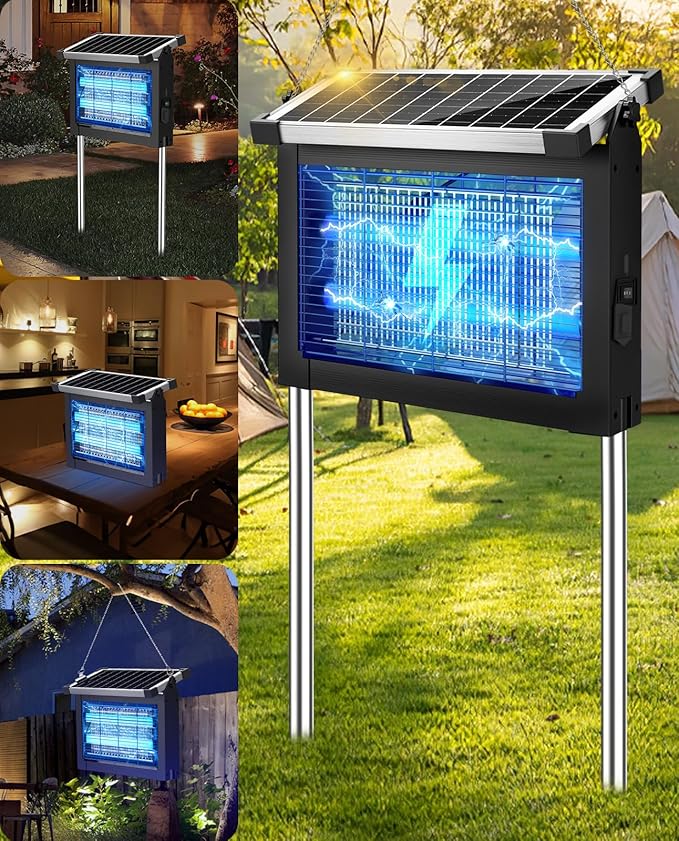
Portable and durable, this zapper balances strong output with manageable size. It holds charge reasonably well and is easy to reposition as garden layouts change. Coverage isn’t expansive, but reliability is solid.
Verdict: A good fit for medium gardens needing mobility.
Solar Bug Zapper Outdoor Waterproof with Panel Sensor
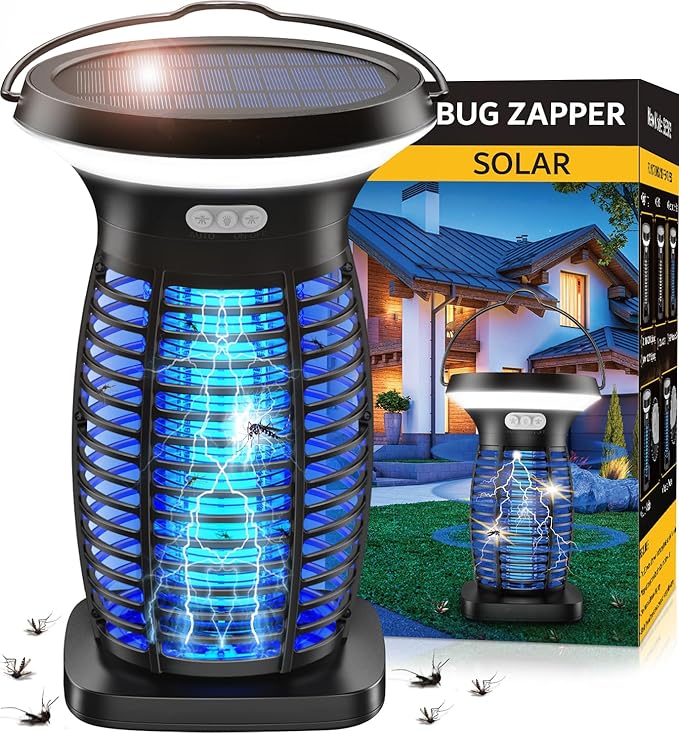
This compact unit focuses on convenience rather than reach. It activates automatically and handles light insect presence but struggles in open garden layouts. Best used close to activity zones.
Verdict: Works for patios or garden corners rather than full-yard control.
Solar Bug Zapper Outdoor, Rechargeable Mosquito Trap with Reading Lamp
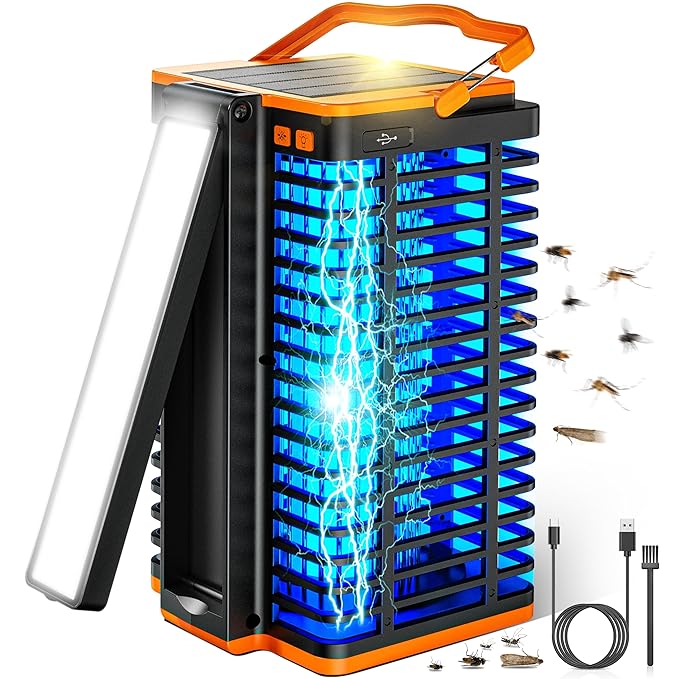
The added lamp makes this useful near seating or tables. Battery capacity is decent, but insect coverage remains limited. It’s more of a comfort-focused solution than a full garden defense.
Verdict: Best for small garden seating areas needing light and bug reduction.
Powerful Large Solar Bug Zapper Outdoor for 4000 sq.ft
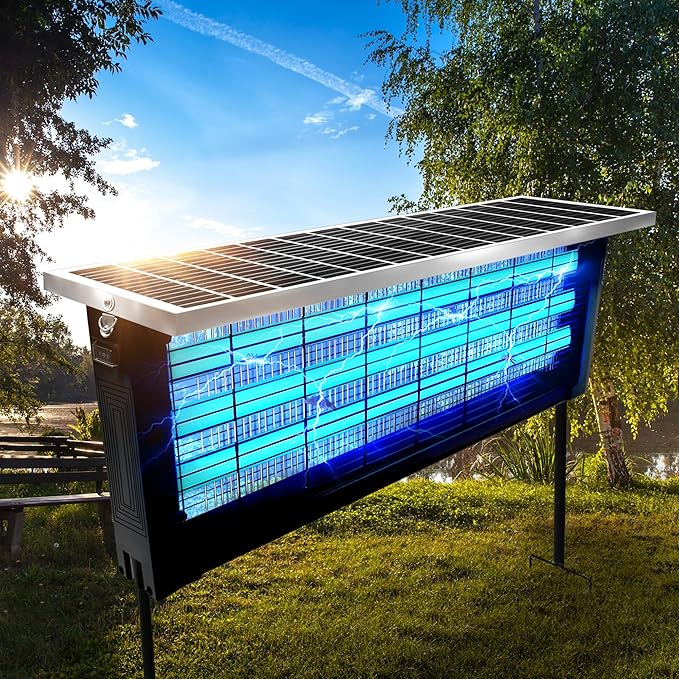
Designed for wide coverage, this model excels in open gardens and yards. The large solar panel and battery support long runtimes, even after partial sun days. It’s larger and less discreet but far more effective.
Verdict: The strongest choice for large gardens without power access.
How to Choose Under Limited Power Conditions
Focus on solar panel size first, not voltage ratings. Larger panels recharge more reliably, especially when sunlight isn’t perfect. Match coverage claims to actual garden size, and expect smaller units to work best near seating rather than across open lawns. Durability matters since garden placement often means weather exposure.
A Realistic Way to Decide
When outlets aren’t an option, consistency beats intensity. The best solar bug trap for garden use is one that charges dependably, lasts through the evening, and fits the actual space you’re protecting. Large gardens benefit from fewer but stronger units, while smaller areas can rely on compact zappers placed strategically. Choosing with realistic expectations leads to steadier results and less frustration over time.