

Nomadic living requires every drop of power you can squeeze from the sun. While fixed panels are easy to install, they miss out on significant energy gains during the morning and late afternoon. Using the best solar energy tracker for nomads allows your setup to follow the sun’s path, ensuring your batteries stay topped off even on shorter winter days.
Whether you are looking for a rugged GPS unit to protect your mobile assets or a DIY dual axis system to rotate your heavy duty panels, the right hardware makes a world of difference. These tools help you spend less time worrying about your battery levels and more time enjoying the open road.
Best Solar Energy Tracker for Nomads
| Solar Trackers | Best For | Key Feature |
| Trak-4 Solar GPS Tracker | Asset Security | Built-in Solar Charging |
| Dual Axis Tracker Controller | Automated Tracking | Wind & Sunlight Sensors |
| KEYESTUDIO DIY Kit | Learning & Small Tech | Educational Programming |
| DIY DC Dual Axis Robot | Custom Heavy Loads | All-Metal Worm Gear |
| ECO-WORTHY Linear Actuator | Large Panel Tilting | 330lbs Lift Capacity |
| ECO-WORTHY Power Box | Independent Power | LiFePO4 Battery Included |
Trak-4 Solar GPS Tracker

The Trak-4 Solar GPS Tracker is an essential tool for any nomad who wants to keep an eye on their expensive gear. It features a rugged, waterproof housing that withstands harsh highway speeds and heavy rain. The integrated solar cell provides a trickle charge to the internal battery, significantly extending the time between manual recharges. This is perfect for mounting on the roof of a trailer or a piece of outdoor equipment that stays exposed to the elements.
Setup is quick and user friendly, allowing you to view your asset location on a map via phone or tablet. You can create geofences to get instant alerts if your equipment moves outside a designated area. For nomads who park in remote spots, this device offers peace of mind by combining global tracking with a self sustaining power source.
Pros
- Self charges using sunlight to maintain battery life.
- Extremely durable and waterproof for outdoor mounting.
- Provides real time email and text alerts for movement.
Cons
- Requires a monthly or annual subscription for tracking.
- Signal can be blocked if placed inside metal containers.
Dual Axis Sun Tracking Controller
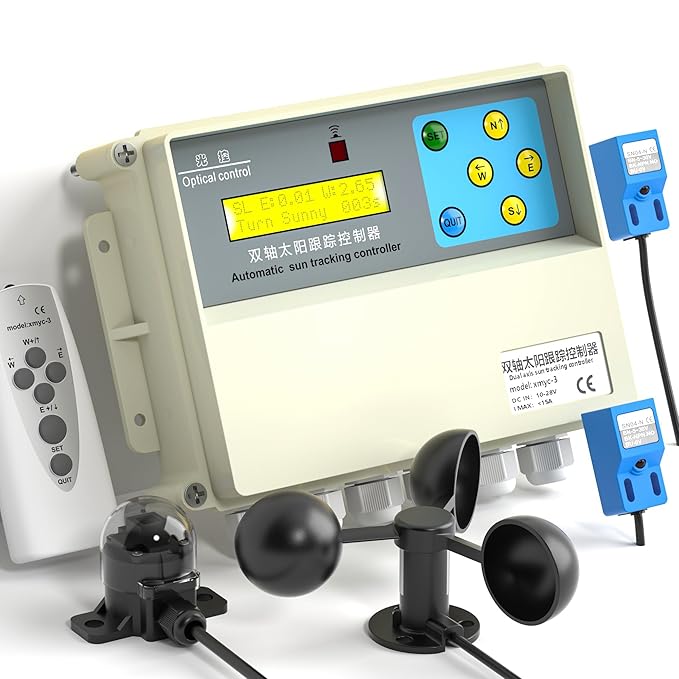
This Automatic Sun Tracking Controller is the brain of a high efficiency solar setup. It uses a sunlight sensor to detect the brightest point in the sky and moves your panels to match it. Because it supports dual axis movement, it can track the sun from east to west and adjust for seasonal height changes. This is a massive advantage for long term travelers who stay in different latitudes throughout the year.
The kit includes a wind speed sensor, which is a life saver for nomads. If winds become too high, the controller can automatically move the panels to a flat, safe position to prevent damage. It also features a remote control for manual overrides, making it highly versatile for different camping scenarios.
Pros
- Significantly increases energy yield compared to fixed mounts.
- Safety features include wind and limit sensors.
- Remote control allows for easy manual adjustments.
Cons
- Requires additional actuators and a frame to work.
- More complex wiring than a single axis system.
KEYESTUDIO DIY Solar Tracking Kit for Nomads
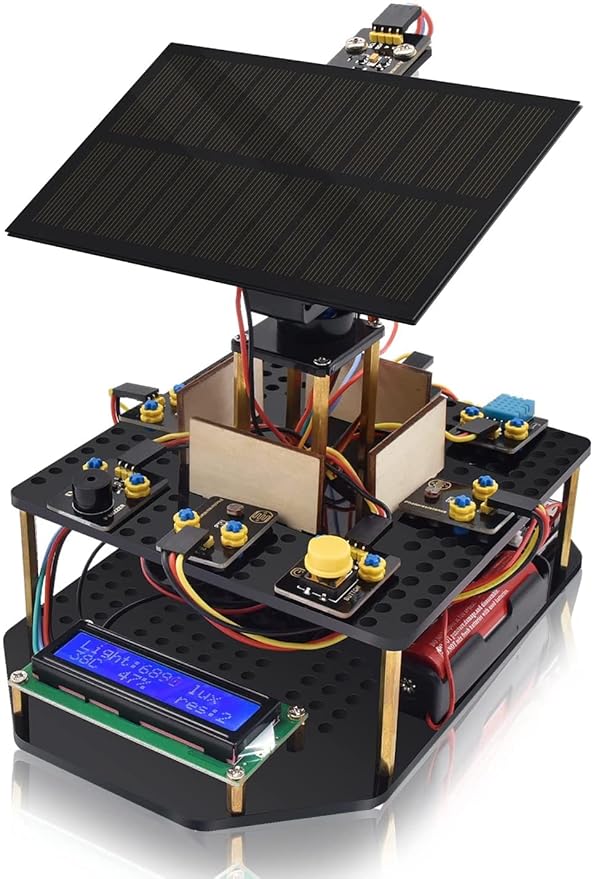
If you enjoy tinkering or want to teach your kids about renewable energy, the KEYESTUDIO DIY Solar Tracking Kit is a fantastic choice. This Arduino based kit lets you build a miniature solar tracker that can charge a smartphone. It includes temperature and humidity sensors, giving you a full weather station experience while you learn to program.
The kit is designed for those 15 and older, making it a great educational project for the vanlife community. It demonstrates the core principles of the best solar energy tracker for nomads on a smaller scale. While it won’t power your whole RV, it is a perfect desk companion for charging small USB devices while you work.
Pros
- Excellent for learning Arduino and solar technology.
- Includes multiple sensors for a complete data experience.
- Compact design is easy to store in a small van.
Cons
- Too small to power large appliances or RV batteries.
- Requires assembly and basic programming knowledge.
DIY DC Dual Axis Pan Tilt Robot

The DIY DC Dual Axis Pan Tilt Robot is a beast when it comes to mechanical strength. Built with all metal worm gears and high torque motors, this mount is designed to handle heavy loads without slipping. It is an ideal base for nomads who want to build a custom tracking mount for larger solar panels or even satellite monitoring equipment.
The high torque worm gear motor ensures that the panels stay in place even when the motors are not powered. This mechanical locking feature is vital for stability in breezy conditions. If you are a DIY enthusiast looking to build a professional grade tracking mount for your off grid basecamp, this heavy duty hardware is the foundation you need.
Pros
- All metal construction for maximum durability.
- High torque motors handle heavy solar panels easily.
- Worm gear design prevents backdriving from wind.
Cons
- Requires a separate controller and sensors to automate.
- Heavier than plastic or aluminum alternatives.
ECO-WORTHY Heavy Duty Linear Actuator

When it comes to moving large panel arrays, the ECO-WORTHY Linear Actuator is the industry standard. This 12V motor can lift up to 330lbs, making it powerful enough to tilt multiple panels at once. It features an IP54 waterproof rating, which means it can handle splashes and dust while mounted on the exterior of your vehicle or ground rack.
The 8 inch stroke length provides ample range for adjusting the vertical tilt of your panels. This is the hardware most nomads use to create a “tilt bar” system that can be automated with a solar controller. It comes with mounting brackets included, simplifying the installation process on your roof rack or solar stand.
Pros
- Massive 330lbs lifting capacity for large arrays.
- Waterproof and dustproof for reliable outdoor use.
- Quiet operation despite its high power output.
Cons
- Draws significant power while in motion.
- Requires careful installation to ensure proper leverage.
ECO-WORTHY Power Box for Solar Tracker
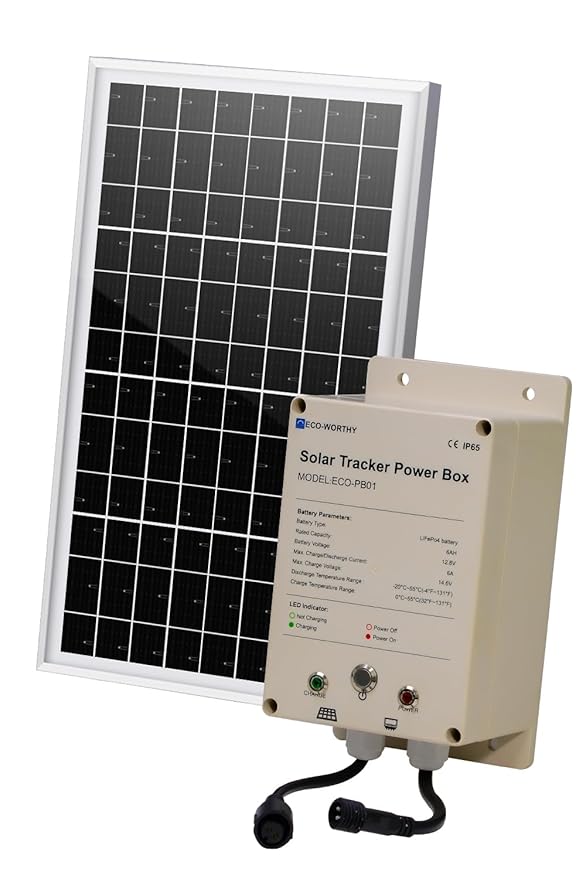
The ECO-WORTHY Power Box is a specialized solution that provides independent power to your tracking system. It includes a 10W solar panel and a 6Ah LiFePO4 battery housed in a waterproof IP65 box. This setup ensures that your solar tracker has its own dedicated energy source and does not drain your main house batteries.
This is a plug and play solution for garden or outdoor solar trackers. For a nomad, this means you can set up a portable ground array that tracks the sun completely on its own power. The LiFePO4 battery technology is a major plus, offering over 3000 cycles and a long service life, which is perfect for the rigors of travel.
Pros
- Independent power source prevents main battery drain.
- Uses high quality LiFePO4 battery for long life.
- Fully waterproof and ready for outdoor mounting.
Cons
- Only designed to power the tracker motors and controller.
- 10W panel needs clear sun to keep the internal battery full.
Smart Choices for Portable Sun Tracking
Selecting the right hardware for your mobile setup depends on how much you want to build yourself versus buying a ready to use solution.
Mechanical Strength vs. Portability
If you are mounting panels on the roof of a large RV, you need heavy duty actuators like the ECO-WORTHY 330lbs model. These are built to handle the vibrations of travel and the force of the wind. However, if you are a van lifer with a small portable ground array, a lighter DIY pan tilt motor might be more efficient and easier to store when you hit the road.
Automation vs. Security
Not all solar trackers move panels. Some, like the Trak-4, track the physical location of your solar assets. Nomads often leave portable panels outside while they go for a hike. In this scenario, a solar GPS tracker is just as important as a motor, as it ensures your expensive equipment doesn’t “walk away” from your campsite.
Power Management
Remember that motorized trackers consume electricity. To ensure you are actually gaining more power than you are spending, look for systems that use high efficiency controllers.
A dedicated power box with its own small panel is a smart way to isolate your tracking energy needs from your main living power.