

Forget the screen time. If you want your kids to actually grasp how renewable energy works, you need hands-on gear. These kits range from “plug-and-play” solar cars to full-on circuit building. They are perfect for knocking out a science fair project or just keeping their brains sharp on the weekend.
Just a heads-up: these aren’t indoor toys. You’ll need a bright, sunny day or a serious halogen bulb to get these motors humming.
Best Solar Experiment Boxes For Kids
| Kit Name | Best For | Material | Type | Quantity |
| 4-in-1 STEM Kit | Beginners | Plastic/Wood | Multi-build | 4 Projects |
| Solar Car Projects | Building Skills | Plastic | Mechanics | 1 Project |
| Wooden Solar 10-Pack | Classrooms | Plywood | Woodworking | 10 Projects |
| DIY RC Solar Car | Tech Lovers | Plastic/Metal | Remote Control | 1 Project |
| Playnovate Satellite | Space Nerds | Plastic | Space Model | 1 Project |
| Energy Experiment Set | Data Geeks | Multi | Circuitry | 1 Set |
| Micro Panel 5-Pack | DIY Creators | Silicon | Components | 5 Panels |
Choose The Best Solar Experiment Box For Kids For Hands-On Learning
Solar power isn’t just a buzzword; it’s a blast when you’re building your own gear. Whether your kid is into space exploration or racing cars, these kits provide the hardware to turn light into motion without a single AA battery in sight.
4-in-1 Solar & Electric Motor Kit
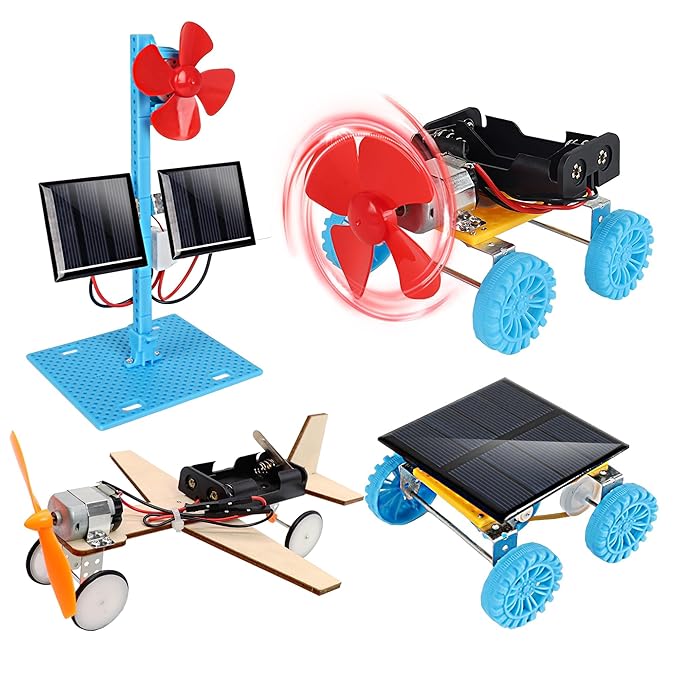
This is the ultimate starter pack for kids who get bored easily. It’s not just one toy; it’s a four-project marathon that covers both solar and battery power. It’s a solid way to teach them about “hybrid” tech while they build fans and cars from scratch.
Features a mix of wooden and plastic parts that are easy on the fingers. The kit includes a dedicated solar panel and a small motor, ensuring you have the “guts” needed for every experiment without hunting for extra parts.
Why It’s A Winner
- Dual Power: Works under the sun or with batteries for indoor play.
- Variety: Four different builds keep the “I’m bored” complaints at bay.
- Easy Entry: Perfect for beginners who haven’t touched a circuit before.
The Bummer
- Small Parts: Keep an eye on the tiny screws; they love to go missing.
Grab this if you want a “bang for your buck” gift that covers all the basics of electrical engineering. Skip it if your kid is already a pro builder.
Science Experiments & Solar Car Box
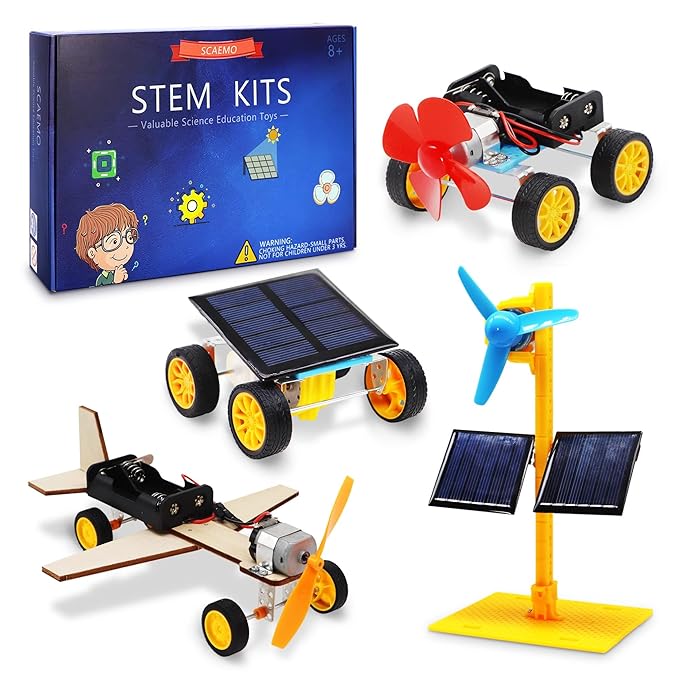
This kit is all about the “build.” It’s designed for the 8-12 crowd who want something that looks like a real piece of machinery once it’s done. It’s a great “brain-sharpener” for a rainy Saturday—well, a sunny Saturday, actually.
The kit focuses on mechanical transmission, showing kids how gears and axles work in tandem with the solar cell. It’s made of durable, non-toxic ABS plastic that can take a few bumps during “test drives.”
The Highs
- High Durability: The plastic parts are sturdier than the wooden alternatives.
- Clear Logic: Excellent for teaching gear ratios and mechanical advantage.
The Lows
- Sun Hungry: Needs very direct, intense sunlight to move at a decent clip.
Buy this for the kid who loves Legos but wants to add some real-world physics to their builds.
10-Pack Wooden Solar Car Kit Box
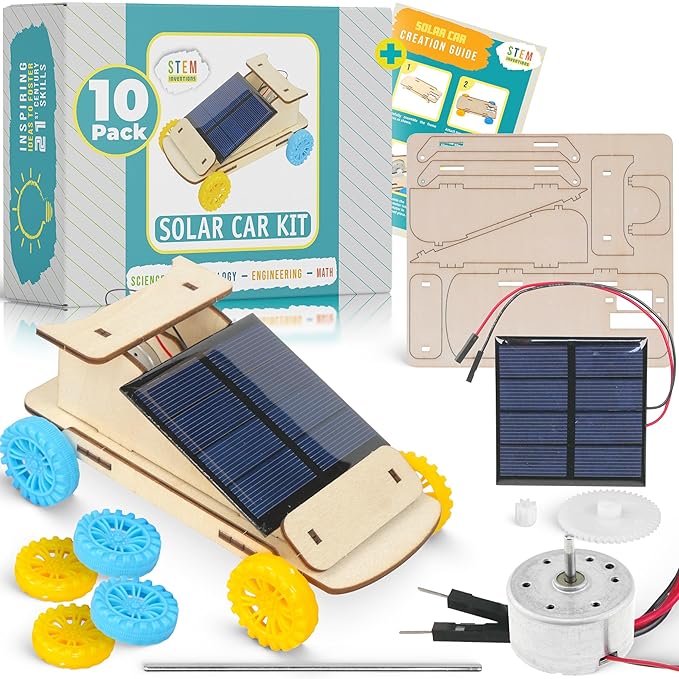
If you’re a teacher or a parent throwing a birthday bash, this is your play. You get ten individual wooden cars in one box. It’s the most cost-effective way to get a whole “fleet” of solar racers moving.
Each car is made of laser-cut plywood that snaps together fairly easily. Because they are wood, kids can customize them with paint or markers, making it a “craft-meets-science” afternoon.
The Perks
- Bulk Value: Unbeatable price-per-unit for classroom settings.
- Customizable: The raw wood is a blank canvas for artistic kids.
The Pitfalls
- Fragile: Plywood can snap if a kid gets too “Hulk-smash” during assembly.
This is a “no-brainer” for teachers. It turns a science lesson into a race day that students will actually remember.
DIY RC Solar Racing Car Kits
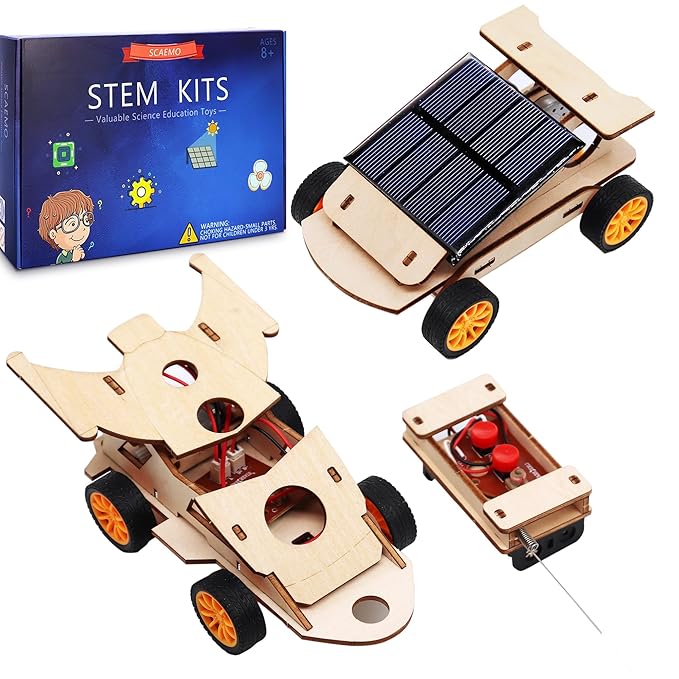
Most solar cars just drive in a straight line until they hit a wall. This one actually gives the “driver” control. It’s a dual-power RC car that can run off the sun or batteries, giving it a bit more “street cred” with older kids.
Includes a remote control and all the wiring needed to bridge the gap between solar energy and radio frequency. It’s a slightly more complex build, making it great for the 10-12 age range.
The Upside
- Interactive: Being able to steer makes it a “real” toy, not just a desk model.
- Complex Learning: Teaches remote signals alongside solar power.
The Downside
- Tricky Wiring: Might require a parent’s help to get the connections just right.
If your kid wants a “whip” they can actually drive around the driveway, this is the one to get.
Playnovate Solar Satellite Box
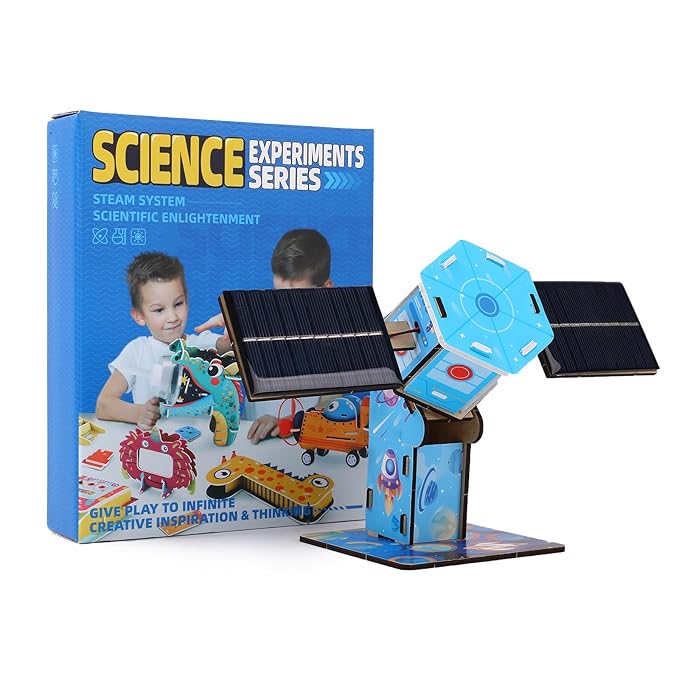
For the kid who spends their nights looking at the stars, this satellite kit is “out of this world.” It’s a working model that spins its solar sails when hit by light, mimicking how real satellites power themselves in orbit.
Includes a QR code for astronomy tutorials, adding a digital learning layer to the physical build. The motor is specifically geared for a slow, realistic rotation of the satellite arms.
Why It Rocks
- Thematic: Great for kids interested in NASA and space exploration.
- Educational: The included tutorials provide actual context for the toy.
The Drawback
- Stationary: It’s a desk model, so don’t expect it to zoom across the floor.
Get this for the “thinker” who prefers a cool display piece for their room over a racing car.
Renewable Energy DIY Science Kit for Kids
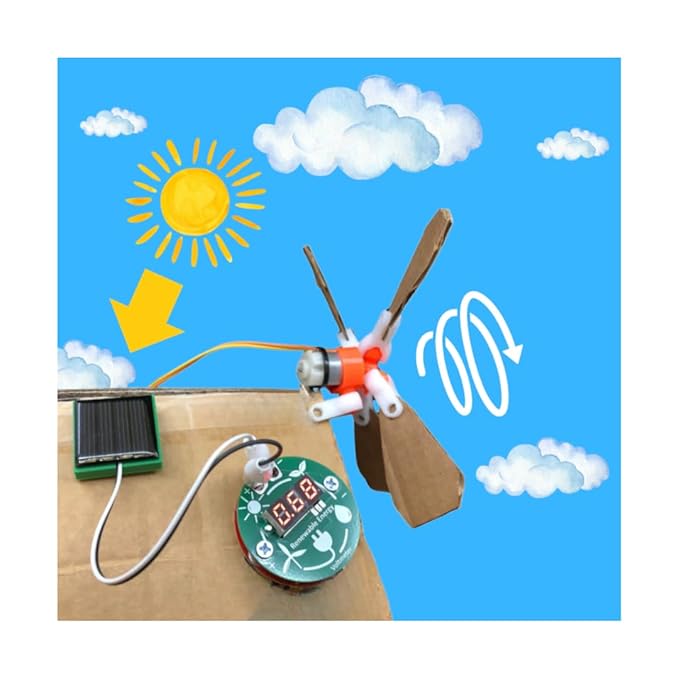
This isn’t just a toy; it’s a mini lab. It combines solar power with wind turbine technology. It even comes with a voltmeter so kids can actually measure the “juice” they are generating.
The kit features LED circuits and a real-time voltmeter. It’s designed to show the difference between sunny and windy conditions, making it a perfect “Science Fair” contender.
The Good Stuff
- Real Data: The voltmeter makes the science feel “real” rather than “magic.”
- Multi-Source: Teaches both wind and solar in one go.
The Bad Stuff
- Not a “Toy”: It’s more of a lab setup, so it lacks the “playability” of a car.
This is the “Gold Standard” for homeschoolers or kids who want to win the science fair trophy this year.
Micro Solar Panels 5-Pack for Junior Green Energy Engineer

Got a kid who is already tearing apart old electronics? These are the raw materials. It’s just the panels and wires—no instructions, no pre-cut wood, just pure power components.
These are 5V 200mA panels, which is enough “oomph” to power small motors, LEDs, or even charge a DIY battery bank. They come pre-wired to save you the hassle of soldering.
The Wins
- Pure Creativity: No limits on what you can build.
- Great Specs: 5V is a versatile power level for most hobby motors.
The Fails
- Zero Guidance: Not for beginners; you need to know what you’re doing with these.
Buy these for the “Junior Inventor” who already has a drawer full of motors and gears and just needs a way to power them.
How To Snag The Best Solar Gear
- Check the Voltage: If you’re buying extra motors, make sure they match the solar panel’s output (usually 1.5V to 5V).
- Look for Hybrid Options: Kits that also take batteries are “clutch” for when the clouds roll in.
- Size Matters: For classrooms, prioritize “bulk” wooden kits to keep the cost-per-kid low.
- Age Appropriateness: Stick to the 8+ rating; younger kids will just end up frustrated by the tiny wires.
Avoid any kit that doesn’t specify its power output. Many “cheapie” kits use panels that are basically just for show and won’t actually turn a motor unless you’re standing on the equator at noon. If the panel looks like a sticker, run.