

Bedrooms are where bad cooling decisions show up fast: noise, weak airflow, wasted power, or bulky units that don’t belong there. The goal here isn’t to admire specs or explore every option. It’s to eliminate the wrong choices quickly.
This guide filters aggressively so only realistic contenders remain. Some units look tempting but fail basic bedroom needs like quiet operation, stable cooling, or sensible power use. Others cool well but simply don’t fit the “solar mini” expectation. By the end, you’ll have a short list that makes sense for sleeping spaces—and you’ll know exactly which types to ignore without second-guessing.
Bedroom Cooling Reality Check Before Buying a Solar Mini AC
- If you expect full-room cooling without a window or exhaust, eliminate evaporative coolers now.
- If silence matters more than raw power, remove high-BTU portable units.
- If solar use is a must, rule out standard plug-only window ACs.
- If your bedroom is under 150 sq ft, skip oversized 10,000 BTU machines.
- If humidity is already high, cross off USB and water-based mini coolers.
Fast Elimination Map for Bedroom Solar Cooling
- Need true cooling, not mist → ignore evaporative and USB mini coolers
- Need solar compatibility → ignore window and wall-mounted AC units
- Light sleeper → ignore high-output portable compressors
- Small bedroom → ignore large-room ACs over 8,000 BTU
Best Solar Mini AC For Bedroom Options That Actually Make Sense
These are the units that survive the filters: realistic cooling expectations, manageable power draw, and bedroom-appropriate use cases.
Sunjoy Portable Solar Mini AC with Add-on Battery & Solar Panel
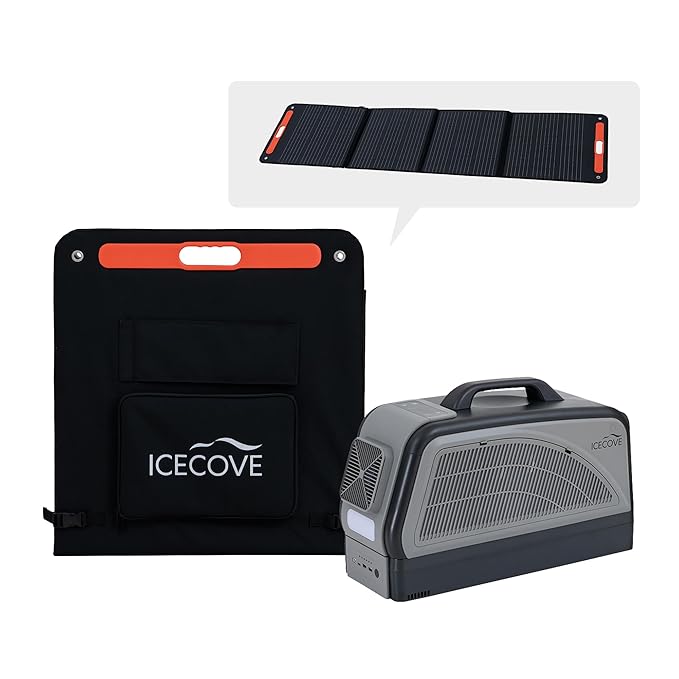
This compact portable AC is the only true match for a solar mini setup. It clears the biggest filter: actual compressor-based cooling with low power demand. Designed more like a camping or van-life AC, it works best in small bedrooms where modest but real cooling is enough. Battery and solar compatibility make it viable where outlets are limited or power savings matter.
Skip this if you want to cool an entire master bedroom or expect traditional window-AC performance.
Amazon Basics 5000-BTU Small Window Air Conditioner
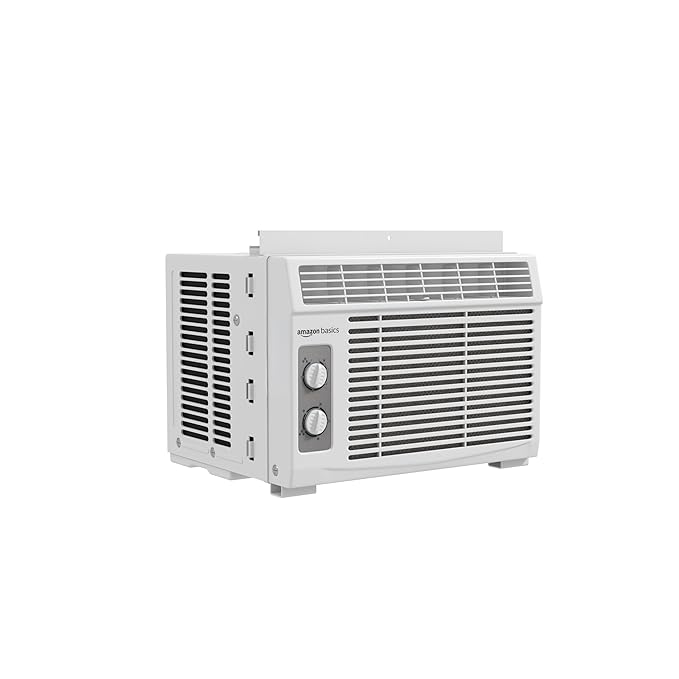
This is the baseline reality check. It passes the “effective cooling” filter easily and suits small bedrooms well. While not solar-powered, it’s what many buyers mean when they want reliable overnight cooling without fuss. It helps rule out weaker alternatives by showing what real bedroom cooling feels like.
Skip this if solar power or portability is non-negotiable.
MEPTY 10000 BTU Portable Air Conditioner
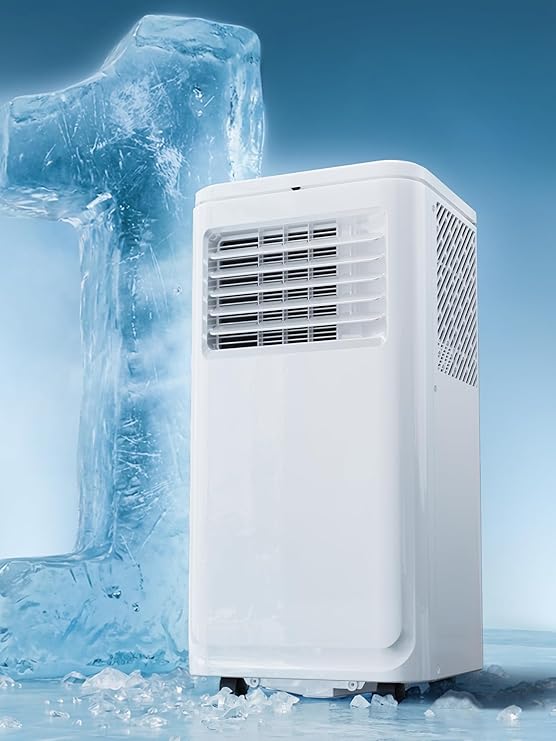
This unit survives only one filter: raw cooling strength. It’s here to show the upper boundary. For large bedrooms that trap heat, it works—but it breaks the “mini” and “solar-friendly” expectations. Noise and size make it a questionable fit for light sleepers.
Skip this if energy efficiency, compact size, or quiet nights are priorities.
JYew Evaporative Mini Room Air Conditioner

This evaporative cooler passes only the portability and low-power filters. It’s suitable for dry climates and personal bedside use, not room-wide cooling. It survives the list to prevent confusion: it cools people, not rooms.
Skip this if you expect temperature drop instead of airflow relief.
1700ml Evaporative Portable Air Cooler with Remote
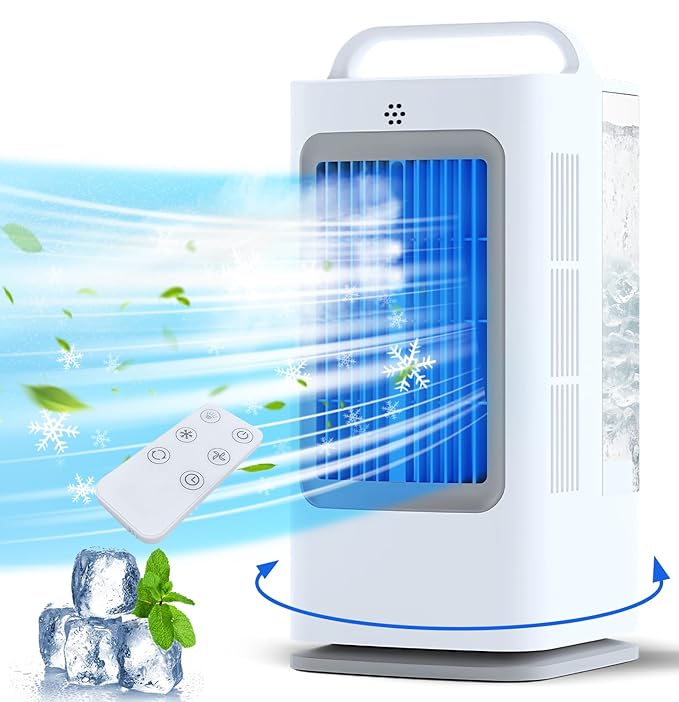
This option remains for the same reason as other evaporative models: ultra-low energy use. It’s best treated as a personal comfort device. Solar compatibility is realistic, but expectations must stay grounded.
Skip this if the humidity is high or if cooling the whole bedroom is the goal.
BLACK+DECKER Desktop Air Cooler
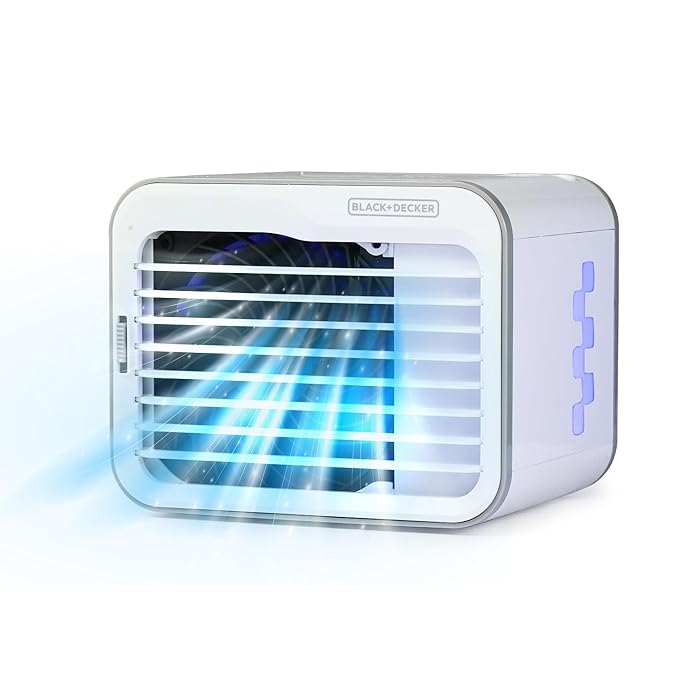
This is a desk or nightstand cooler, not a bedroom AC. It survives only the strict “personal space cooling” filter. It’s useful for targeted airflow and minimal power draw.
Skip this if you’re replacing an air conditioner.
3-in-1 USB Mini Personal Air Conditioner
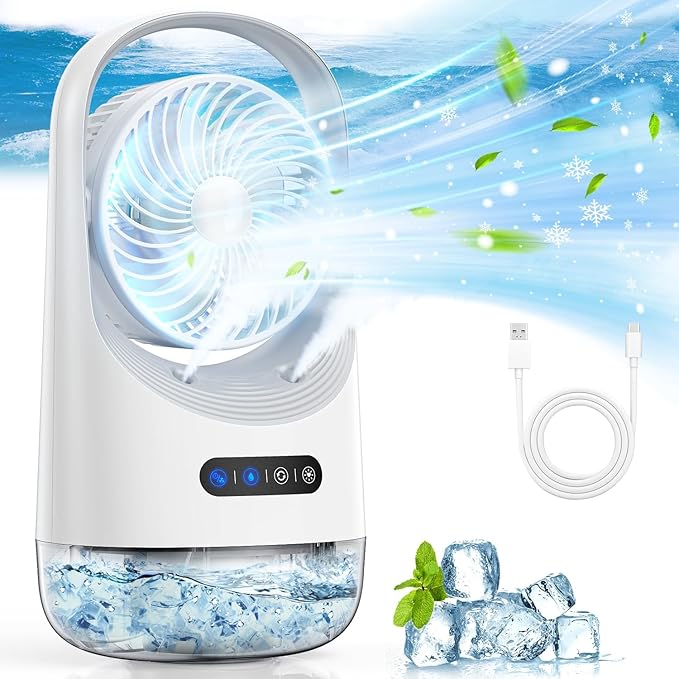
This unit sits at the very edge of qualification. It’s compact, low power, and bedroom-safe—but only for direct, close-range use. It’s here to prevent overestimating what USB mini coolers can do.
Skip this if your bed is more than a few feet away.
Still Torn Between Two Bedroom Cooling Options?
If more than one option fits, choose based on one factor only. Either prioritize real temperature reduction or prioritize power flexibility. Don’t try to balance everything. If sleep quality depends on cooler air, choose compressor-based cooling. If power access is limited, choose the smallest unit that meets expectations.
Cooling decisions improve fast when the list gets shorter. By removing mismatches early, the remaining options become easier to trust. The best choice isn’t the most powerful or the most advertised—it’s the one that fits your bedroom, your power limits, and your tolerance for noise. Fewer options mean fewer regrets, and better sleep usually follows.