

The Grid is Failing. Here’s Your Insurance Policy.
Let’s be real for a second. The US power grid isn’t what it used to be. Whether it’s winter storms in Texas, hurricanes in Florida, or just an aging infrastructure that trips every time the wind blows, relying solely on the utility company is a gamble I’m no longer willing to take.
You’re here because you want the best whole house standby generator to stop your basement from flooding and your food from spoiling. I have listed the top 5 models, mostly from the two giants, Generac and Honeywell.
A quick reality check before we start:
- Installation is not included: The price you see is for the metal box. You will need a plumber (for gas) and an electrician. Budget an extra $3k-$5k for this.
- Generac makes Honeywell: Spoiler alert—Generac manufactures Honeywell generators. The engines are often identical. The difference is usually in the warranty, the casing, or the bundled accessories.
Here is the quick breakdown of the units I looked at:


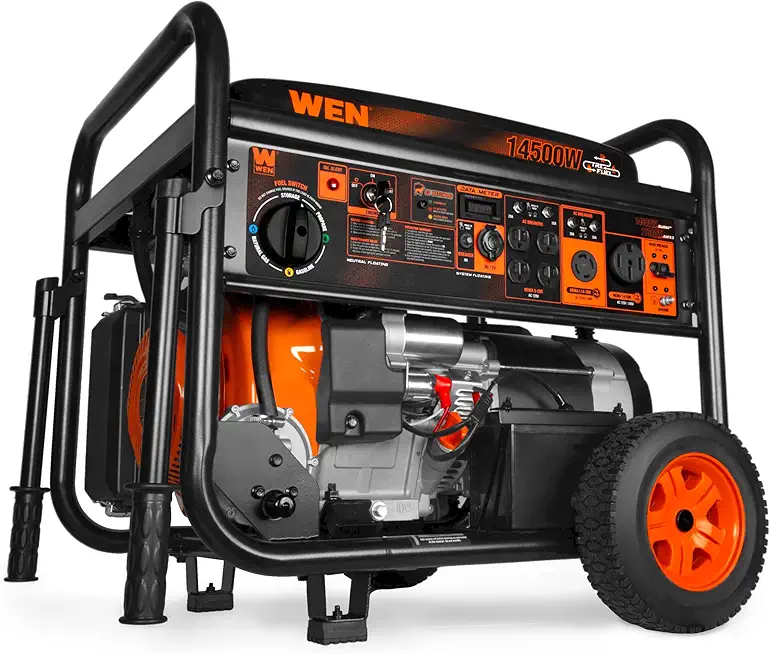

Best Whole House Standby Generators
| Generator Model | Power Output | Fuel Type | Transfer Switch | Best For |
| Generac Guardian 10kW | 10kW | NG / Propane | 100 Amp | Small homes, essentials |
| Honeywell 14kW | 14kW | NG / Propane | Automatic | Mid-size homes |
| Generac Guardian 22kW | 22kW | NG / Propane | 200 Amp | Full-home coverage |
| Honeywell 18kW | 18kW | NG / Propane | Automatic | Balance of power & price |
| Generac Guardian 26kW | 26kW | NG / Propane | 200 Amp | Large homes, multiple ACs |
1. Generac Guardian 10kW Standby Generator ( Best for Small Homes )
If your goal is keeping the basics alive: fridge, lights, internet, maybe one AC, this one makes sense.

In real life, it feels solid and predictable. When the power drops, it kicks on fast and just does its job. This is not a whole-mansion solution, but it wasn’t built to be.
What I like
- Automatic transfer switch included, so no scrambling during outages
- Dual fuel gives flexibility if gas prices or availability change
Just a heads up
- WiFi monitoring can be flaky. Multiple owners mention reconnecting it manually.
- Installation is not DIY unless you’re licensed. Budget for a pro.
Who should buy this Generac?
Smaller homes or anyone who just wants essentials covered without overspending.
Pros:
- Cost: It’s the cheapest entry point into automatic standby power.
- Compact: Takes up less garden space.
Cons:
- The “WiFi” Gimmick: As one user noted, “WiFi connection has dropped 8 times.” Generac’s Mobile Link is notorious for having a weak antenna. If your router is located at the front of the house and this unit is positioned at the back, you may struggle to get a signal.
- Limited Power: If you turn on the microwave while the AC is running, you might trip a breaker.
2. Honeywell 14kW Home Standby Generator (Best Budget Friendly Upgrade)
Automatic Backup Power for Whole Home

Honeywell brands this as “Weather-Resistant,” and the aluminum enclosure does feel incredibly sturdy. In reality, under the hood, this is very similar to a Generac, but often sold at a slightly better price point or with different distribution perks. The 14kW is that awkward middle child, better than the 10kW, but still might struggle with a 5-ton AC unit without a “soft start” kit.
How it compares?
It steps up the power from the 10kW model, giving you a bit more breathing room for larger appliances.
Pros:
- The Enclosure: The RhinoCoat finish is legit. If you live near the coast (salt air), this matters.
- User Interface: Users love the LCD panel. It’s simple, multilingual, and tells you exactly what’s wrong without needing a code reader.
Cons:
- “New Brand” Stigma: One user mentioned, “Good, but new brand in the market.” It’s not actually new (it’s Generac-powered), but finding a technician who explicitly advertises “Honeywell Repair” can sometimes be harder than finding a “Generac” guy, even if the parts are the same.
Who should buy this:
Homeowners who want more power than entry-level units without paying premium-brand prices.
3. Generac Guardian 22kW: “Best All Around Whole House Generator”
This is where “whole house” actually means whole house.

If you drive through any suburb in the Northeast, this is the beige box you see in every driveway. The 22kW is the industry standard for a reason. It comes with a 200 Amp Transfer Switch, which means you don’t have to pick and choose circuits. It powers your entire electrical panel. When the grid goes down, your house doesn’t even blink.
What I Like:
This is a massive jump from the 14kW. This is true “set it and forget it” power.
Pros:
- True Whole House: Runs the AC, the oven, and the kids’ gaming PCs without breaking a sweat.
- Resale Value: Having a 22kW Generac plumbed in adds legitimate value to your home.
Cons:
- Delivery Nightmares: Weighing over 500 lbs, delivery drivers hate these things. Feedback is full of “Great generator, but bad delivery” stories. Inspect the box for dents before the driver leaves.
- Fuel Hungry: At full load, this thing guzzles propane or natural gas. It’s not an efficiency machine; it’s a brute force machine.
Who should buy this:
Families who don’t want to think about what’s running during an outage.
4. Honeywell 18kW Standby Generator (Best Middle Ground Option)
This one sits nicely between price and power.
This Honeywell unit sits right in the “Goldilocks” zone for medium-sized homes (around 2,500 sq ft). What makes this specific listing interesting is the composite mounting pad. Usually, you have to pour a concrete slab or buy a separate pre-cast concrete pad. This one includes a composite pad that can sit directly on leveled soil (check your local codes first, though).
Extra Advantages: Less power than the 22kW, but often easier to squeeze into tight property lines due to the installation flexibility.
What I like
- No concrete pad needed — installs directly on soil
- Dual fuel flexibility
Just a heads up
- Not as battle-tested as Generac’s long-running models.
- The support network isn’t as deep yet.
Pros:
- Dual Fuel Flexibility: It runs on Natural Gas or Propane right out of the box with an easy switch.
- Installation Pad: Saves you about $150-$200 and a trip to the hardware store for concrete mix.
Cons:
- It’s Still Loud: Don’t let marketing fool you. Air-cooled generators running at 3600 RPM are loud. Your neighbors will hear this running.
5. Generac Guardian 26kW ( The Overkill King of Standby Generators )
Best Money-No-Object Pick

If you’ve got a large home, multiple AC units, electric appliances everywhere, and zero tolerance for inconvenience: this is it. When it fires up, it feels like the grid never went down.
What I like
- Runs entire homes easily, even with heavy loads
- Fast startup: around 10 seconds after the outage
Just a heads up
- Delivery logistics can be frustrating.
- Overkill for smaller homes.
Pros:
- Start-Up Speed: Users report it fires up in “10 seconds.”
- AC Capability: One user noted it runs “entire house and two AC units.” That is the primary selling point here.
Cons:
- Delivery (Again): “The delivery company SUCKED!!!” This is a recurring theme. You are ordering an appliance that weighs as much as a motorcycle. Expect logistical headaches.
- Overkill for Most: If you have a normal 2,000 sq ft house, this is a waste of money. You’re paying for capacity you will likely never use.
Who should buy this Generac 26kW Standby Generator?
Large households, home offices, or anyone who refuses to compromise during outages.
Which One Should You Buy?
Buying a generator is painful because it’s expensive, but being without power is worse. Here is my honest decision matrix:
1. The “zero headaches” Choice:
Get the Generac Guardian 22kW. It is the standard for a reason. It comes with the 200 Amp switch (crucial for true whole-house backup) and has the most support network in the US. If you ever sell your house, this is the one buyers recognize.
2. The “Budget Conscious” Choice:
If you have a smaller home and gas heating, save the money and get the Generac 10kW. You don’t need to power a mansion; you just need to keep the pipes from freezing and the food cold.
3. The “Power User” Choice:
If you have a large home with dual AC units and you refuse to compromise on comfort, the Generac 26kW is the only air-cooled unit that can keep up with you.
Finally,
The best whole house standby generator isn’t about brand loyalty. It’s about matching power output to how you actually live. Moreover, you know that: Overspend and you waste money. Underspend and you’ll regret it during the next outage.