

The “Generator” Myth: What You’re Actually Buying?
Let’s get one thing straight before you drop a dime: these aren’t gas-guzzling, loud engines. When we talk about the best small portable generator in this class, we are talking about silent, lithium-ion battery banks with a fancy AC outlet attached.
Why does this matter? Because marketing will tell you these can “power your home.” They can’t.
If you try to plug a space heater, a full-sized fridge, or a hair dryer into any of the units on this list, they will shut down instantly. These are designed for micropower—keeping your laptop running during a Zoom call in the woods, charging your drone batteries, or running a CPAP machine for a single night.
I’ve analyzed the specs and real-world performance of the top 7 contenders on Amazon to see which ones are actual life-savers and which are just expensive paperweights.
Compare The 7 Best Small Portable Generators
| Generator Brand | Capacity (Wh) | AC Output (W) | Best For… |
| GRECELL 300W | 230Wh | 300W | Overall Performance |
| Bailibatt 300W | 257Wh | 300W | Laptops & Work |
| Outdoor Gen 192Wh | 192Wh | 100W | Longevity (LiFePO4) |
| HOWEASY 120W | 88Wh | 120W | Ultra-Light Packing |
| Takki 88.8Wh | 88Wh | 80W | Budget Basics |
| MARBERO 88Wh | 88Wh | 80W | Emergency Lighting |
| powkey 88Wh | 88Wh | 65W | Phone Charging Only |
1. GRECELL 300W Portable Power Station [The “Do-It-All” Choice]
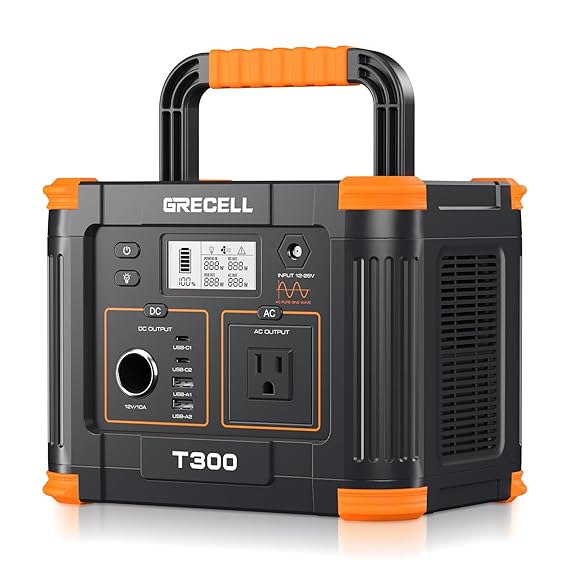
If I had to grab one unit from this list to keep in my car trunk for a “just in case” scenario, it would be this GRECELL. Unlike the tiny 88Wh units further down this list, this actually has enough juice (230Wh) to feel like a legitimate power station rather than just a glorified phone charger.
It features a 60W USB-C PD port, which is a massive win. This means you can charge your MacBook or modern Dell laptop directly via USB-C without needing the bulky AC brick. That saves energy conversion loss, giving you more runtime.
Pros:
- High Output: 300W AC output is strong enough to run a small fan or a TV, which most others here can’t touch.
- USB-C PD: The 60W two-way charging is a game-changer for modern tech users.
Cons:
- The Fan Noise: When you push it near 300W, the cooling fan kicks in and it’s not exactly whisper-quiet.
- Capacity Limits: Don’t let the size fool you; 230Wh will barely run a CPAP for one night if you have the humidifier turned on.
2. HOWEASY 120W Portable Power Station [The Backpacker’s Friend]
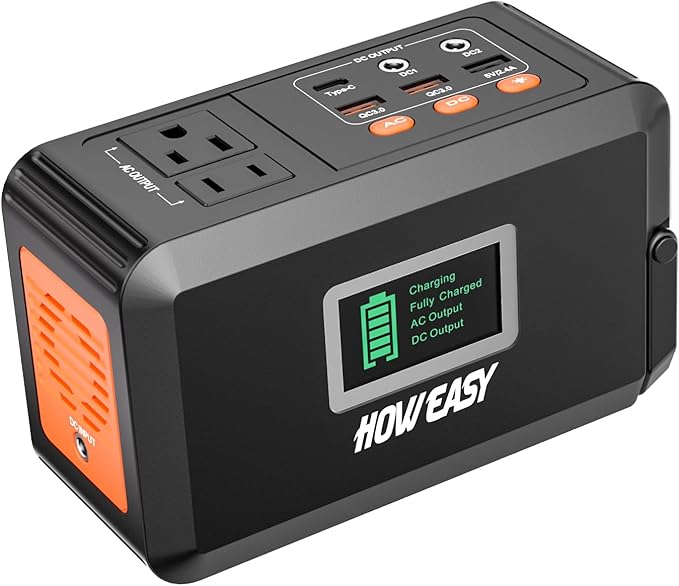
Compared to the GRECELL above, the HOWEASY is tiny. It’s strictly for the “light and fast” crowd. If you are hiking into a campsite and just need to charge a camera battery and a phone, this is your guy.
It looks rugged, but it feels a bit plasticky in hand. The main selling point here is the form factor. It’s small enough to toss in a backpack without regretting it three miles down the trail. However, the 120W AC limit is strict. It will trip if you try to power anything substantial.
Pros:
- Portability: Weighs almost nothing compared to the 300W units.
- Solar Ready: Decent input for small solar panels (though you have to buy the panel separately).
Cons:
- Low Capacity: 88Wh is small. You’ll get maybe 1.5 charges on a decent laptop before this thing dies.
- Display: The battery indicator is a bit vague compared to digital percentage readouts.
3. Takki 88.8Wh Power Station [The Bare Minimum]
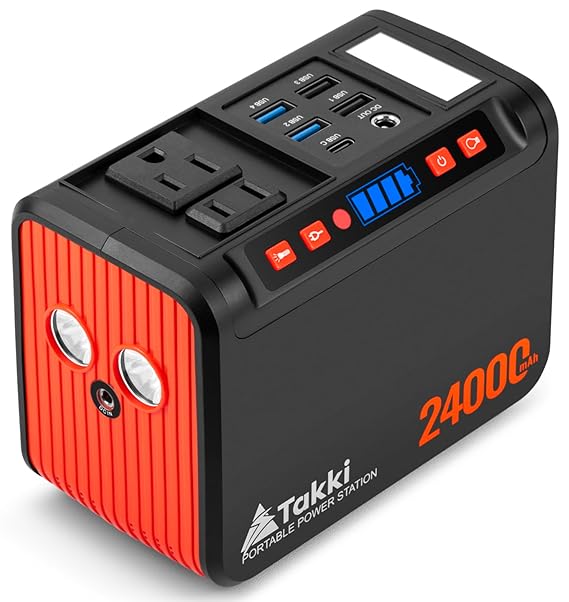
The Takki is very similar to the HOWEASY but with a slightly different port layout and lower AC limit (80W). Honestly, this device struggles to justify its existence if you have high-demand gear.
It’s best viewed as a “communal power bank” for a family camping trip where everyone just needs to keep their iPhones at 100%. Don’t expect to run any appliances here. It often struggles with some laptop chargers that draw a high surge when first plugged in.
Pros:
- Simplicity: Very easy to use; literally plug and play.
- Size: Extremely compact, fits in a glovebox easily.
Cons:
- Weak AC Inverter: Rated at only 80W. Many gaming laptops draw more than this just while idling.
- Charging Speed: Recharging the unit itself takes seemingly forever with the included wall adapter.
4. powkey 88Wh Portable Power Station [The Budget Pick]
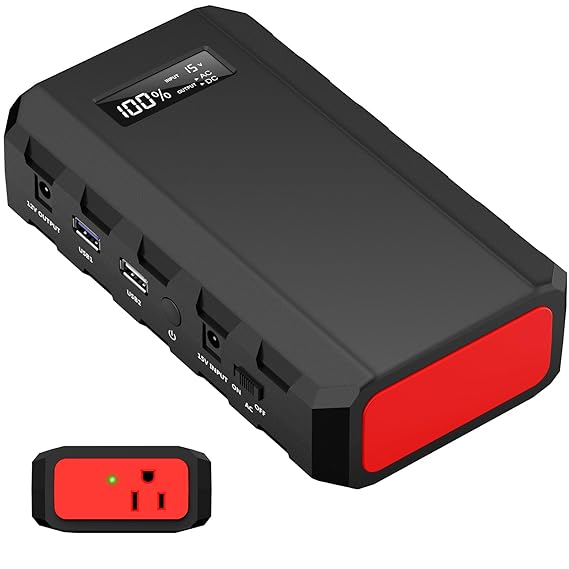
This unit is nearly identical in specs to the Takki, but with a design that looks a bit more like a traditional tool battery. The AC outlet is rated for 65W.
I have to be critical here: 65W is very low. Most fast-charging bricks for phones nowadays pull 20-40W. If you plug in a laptop charger and a phone at the same time, you might trip the overload protection. Buy this only if price is your absolute only metric.
Pros:
- Price: Usually one of the cheapest options on the market.
- DC Output: Good 12V output if you have specific DC appliances (like air pumps).
Cons:
- AC Limit: 65W is restrictive. It won’t power most modern electronics beyond basic charging.
- Modified Sine Wave: Likely not a pure sine wave inverter, which can cause buzzing in audio equipment or sensitive fans.
5. Portable Power Station 192Wh (LiFePO4) [The Long-Life Sleeper]
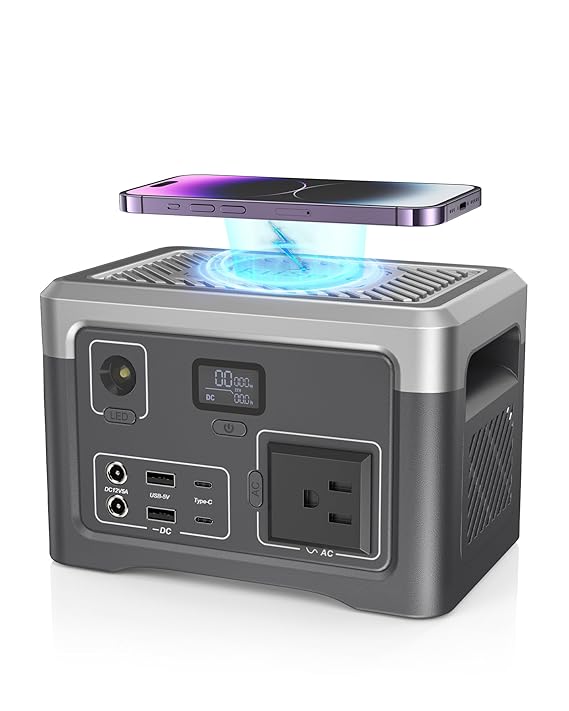
This generic-branded unit is actually a hidden gem for one specific reason: LiFePO4 battery chemistry.
Most other cheap power stations use standard Lithium-Ion, which lasts for about 500-800 cycles. LiFePO4 batteries generally last 2000+ cycles. If you plan to use your generator every single weekend, this is the one to get. The 192Wh capacity sits nicely between the tiny 88Wh toys and the bulkier 300W units.
Pros:
- Durability: The battery chemistry is far superior for long-term ownership.
- Safety: LiFePO4 is much more stable and less prone to overheating than standard lithium.
Cons:
- Slow Charging: Despite the advanced battery, the input charging speed isn’t blazing fast.
- AC Limit: Stuck at 100W, so again, no blenders or heaters.
6. Bailibatt 300W Small Portable Generator [The Modern Contender]
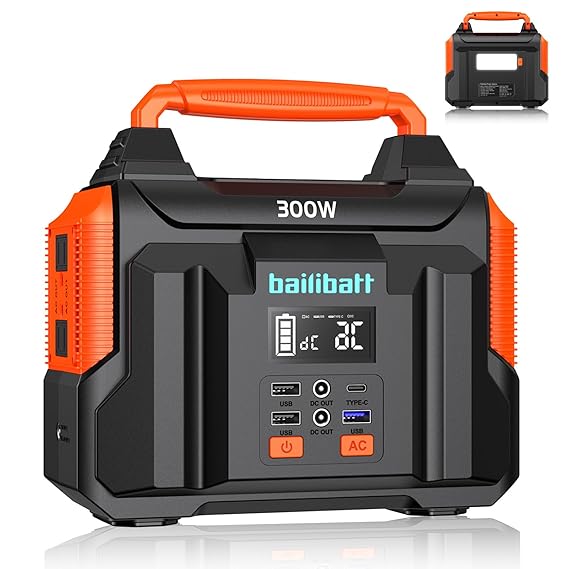
The Bailibatt is the direct competitor to the GRECELL. It actually edges it out slightly in capacity (257Wh vs 230Wh). In real-world terms, that’s maybe an extra 20 minutes of runtime on a laptop, but every bit counts when you’re off-grid.
It feels sturdy and has a decent handle. Like the GRECELL, it offers a 300W output, meaning it can handle small CPAP machines (DC converter recommended) or running a small LED TV during a blackout.
Pros:
- Capacity per Dollar: superb balance of storage space (257Wh) for the price.
- Port Variety: plenty of USB ports for the whole family.
Cons:
- Brand Obscurity: Customer support might be harder to reach compared to established brands like Jackery or Bluetti.
- Bulk: It’s a boxy unit that takes up decent footwell space in a car.
7. MARBERO 88Wh Camping Generator [The Old School]

The MARBERO has been around for a while, and it shows. It has a very specific aesthetic—black and red, rugged looking. It’s a reliable 88Wh unit that many people use specifically for its flashlight, which is surprisingly bright and covers a wide angle.
However, against modern competition, it feels dated. It lacks high-speed USB-C PD input/output, which makes charging modern devices slower than necessary.
Pros:
- Flashlight: Arguably the best integrated light of the bunch; good for emergencies.
- Proven: It has thousands of reviews because it’s been sold for years; it’s a known quantity.
Cons:
- Outdated Tech: No fast charging standards.
- Slow Recharge: Takes hours to top itself back up via wall outlet.
Verdict: Which “Generator” Should You Buy?
I won’t beat around the bush. Most of these units are very similar, so your choice comes down to Capacity vs. Size.
- If you need to work remotely or run a CPAP:
Buy the GRECELL 300W or the Bailibatt 300W. The 88Wh units simply do not have the lung capacity to keep a laptop running for an 8-hour workday or a CPAP running through the night. The GRECELL’s 60W USB-C PD port makes it the winner for modern tech users. - If you want a battery that lasts for 5+ years:
Buy the Outdoor Generator 192Wh. The LiFePO4 battery inside is superior technology that will outlive the others on this list by a wide margin. - If you just want to charge phones while camping:
Save your money and grab the HOWEASY 120W. It’s light, cheap, and does exactly what a power bank should do, with the bonus of an AC outlet for low-power camera chargers.
My Final Tip: Always check the “Rated Power” of the device you want to plug in. If your device says “Input: 200W” and you buy an 88Wh generator with an 80W limit, it will not work. Do the math before you buy!