

If you’re trying to get WiFi to a remote barn, a construction trailer, or a “middle-of-nowhere” security camera, you need a rig that doesn’t cry when it rains.
These gadgets combine a cellular modem, a beefy battery, and a solar panel into one unit. No cables, no headaches. Just pop in a SIM card, mount it to a pole, and you’ve got high-speed internet powered by the big heat lamp in the sky.
Top Solar 4G WiFi Extender Router For Outdoor Specs
| Router | Battery | Solar Power | WiFi Tech | Best For |
| 15W 4G LTE Modem | 26000mAh | 15W | 2.4GHz | Maximum Runtime |
| Solar Outdoor 4G | 20000mAh | 15W | 2.4GHz | Security Camera Hubs |
| WiFi6 Hotspot | 26000mAh | 15W | WiFi 6 | Modern Tech/VSIM |
| Fdit 300Mbps | Internal | 12W | 2.4GHz | Budget Utility |
| GOWENIC WiFi 6 | 18000mAh | 12W | WiFi 6 | Long Range (150M) |
| APP Control Kit | 20000mAh | 15W | 2.4GHz | Remote Management |
Best Solar 4G WiFi Extender Router For Outdoor Use
Setting up shop in the sticks usually means zero bars and zero outlets. These routers act as a bridge between the cellular tower and your devices, using high-gain antennas to grab a signal where your phone might fail. It’s the ultimate set-it-and-forget-it solution for off-grid productivity.
15W Solar 26000mAh Powerhouse

This “tank” of a router is built for folks who can’t afford a blackout. With a massive 26000mAh juice box, it stays humming even when the clouds roll in for a few days. The 15W panel is snappy at recharging, making it a reliable workhorse for remote ranch monitoring.
Its IP66 rating means it shrugs off heavy downpours, and the 50-meter range is solid for a standard backyard or small lot. It supports global 4G bands, so it’s ready to rock right out of the box.
Why It Rocks & What Bites
Pros:
- Massive battery capacity for 24/7 uptime.
- High-efficiency 15W solar panel.
- Rugged waterproof build.
Cons:
- Heavier than other units due to battery size.
- Limited to 2.4GHz frequency.
Grab this if you live in a place with unpredictable weather and need your connection to stay live no matter what. Skip it if you’re mounting it on a flimsy plastic pole.
Solar Outdoor Camera Hub

Specifically tuned for the security-conscious, this rig is designed to handle up to 8 cameras simultaneously. It’s the “brain” for your outdoor surveillance setup, ensuring your feeds don’t drop when the sun goes down.
It features a 20000mAh battery which is the “sweet spot” for size and performance. The 15W panel keeps things topped off efficiently even in partial sun.
Highs and Lows
Pros:
- Optimized for multiple camera streams.
- Easy SIM card installation.
- Compact mounting footprint.
Cons:
- IP65 rating is slightly lower than IP66.
- 2.4GHz only (no 5G WiFi support).
Perfect for a DIY security setup on a construction site or farm. If you just need a personal hotspot for a laptop, there are faster options.
High-Speed WiFi 6 Solar Hotspot
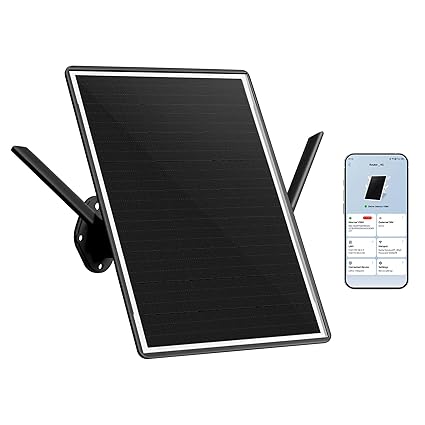
This is the tech-forward choice. It features WiFi 6 technology, which manages data better and reduces lag for multiple devices. The inclusion of VSIM (Virtual SIM) support is a total game-changer, allowing you to switch carriers without swapping physical cards.
The LTE Cat.1 modem is built for stability, making it ideal for IoT devices that need a steady, “always-on” handshake with the cloud.
The Good and The Bad
Pros:
- WiFi 6 tech for better device management.
- VSIM support adds serious flexibility.
- Large 26000mAh battery.
Cons:
- LTE Cat.1 is stable but not the fastest for 4K streaming.
- Setup menu can be a bit tech-heavy.
Buy this if you want the most modern features and hate fiddling with tiny physical SIM cards. It’s the “smartest” tool in the shed.
Fdit 300Mbps Budget Extender
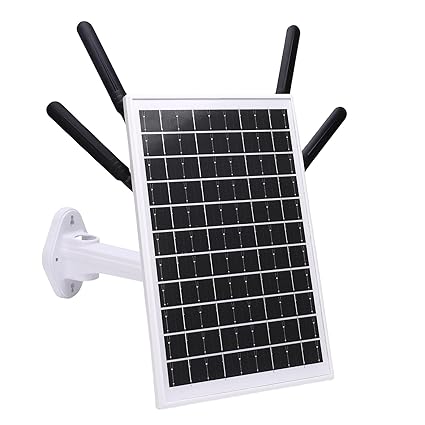
If you need a “beater” router that just works without the bells and whistles, this Fdit unit is your go-to. It offers 300Mbps speeds which is plenty for checking emails or checking on the cattle from your phone.
The black antennae design is low-profile and doesn’t stand out as much as the white units, which is a plus for theft prevention. The 12W panel is a bit smaller but keeps the unit slim.
Wins and Fails
Pros:
- Sleek, low-profile black design.
- Respectable 300Mbps wireless speed.
- Solid IP66 weatherproofing.
Cons:
- 12W solar panel takes longer to charge.
- No VSIM support.
A great value pick for a construction site where you need basic internet without spending a fortune. It’s simple, effective, and stays out of the way.
GOWENIC 150M Long Range Solar 4G WiFi Extender Router

GOWENIC claims a massive 150-meter range on this unit, which is massive for an all-in-one solar solution. It uses WiFi 6 to ensure that even at a distance, your connection doesn’t turn into a crawl.
The 18000mAh battery is slightly smaller than others, but the efficiency of the WiFi 6 chipset helps balance out the power consumption.
Perks and Quirk
Pros:
- Exceptional 150M broadcast range.
- WiFi 6 support for modern devices.
- Very lightweight for its size.
Cons:
- Smallest battery in this lineup.
- 12W solar panel might struggle in very cloudy regions.
If your “back 40” is actually 40 acres, you’ll want this for the extra reach. Skip it if you’re in a rainy state like Washington where you need a bigger battery.
Smart APP Control Station Router
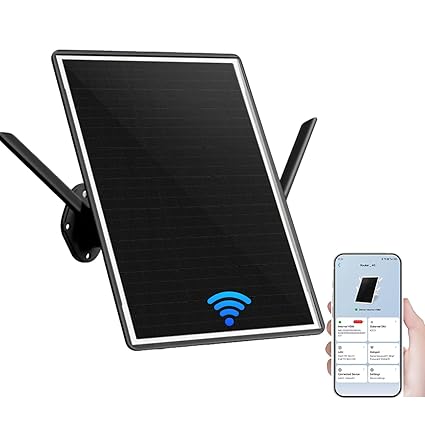
This unit is all about control. It integrates with an app so you can monitor your signal and battery levels from your phone. It’s a “smart” router that supports both physical SIMs and VSIM technology, giving you plenty of data options.
The signal booster capability is excellent, making it a solid choice for areas where the cellular signal is “one bar” at best.
Pros and Cons
Pros:
- Convenient App control and monitoring.
- Dual SIM/VSIM flexibility.
- Integrated signal boosting tech.
Cons:
- App setup can be finicky on some Android versions.
- 15W panel is large and catches the wind.
Buy this if you’re a control freak who wants to see exactly how much juice your solar panel is generating from your couch. It’s a high-visibility, high-control machine.
Pro Tips For Your Solar 4G WiFi Extender Router Setup
- Angle Matters: Point your panel south at a 30-45 degree angle to catch the most rays; flat mounting is a recipe for a dead battery.
- Carrier Check: Before buying, check which carrier (Verizon, AT&T, T-Mobile) actually has a tower near your site; these routers are only as good as the signal they grab.
- Data Caps: Most “Unlimited” SIM cards throttle after a certain point; look for “IoT” or “Data Only” plans for the best experience.
Avoid This Common Mistake Before Choosing a 4G WiFi Extender
Don’t mount your router inside a metal building or under a thick tree canopy. Even with “solar” in the name, the WiFi signal and the LTE antennas need a clear line of sight to the sky and the devices you’re trying to connect.
Putting it under a porch to “protect” it from rain is unnecessary. They are already waterproof, and it will kill your speeds.