

Choosing an electric fence charger becomes more complicated when fencing is installed far from grid power. Remote pastures, temporary grazing areas, and wildlife-heavy land all place limits on charging options, maintenance access, and reliability.
A weak charger leads to fence failure, while an oversized one can waste money without solving real-world issues like inconsistent sunlight or battery drain. Solar-powered fence chargers promise independence, but their performance varies widely depending on battery capacity, joule output, and efficiency during cloudy periods.
This guide focuses on finding the best solar electric fence charger for situations where dependable operation matters more than extra features, and where the fence must work daily with minimal attention.
Best Solar Electric Fence Charger Comparison for Remote Use
| Charger | Max Fence Range | Output Power | Battery Support | Best For |
| Zareba ESP5M-Z Solar Powered Electric Fence Charger | 5 miles | Low impedance | Built-in | Small remote enclosures |
| Solar-Powered Electric Fence Charger with Alarm | Up to 20 miles | 1.2 joules | 12000mAh | Medium pastures with predators |
| 10 Miles Solar Electric Fence Charger with Day/Night Mode | 10 miles | 0.11 joules | Rechargeable | Budget off-grid setups |
| 30-Mile Solar Electric Fence Charger for Livestock Safety | 30 miles | 0.3–1.5 joules | 12000mAh | Large properties |
| Upgrade 5Miles Solar Electric Fence Charger with Alarm | 5 miles | 0.11 joules | Extended reserve | Small livestock areas |
| 30 Miles Solar Electric Fence Charger, 1 Joule | 30 miles | 1 joule | External solar | High-pressure predator zones |
Zareba ESP5M-Z Solar Powered Electric Fence Charger
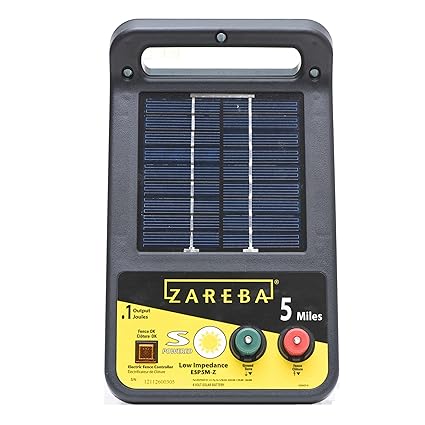
This charger is designed for simple, low-maintenance fencing in remote locations where consistency matters more than power. Its low-impedance design helps maintain voltage even with some vegetation contact, which is common in unattended areas. The five-mile range limits it to smaller enclosures, but it performs reliably within that boundary. Battery capacity is modest, so extended cloudy periods can reduce effectiveness.
This option works best for small livestock pens or garden protection where access is infrequent but expectations are realistic.
Solar-Powered Electric Fence Charger with Alarm, 1.2 Joule Output
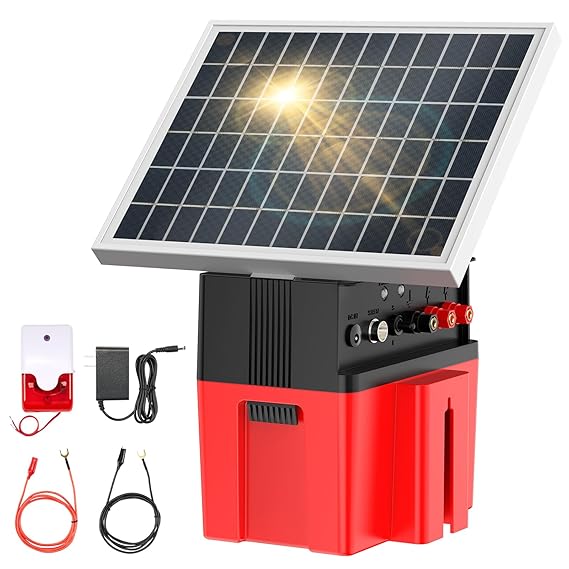
With higher joule output and a large internal battery, this charger handles the unpredictability of remote fencing better than smaller units. It maintains strong pulse energy across longer distances and offers an alarm that helps diagnose fence issues when visits are spread out.
The tradeoff is size and cost, but the added reliability makes sense for mixed livestock and predator control. This is a solid fit for medium-sized pastures where animals need a firm boundary day and night.
10 Miles Solar Electric Fence Charger with Day/Night Mode
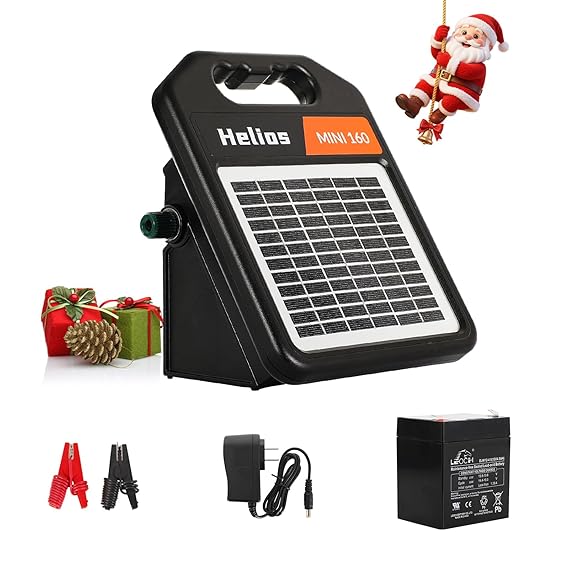
This unit prioritizes efficiency over power, using a low joule output paired with day/night energy management. It stretches battery life during periods of low sunlight, which is useful in shaded or wooded areas.
However, the lower shock strength limits effectiveness against large animals or determined predators. It suits light-duty fencing, poultry areas, or temporary grazing where portability and low power draw are more important than deterrence strength.
30-Mile Solar Electric Fence Charger for Livestock Safety
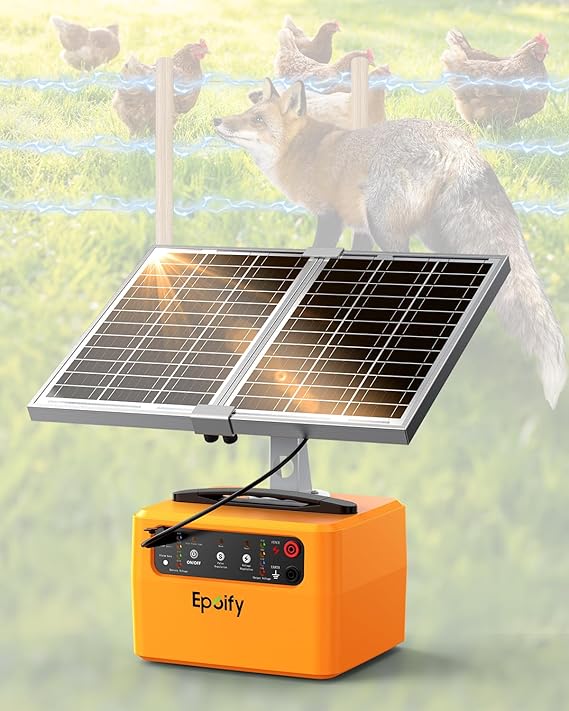
This adjustable-output charger is built for large, remote properties where fence length and terrain vary. The ability to scale power helps conserve battery while still delivering strong pulses when needed. Its larger battery supports longer periods without sunlight, but installation takes more planning due to size and settings.
This model fits landowners managing wide grazing areas who need flexibility without constant adjustment.
Upgrade 5Miles Solar Electric Fence Charger with Short Circuit Alarm
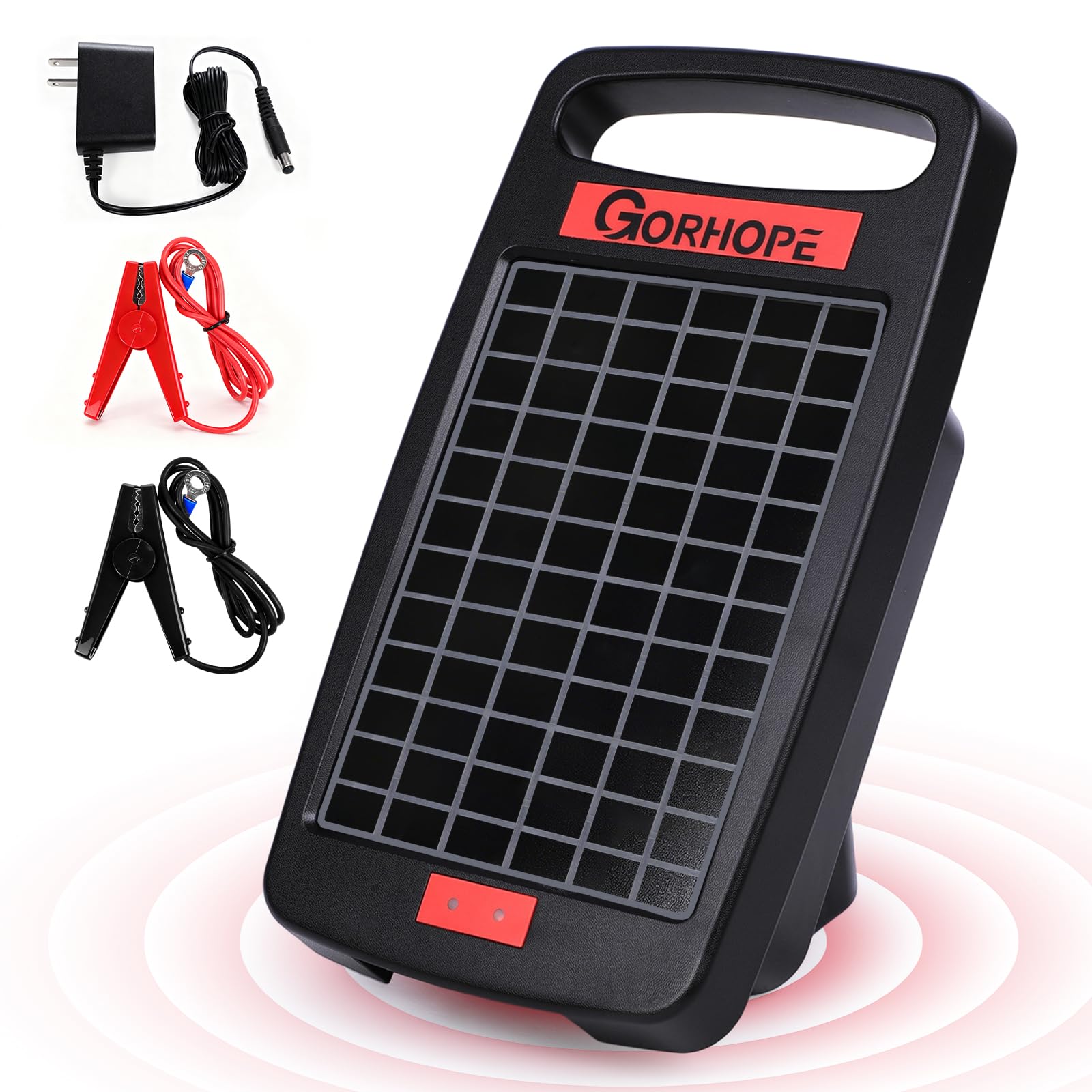
Designed for smaller zones, this charger focuses on battery longevity and fault detection. The short circuit alarm helps identify problems before animals escape, which is valuable when fence checks are infrequent. Power output is limited, making it less effective for large livestock. It’s best for small-scale fencing where reliability and monitoring matter more than strength.
30 Miles Solar Electric Fence Charger, 1 Joule Portable Solar Fence Charger
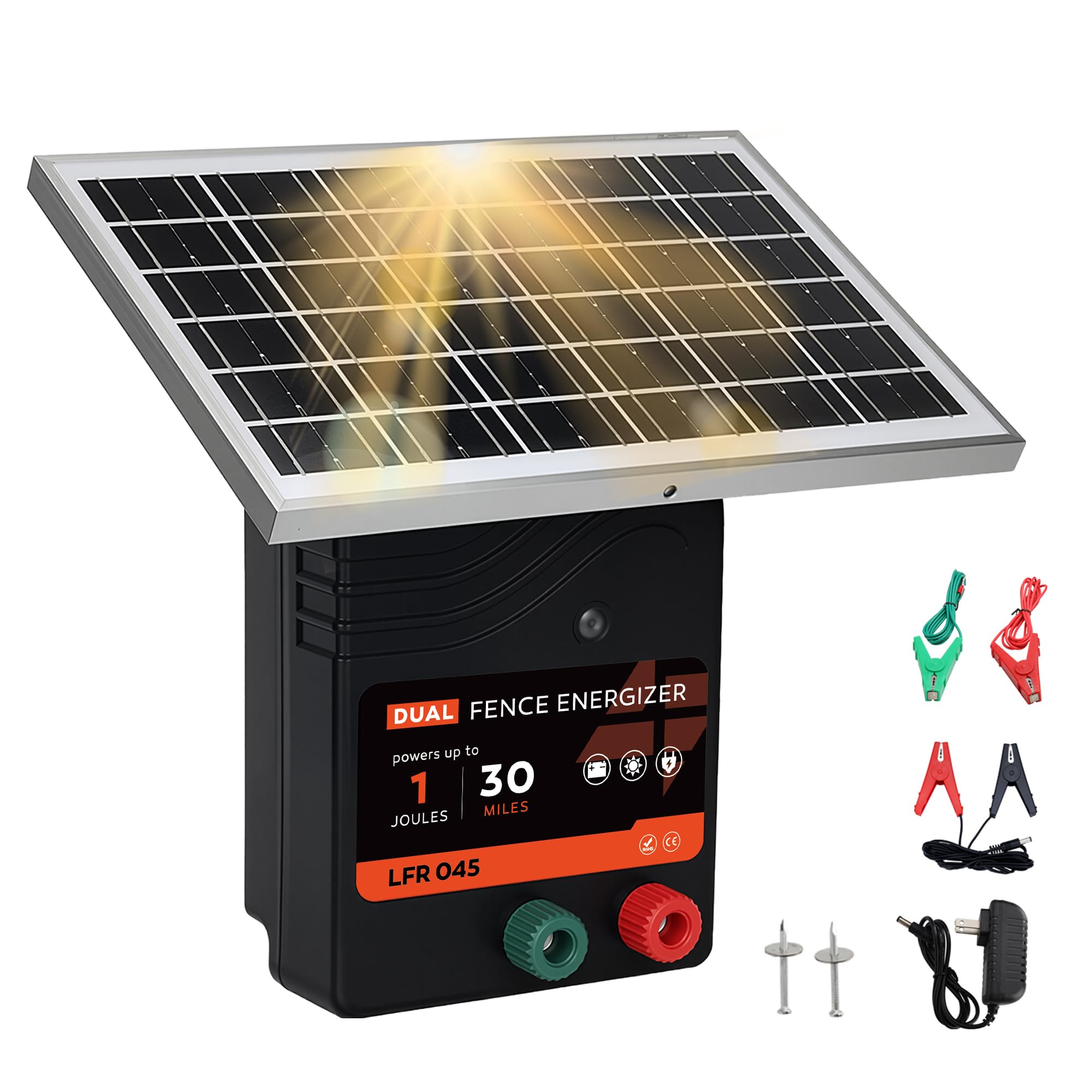
This charger balances portability with serious output, offering enough energy to deter predators across long fence lines. The external solar panel supports faster charging, but placement matters more to maintain performance.
It requires a bit more setup attention, yet rewards that effort with dependable coverage. This option fits remote locations where predator pressure is high and fence failure is not acceptable.
How to Choose Under Remote Power Limitations
When grid power isn’t available, battery size and energy efficiency matter as much as advertised range. Overestimating fence length leads to weak shock delivery, while underestimating sunlight availability drains batteries faster than expected. Prioritize chargers that match actual fence distance, not maximum ratings, and consider how often the fence can be checked. Simple, durable designs often outperform feature-heavy models in isolated areas.
Choosing with Confidence Off the Grid
The safest approach is selecting a charger that comfortably exceeds daily power needs without relying on perfect sunlight. Moderate overcapacity improves reliability and reduces stress on batteries over time. For remote pastures, consistent performance beats maximum range claims. A realistic assessment of fence length, animal type, and maintenance access leads to the smartest long-term choice without unnecessary upgrades.