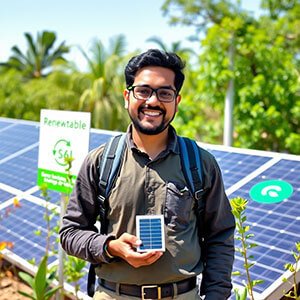

When the juice cuts out, your phone is your lifeline. You need rugged gear that converts sunlight into bars fast. I’ve rounded up the heavy hitters—from massive battery banks to high-efficiency foldable panels.
Forget the fluff; these are the reliable beasts you need in your “go-bag” to stay connected when the lights go out.
Best Solar Phone Charger For Power Outage
| Chargers | Capacity/Output | Top Feature | Best For |
| Ecosonique 30W | 30W Output | ETFE Waterproof | Fast Direct Charging |
| ERRBBIC 49.8k | 49,800mAh | Built-in 4 Cables | All-in-one Backup |
| BLAVOR 10k | 10,000mAh | Wireless Charging | Ultralight Carry |
| 10W Foldable | 10W Output | IPX5 Slim Design | Basic Backpacking |
| 38.8k Power Bank | 38,800mAh | Dual Flashlights | Survival Kits |
| 4-Panel 45.8k | 45,800mAh | Quad Solar Panels | Faster Sun Soaking |
Find The Best Solar Phone Charger For Power Outage Right Now
Stop scrolling and start prepping. Whether you need a behemoth battery that holds a week of charges or a high-speed panel to juice up directly from the sun, these picks ensure you aren’t stuck with a “brick” when a storm hits.
Ecosonique 30W Foldable Solar Panel
Best for High-Speed Direct Charging
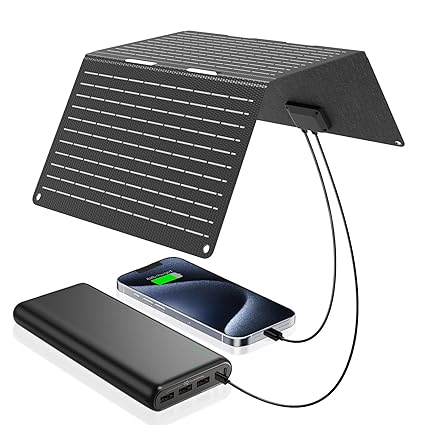
This foldable beast is all about efficiency. It doesn’t store power; it creates it. It’s a “set-it-and-forget-it” solution for your patio or backpack that pumps 30W of raw sun power directly into your devices using high-grade ETFE material.
- High-efficiency 30W panels for faster charging in direct sun.
- Dual ports (USB-C and USB-A) for modern gear.
- Rugged ETFE coating that handles rain and dust like a champ.
- Lightweight, foldable design that slips into any bag.
Perks & Quirks
Pros:
- Professional-grade solar conversion rate.
- No internal battery means no fire risk in high heat.
- Extremely durable for outdoor survival.
Cons:
- Requires direct sunlight to work (no energy storage).
- Larger footprint when fully unfolded.
ERRBBIC 49,800mAh Solar Bank
Best for Maximum Energy Storage
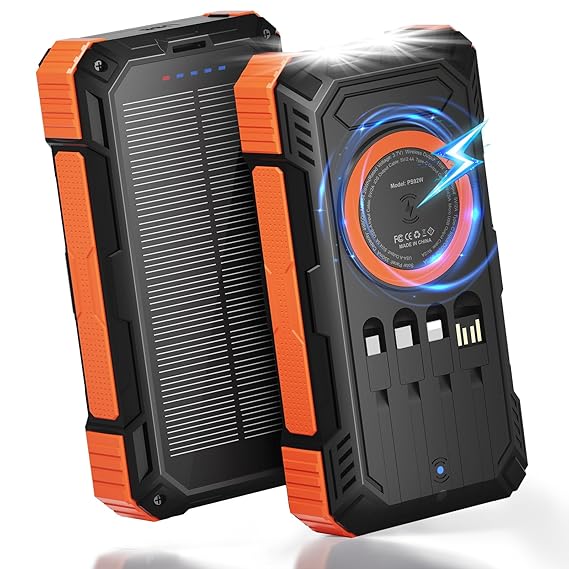
This is the “prepper’s dream.” With a massive 49,800mAh tank, it can juice up an iPhone many times over. It’s got all the cables built-in, so you don’t have to go hunting for a cord when the panic sets in.
- Massive 49,800mAh capacity for multiple device recharges.
- Integrated charging cables (USB-C, Lightning, Micro, etc.).
- 15W wireless charging pad on the back.
- High-intensity dual flashlight for navigating dark hallways.
The Good & The Bad
Pros:
- You don’t need to carry extra cables.
- Huge capacity keeps a whole family’s phones alive.
- Fast 22.5W wired charging speeds.
Cons:
- Takes a long time to charge the internal battery via solar alone.
- Heavy to carry on long hikes.
BLAVOR 10,000mAh Wireless Charger
Best for Minimalist Preparedness
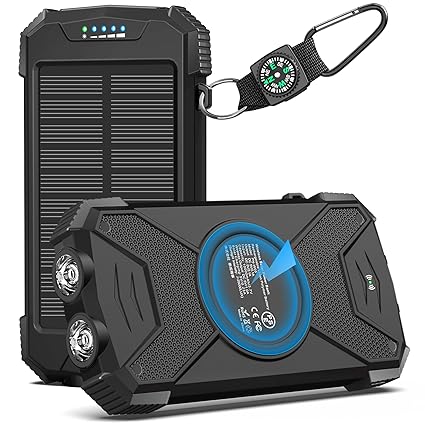
If you want something that won’t weigh your pockets down, this BLAVOR unit is the ticket. It’s a “daily driver” that happens to have a solar backup for emergencies and a handy compass for when GPS fails.
- Compact 10,000mAh size for easy portability.
- 20W PD fast charging via USB-C.
- Built-in compass and dual-LED flashlight.
- Qi-certified wireless charging for cord-free power.
Wins & Woes
Pros:
- Fits in a pocket or clips to a bag easily.
- Very affordable entry point for solar tech.
- Reliable build quality from a known brand.
Cons:
- Small solar panel is for emergency topping off only.
- Lower capacity than the “beast” models.
10W Small Foldable Solar Panel
Best for Ultra-Light Backpacking
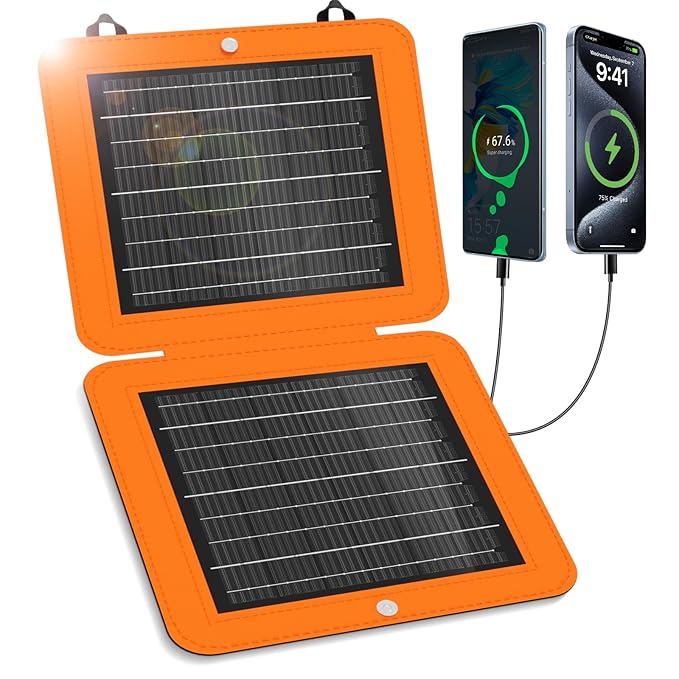
This slim operator is perfect for the minimalist. It’s basically a piece of high-tech cardboard that pumps out 10W of power. It’s IPX5 waterproof, making it a solid choice for rainy-day preparedness.
- Ultra-thin, lightweight foldable design.
- IPX5 waterproof rating for rugged environments.
- Simple 5V USB output for basic phone charging.
- Smart IC technology to prevent overcharging.
Highs & Lows
Pros:
- Takes up almost zero space in a bag.
- Affordable way to get direct-to-device solar.
- Easy to hang on a backpack while walking.
Cons:
- 10W is slow for modern, power-hungry tablets.
- No internal battery to save power for nighttime.
38,800mAh Waterproof Backup Battery
Best for Rough Environments
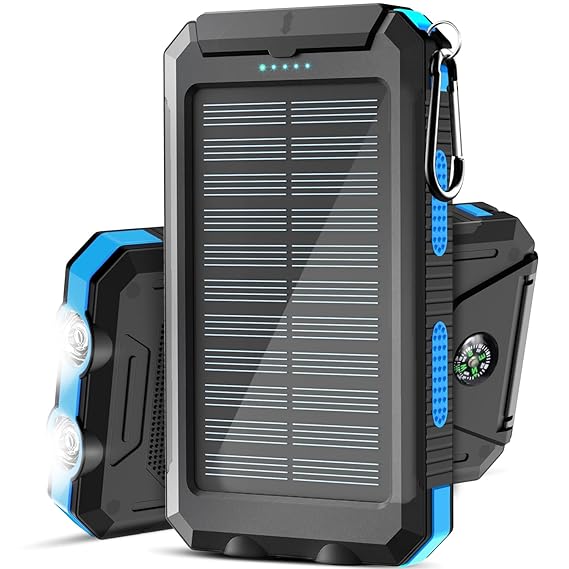
This power pack is built like a tank. It’s designed to survive drops and splashes while holding enough juice to keep you going for days. It’s the perfect “throw-in-the-trunk” insurance policy.
- 38,800mAh capacity balances size and power.
- USB-C input and output for modern device compatibility.
- Rugged, shockproof, and waterproof exterior.
- Super bright LED flashlight for emergency signaling.
Plus & Minus
Pros:
- Extremely durable construction.
- Reliable performance in humid or wet conditions.
- High capacity for the price point.
Cons:
- Solar charging is very slow due to the single small panel.
- Can be bulky in smaller emergency kits.
45,800mAh 4-Panel Solar Bank
Best for Faster Sun Recovery
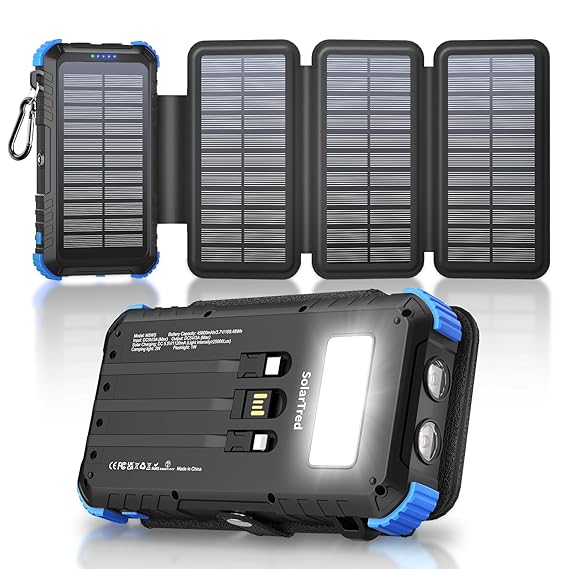
Most solar banks have one tiny panel that takes weeks to charge. This one has four. By unfolding the extra leaves, you significantly speed up how much energy you can pull from the sky during a long outage.
- Quad-panel design for 4x faster solar intake.
- Massive 45,800mAh internal storage.
- Built-in cables for iPhone and Android (USB-C).
- Includes a dedicated camping light mode.
Strengths & Flaws
Pros:
- Much faster solar recharging than single-panel banks.
- Built-in cables eliminate clutter.
- Large battery can power small USB fans or lights.
Cons:
- More moving parts (hinges) could be a failure point.
- Heavier and thicker than standard power banks.
Pro Tip: Avoid relying on the tiny solar panel on a power bank for a “From-Zero” charge. Those panels are meant for emergency top-offs only. For real speed, buy a foldable panel and plug your power bank into it.