

If you’ve got a massive backyard, a detached workshop, or a “beater” shed that needs a signal, dragging Ethernet cables through the dirt is a nightmare. These solar-powered boosters soak up rays to keep your gear online without needing an outlet.
They aren’t built for competitive gaming, but for scrolling, streaming, or checking security cams at the edge of your property, they’re total lifesavers.
Best Solar Powered WiFi Extender Signal Booster
| Signal Booster | Max Range | Battery Capacity | Solar Panel | Waterproof Rating |
| LCLCTEK 15in | 300 Feet | High Capacity | Integrated | IP66 Rated |
| Solar WiFi Garden | 200 Meters | 26,000mAh | Large Surface | IP66 Rated |
| LCLCTEK 33cm | 300 Feet | High Capacity | Wide Panel | IP66 Rated |
| Long Range 500ft | 500 Feet | 26,000mAh | 15W High Output | IP65 Rated |
| Solar 300Mbps | 300 Feet | 25,000mAh | 15W High Output | IP65 Rated |
Solve Your Outdoor Dead Zones With The Best Solar Powered WiFi Extender Signal Booster
Don’t let a patch of woods or a long driveway kill your vibe. These units grab your existing 2.4G signal and toss it further into the wild, using massive internal batteries to stay awake even when the sun goes down. It’s the ultimate “set it and forget it” solution for ranch owners and garden lovers.
LCLCTEK Long Range 15in Booster

This 15-inch powerhouse is built for folks who need a reliable link to their back forty. It acts as a rugged repeater that doesn’t care about rain or dust, pushing a 300Mbps signal through the air so your smart devices stay “woke” even far from the house.
It supports standard 2.4G modem routers and provides a 300-foot leash for your internet. The setup is straightforward, and the solar battery setup means you won’t be climbing ladders to swap batteries every month.
Perks & Quirks
Pros:
- No wiring required; truly off-grid.
- Solid 300-foot range for medium lots.
- Rugged IP66 build handles nasty storms.
Cons:
- 2.4G only; don’t expect 5G speeds.
- Performance drops if placed in deep shade.
Grab this if you have a mid-sized lot and just need a steady connection for your phone or a smart gate. Skip it if you’re trying to beam 4K video to a movie screen in the woods.
High-Capacity 200m Garden Repeater

If you’re managing a ranch or a massive garden, this unit is a tank. With a massive 26,000mAh battery, it stores enough juice to keep the signal pumping through a week of cloudy weather without breaking a sweat.
The 200-meter range is roughly 650 feet, giving you serious coverage. It’s designed to withstand the elements with an IP66 rating, making it a “buy once, cry once” piece of gear for your outdoor network.
The Highs & Lows
Pros:
- Massive battery life for overcast climates.
- Superior 200m distance for larger properties.
- Easy mounting on poles or walls.
Cons:
- Bulkier design than smaller units.
- Requires a very clear line of sight for max range.
This is the one for the “homesteaders” who need internet way out by the barn. It’s overkill for a tiny patio but perfect for a multi-acre property.
LCLCTEK Wide Panel 33cm Extender
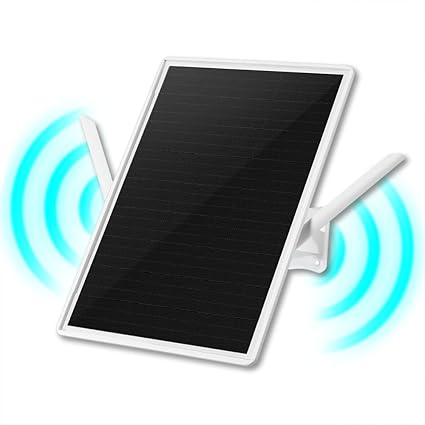
Featuring a larger 33 x 26cm surface area, this model is all about catching every available photon. It’s the “solar king” of the group, designed for areas where the sun might be a bit stingy but the range needs to stay at a crisp 300 feet.
It pairs specifically with 2.4G routers, making it a specialized tool for IoT devices like outdoor cameras and sensors that don’t need the flashy 5G bands but do need a rock-solid heartbeat.
The Good & The Bad
Pros:
- Large panel surface for faster charging.
- Consistent 300Mbps throughput.
- Simple sync process with existing routers.
Cons:
- Large panel is more visible/less discrete.
- Not compatible with 5G-only mesh systems.
If your yard has a bit of tree cover and you need a larger panel to compensate for the shadows, this is your best bet. It’s a workhorse for the average American suburban lot.
Ultra Long Range 500ft 15W Powerhouse

When you need to reach the very edge of the property line, this 500-foot beast is the heavy hitter. It packs a 15W solar panel—which is massive for an extender—ensuring the 26,000mAh battery stays topped off even with heavy data use.
This unit is perfect for “farm tech” applications where you might have sensors or cameras a football field away. The IP65 rating keeps the internal tech dry during summer downpours.
Wins & Fails
Pros:
- Incredible 500-foot reach.
- High-wattage panel charges quickly.
- Great for high-traffic outdoor areas.
Cons:
- IP65 is slightly lower protection than IP66.
- Price point is higher than entry-level models.
Buy this if you’re trying to cover a massive distance and don’t want to worry about the battery dying during a Netflix binge by the fire pit. It’s the “long-haul” choice.
Solar 300Mbps 15W Outdoor Repeater
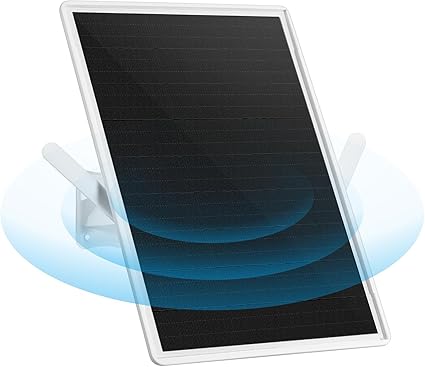
A balanced middle-ground option, this repeater offers a 15W panel paired with a 25,000mAh battery. It focuses on stability over raw distance, providing a very clean 300-foot bubble of internet that doesn’t flicker when the sun goes behind a cloud.
It’s built for the “outdoor office” type who wants to work from a hammock without the zoom call dropping. The 300Mbps speed is plenty for most standard web tasks.
Hits & Misses
Pros:
- Very stable power management.
- Easy to install on various surfaces.
- Reliable 2.4G signal penetration.
Cons:
- Battery is slightly smaller than the 500ft model.
- 300-foot range is standard, not exceptional.
This is a great “Goldilocks” pick for someone who wants high-end solar charging but doesn’t necessarily need to beam internet to the next county.
Smart Moves For Better Signal
- Line of Sight is King: Even the best booster struggles with brick walls. Mount it high and keep it in view of the main house.
- Angle the Sun: Don’t just slap it flat. Tilt that panel toward the southern sky to maximize the juice.
- Check Your Band: Ensure your main router is broadcasting a 2.4GHz signal, as most solar units won’t talk to 5GHz-only bands.
Keep an eye out for “Range Inflation.” If a product claims it can go through three barns and a mountain, it’s probably stretching the truth. Stick to clear lines of sight for the best results.