

Choosing a solar car kit for kids is not just about picking something with a panel and wheels. Parents want a project that keeps attention, explains real STEM ideas, and actually works without constant adult fixing. Some kits are great for demonstrating solar power but feel flimsy. Others are fun builds but barely teach the science.
This guide focuses on real usability, age appropriateness, and learning payoff so you can choose a solar car kit that fits your child, classroom, or gift purpose without wasted money or disappointment.
Best Solar Toy Car Kit for Kids
| Car Kits | Power Type | Build Difficulty | Age Range | Best Use |
| Thames and Kosmos Solar Race Car | Solar only | Moderate | 8+ | Learning photovoltaic basics |
| Remote Control Wood Car Kit | Battery powered | High | 8 to 14 | Mechanical building skills |
| STEM Solar Car Projects Kit | Solar only | Easy to moderate | 8 to 12 | Intro STEM exploration |
| Soulchen 12 Set Solar Kits | Solar only | Easy | 8+ | Group projects and classrooms |
| Sntieecr Solar Motor Kit | Solar only | Easy | 7+ | Basic circuit learning |
| 7 in 1 Solar STEM Kit | Solar and motor | Moderate | 8 to 14 | Variety driven learning |
Thames and Kosmos Solar Race Car STEM Experiment Kit
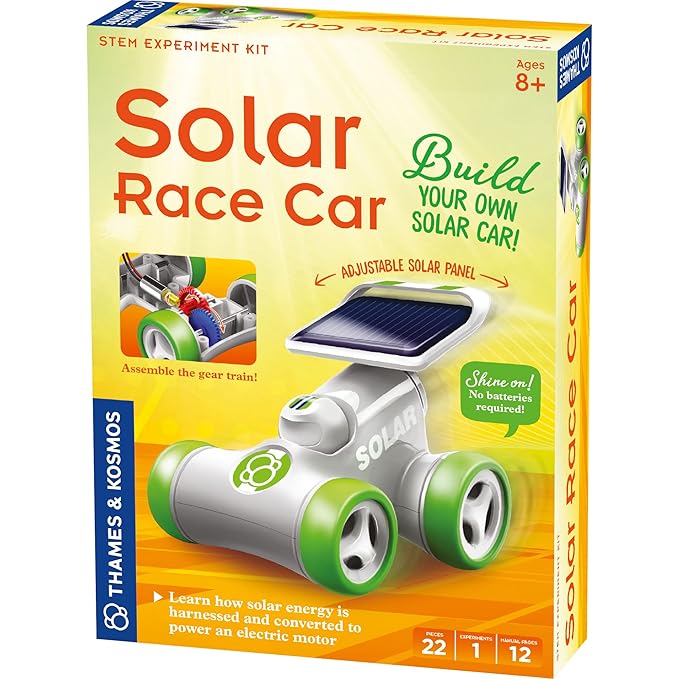
This kit is best for kids who want to understand how solar energy actually turns into motion. The parts feel solid, and the instructions walk through the science instead of just the assembly. In real sunlight, the car moves smoothly and clearly shows how panel angle affects speed. Indoors performance is limited, which can frustrate some kids. This is a smart buy for curious learners and school projects, but not ideal for play without outdoor sun.
Remote Control Model Car Building Kit
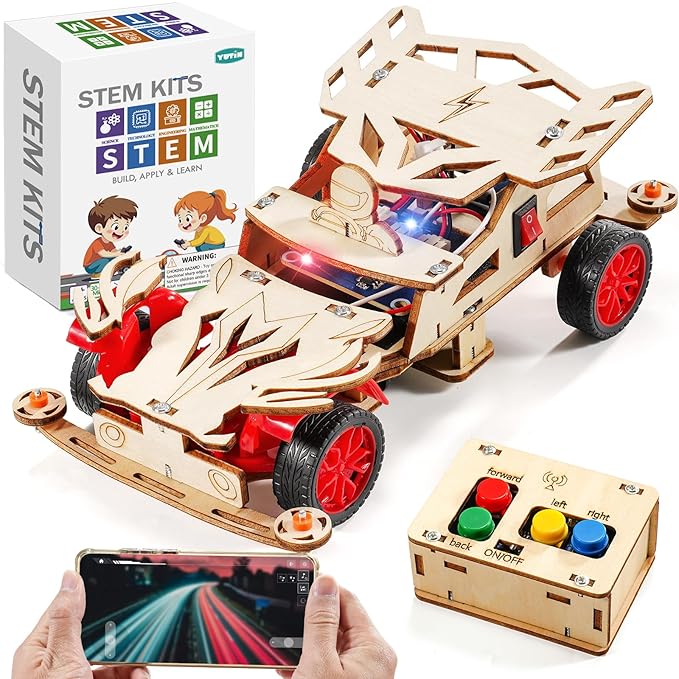
This kit focuses more on engineering and mechanics than solar learning. Building the wooden car is engaging and rewarding, especially for kids who like tools and structure. Since it uses batteries instead of solar power, it does not teach renewable energy concepts. It works best as a hands on construction project rather than a solar STEM lesson. Buy this for kids who love building models, skip it if solar energy is the goal.
STEM Building Toys Solar Car Projects Kit
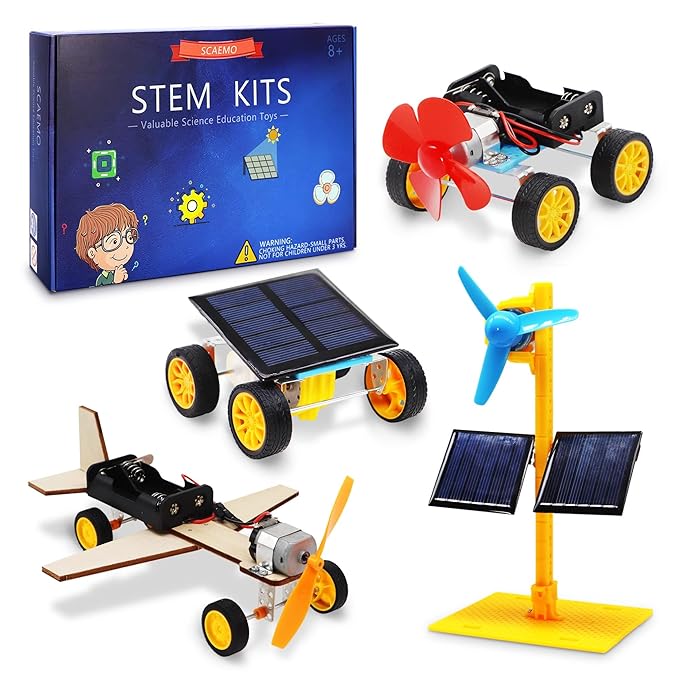
This kit balances simplicity and learning well. Assembly is straightforward, and kids can see quick results when placed in direct sunlight. It introduces basic solar concepts without overwhelming younger builders. The materials are lighter than premium kits, so durability is limited. This is a good choice for first time STEM projects, but older kids may outgrow it quickly.
Soulchen 12 Sets DIY Solar Car STEM Kits
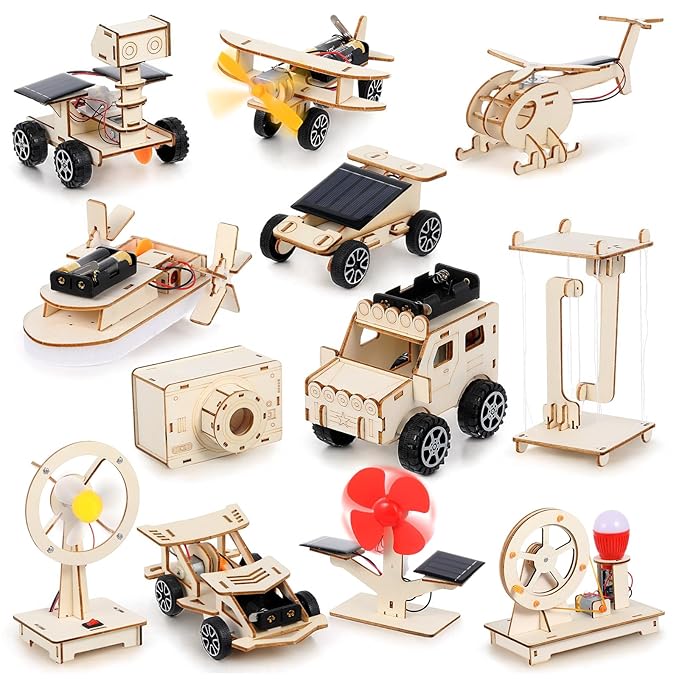
Designed for classrooms or group activities, this set includes multiple simple solar car builds. Each kit is easy to assemble and focuses on basic engineering ideas. Performance is modest, and these are not built for long term play. The real value is quantity and accessibility. This is ideal for teachers or group events, not for a single child wanting a standout build.
Sntieecr Electric Circuit Motor Kit with Solar Panel

This kit works best as a learning tool for circuits and motor basics. Kids can clearly see how wiring, motors, and solar panels interact. It is less of a finished car experience and more of an experiment setup. Younger kids benefit from guidance during assembly. Choose this for learning fundamentals, not for racing or creative building.
7 in 1 Solar STEM Kits for Kids
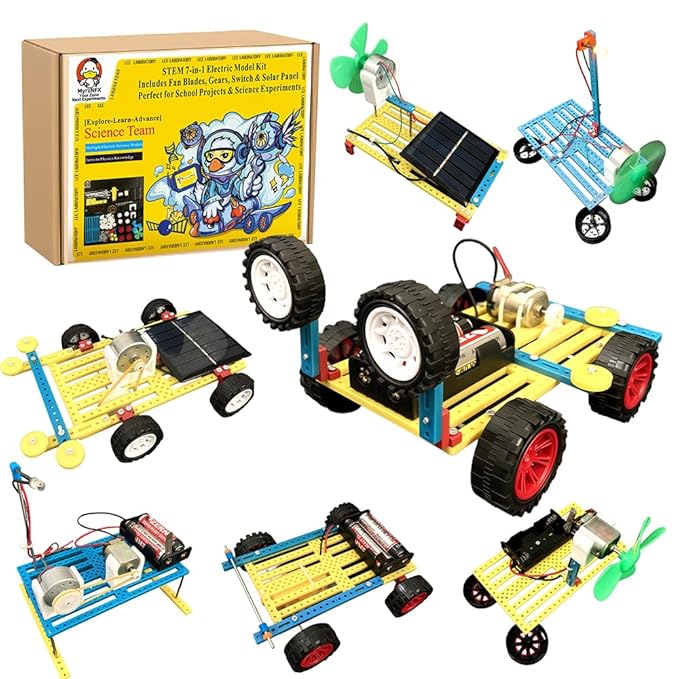
This kit stands out for variety. Kids can build multiple solar powered projects, including a car, which keeps interest high over time. Instructions are clear, though some builds require patience. Solar performance depends heavily on sunlight quality. This is a strong option for kids who enjoy experimenting rather than sticking to one project.
Reality Check Before You Buy
Solar toy car kits do not perform well under indoor lighting. Many frustrations come from expecting strong movement without direct sunlight. Outdoor use is essential for success.
Final Takeaway,
The best solar toy car kit for kids to build stem project depends on the goal. For learning solar science, a focused kit works best. For variety and long term engagement, multi project sets make more sense. Classroom buyers should prioritize quantity and simplicity, while curious kids benefit from kits that explain why things work, not just how to assemble them.