
Alright — we’ve covered what peak sun hours are, how tilt angle affects PSH, and the physics behind why optimal tilt equals latitude. Now let’s make this dead simple with one comprehensive reference you can bookmark and come back to whenever you need it.
This guide gives you the best annual tilt angle, summer tilt angle, and winter tilt angle for every US state — plus the 30 most populated cities with precise figures. All panels face true south unless otherwise noted. All values are for the Northern Hemisphere (all 48 contiguous states + Alaska). Hawaii is a special case we cover separately.
One important note before the tables: the figures here use the refined latitude formula used by professional installers:
- Year-round: Latitude − 2.5° (slightly flatter than raw latitude for better annual average)
- Summer: (Latitude × 0.9) − 23.5°
- Winter: (Latitude × 0.9) + 29°
This formula delivers approximately 4% better annual output than the simple “tilt = latitude” rule.
The Quick Formula
Solar panel angle formulas
If you just want to calculate your own tilt angle from your latitude — here it is:
Year-Round Tilt = Latitude − 2.5°
Summer Tilt = (Latitude × 0.9) − 23.5°
Winter Tilt = (Latitude × 0.9) + 29°
Example — Dallas, TX (latitude 32.8°):
- Year-round: 32.8 − 2.5 = 30.3°
- Summer: (32.8 × 0.9) − 23.5 = 6.0°
- Winter: (32.8 × 0.9) + 29 = 58.5° → capped at practical maximum of ~50° for most installations
For winter tilt, most professional installers cap the recommendation at 50–55° for practical mounting reasons — extremely steep angles cause wind loading issues and often aren’t structurally practical on standard roof mounts.
Best Tilt Angle by State — Complete Table
All panels face true south. Year-round angle is your fixed installation target. Summer and winter angles are for adjustable ground-mount systems or for reference.
The South & Southeast
| State | Latitude Range | Year-Round Tilt | Summer Tilt | Winter Tilt |
|---|---|---|---|---|
| Florida | 24.5° – 31.0° | 23° – 29° | 8° – 14° | 38° – 44° |
| Hawaii | 19.5° – 22.2° | 17° – 20° | 0° – 0° | 32° – 37° |
| Louisiana | 29.0° – 33.0° | 27° – 31° | 11° – 14° | 42° – 46° |
| Mississippi | 30.3° – 35.0° | 28° – 33° | 12° – 16° | 43° – 48° |
| Alabama | 30.1° – 35.0° | 28° – 33° | 12° – 16° | 43° – 48° |
| Georgia | 30.3° – 34.9° | 28° – 32° | 12° – 15° | 43° – 48° |
| South Carolina | 32.0° – 35.2° | 30° – 33° | 13° – 16° | 45° – 48° |
| North Carolina | 33.7° – 36.6° | 31° – 34° | 15° – 17° | 46° – 50° |
| Tennessee | 34.9° – 36.7° | 32° – 34° | 16° – 17° | 47° – 50° |
| Arkansas | 33.0° – 36.5° | 31° – 34° | 14° – 17° | 46° – 50° |
| Virginia | 36.5° – 39.5° | 34° – 37° | 17° – 20° | 49° – 53° |
| West Virginia | 37.2° – 40.6° | 35° – 38° | 18° – 21° | 50° – 54° |
| Kentucky | 36.5° – 39.1° | 34° – 37° | 17° – 20° | 49° – 53° |
| Maryland | 37.9° – 39.7° | 35° – 37° | 18° – 20° | 50° – 53° |
| Delaware | 38.4° – 39.8° | 36° – 37° | 19° – 20° | 51° – 53° |
The Southwest
| State | Latitude Range | Year-Round Tilt | Summer Tilt | Winter Tilt |
|---|---|---|---|---|
| Texas | 25.8° – 36.5° | 23° – 34° | 8° – 17° | 38° – 50° |
| Arizona | 31.3° – 37.0° | 29° – 35° | 13° – 17° | 44° – 50° |
| New Mexico | 31.3° – 37.0° | 29° – 35° | 13° – 17° | 44° – 50° |
| Nevada | 35.0° – 42.0° | 33° – 40° | 16° – 23° | 48° – 54° |
| California | 32.5° – 42.0° | 30° – 40° | 14° – 23° | 45° – 54° |
| Utah | 36.9° – 42.0° | 34° – 40° | 18° – 24° | 50° – 54° |
| Colorado | 36.9° – 41.0° | 34° – 39° | 18° – 22° | 50° – 54° |
| Oklahoma | 33.6° – 37.0° | 31° – 35° | 15° – 17° | 46° – 50° |
| Kansas | 36.9° – 40.0° | 34° – 38° | 18° – 21° | 50° – 54° |
The Midwest & Great Lakes
| State | Latitude Range | Year-Round Tilt | Summer Tilt | Winter Tilt |
|---|---|---|---|---|
| Missouri | 35.9° – 40.6° | 33° – 38° | 17° – 21° | 48° – 54° |
| Illinois | 36.9° – 42.5° | 34° – 40° | 18° – 24° | 50° – 55° |
| Indiana | 37.7° – 41.8° | 35° – 39° | 18° – 22° | 51° – 55° |
| Ohio | 38.4° – 42.3° | 36° – 40° | 19° – 23° | 51° – 55° |
| Michigan | 41.6° – 48.3° | 39° – 46° | 22° – 29° | 54° – 58° |
| Wisconsin | 42.4° – 47.1° | 40° – 44° | 23° – 27° | 55° – 58° |
| Minnesota | 43.5° – 49.4° | 41° – 47° | 24° – 30° | 56° – 59° |
| Iowa | 40.4° – 43.5° | 38° – 41° | 21° – 24° | 53° – 56° |
| Nebraska | 39.8° – 43.0° | 37° – 41° | 20° – 24° | 52° – 56° |
The Northeast
| State | Latitude Range | Year-Round Tilt | Summer Tilt | Winter Tilt |
|---|---|---|---|---|
| New York | 40.5° – 45.0° | 38° – 43° | 21° – 26° | 53° – 57° |
| Pennsylvania | 39.7° – 42.3° | 37° – 40° | 20° – 23° | 52° – 55° |
| New Jersey | 38.9° – 41.4° | 36° – 39° | 19° – 22° | 51° – 54° |
| Connecticut | 40.9° – 42.1° | 38° – 40° | 22° – 23° | 54° – 55° |
| Massachusetts | 41.2° – 42.9° | 39° – 41° | 22° – 24° | 54° – 56° |
| Rhode Island | 41.1° – 42.0° | 39° – 40° | 22° – 23° | 54° – 55° |
| Vermont | 42.7° – 45.0° | 40° – 43° | 24° – 27° | 55° – 57° |
| New Hampshire | 42.7° – 45.3° | 40° – 43° | 24° – 27° | 55° – 57° |
| Maine | 43.1° – 47.5° | 41° – 45° | 24° – 28° | 56° – 58° |
| Washington DC | 38.8° – 39.0° | 36° – 37° | 19° – 20° | 51° – 52° |
The Northwest & Mountain States
| State | Latitude Range | Year-Round Tilt | Summer Tilt | Winter Tilt |
|---|---|---|---|---|
| Washington | 45.5° – 49.0° | 43° – 47° | 26° – 30° | 57° – 59° |
| Oregon | 41.9° – 46.3° | 39° – 44° | 23° – 27° | 54° – 58° |
| Idaho | 41.9° – 49.0° | 39° – 47° | 23° – 30° | 54° – 59° |
| Montana | 44.3° – 49.0° | 42° – 47° | 25° – 30° | 57° – 59° |
| Wyoming | 40.9° – 45.0° | 38° – 43° | 22° – 27° | 53° – 57° |
| South Dakota | 42.4° – 45.9° | 40° – 44° | 23° – 27° | 55° – 58° |
| North Dakota | 45.9° – 49.0° | 44° – 47° | 27° – 30° | 58° – 59° |
| Alaska | 54.6° – 71.4° | 52° – 64° | 35° – 52° | 63° – 70°+ |
Best Tilt Angle by Major City
Here are precise tilt angles for the 30 largest US cities — pulled directly from professional solar data:
| City | State | Year-Round Tilt | Summer Tilt | Winter Tilt |
|---|---|---|---|---|
| Houston | TX | 26.5° | 11.5° | 41.5° |
| San Antonio | TX | 26.3° | 11.3° | 41.3° |
| New Orleans | LA | 26.6° | 11.6° | 41.6° |
| Jacksonville | FL | 26.8° | 11.8° | 41.8° |
| Miami | FL | 23.5° | 8.5° | 38.5° |
| Austin | TX | 26.8° | 11.8° | 41.8° |
| Dallas | TX | 28.1° | 13.1° | 43.1° |
| Phoenix | AZ | 28.5° | 13.5° | 43.5° |
| San Diego | CA | 28.1° | 13.1° | 43.1° |
| Atlanta | GA | 28.6° | 13.6° | 43.6° |
| Los Angeles | CA | 28.8° | 13.8° | 43.8° |
| Las Vegas | NV | 29.8° | 14.8° | 44.8° |
| Nashville | TN | 29.8° | 14.8° | 44.8° |
| Oklahoma City | OK | 29.5° | 14.5° | 44.5° |
| Charlotte | NC | 29.3° | 14.3° | 44.3° |
| Washington DC | DC | 31.0° | 16.0° | 46.0° |
| Kansas City | MO | 31.1° | 16.1° | 46.1° |
| Baltimore | MD | 31.2° | 16.2° | 46.2° |
| Columbus | OH | 31.5° | 16.5° | 46.5° |
| Philadelphia | PA | 31.5° | 16.5° | 46.5° |
| Chicago | IL | 32.3° | 17.3° | 47.3° |
| Denver | CO | 31.4° | 16.4° | 46.4° |
| Indianapolis | IN | 31.4° | 16.4° | 46.4° |
| San Francisco | CA | 30.5° | 15.5° | 45.5° |
| Boston | MA | 32.5° | 17.5° | 47.5° |
| Detroit | MI | 32.5° | 17.5° | 47.5° |
| New York City | NY | 31.8° | 16.8° | 46.8° |
| Milwaukee | WI | 32.8° | 17.8° | 47.8° |
| Minneapolis | MN | 33.6° | 18.6° | 48.6° |
| Portland | OR | 33.8° | 18.8° | 48.8° |
| Seattle | WA | 34.6° | 19.6° | 49.6° |
Summer vs. Winter Tilt by State
Here’s the big picture pattern — why summer and winter angles are so dramatically different, and what it means in practice.
Summer: The sun is high in the sky. You want panels tilted flatter — closer to horizontal — so the face of the panel is more perpendicular to the high-angle summer sun. Summer tilt angles range from 0° in the deep South to about 30° in northern states like Minnesota and Washington.
Winter: The sun stays low on the horizon all day. You want panels tilted steeper — closer to vertical — so the face catches the low-angle winter sun more directly. Winter tilt angles range from 38° in Miami to 59°+ in the northern tier states.
The gap between summer and winter tilt is remarkably consistent — approximately 30° difference across virtually all US latitudes. Miami: 8.5° summer, 38.5° winter (30° gap). Seattle: 19.6° summer, 49.6° winter (30° gap). This ~30° swing applies universally.
Who should adjust seasonally?
- Rooftop systems: Almost nobody — adjusting roof-mounted panels seasonally is impractical and rarely cost-effective
- Ground-mount systems: Twice-yearly adjustment (switch at March and September equinox) gains 5–8% annual energy with minimal effort — worth doing
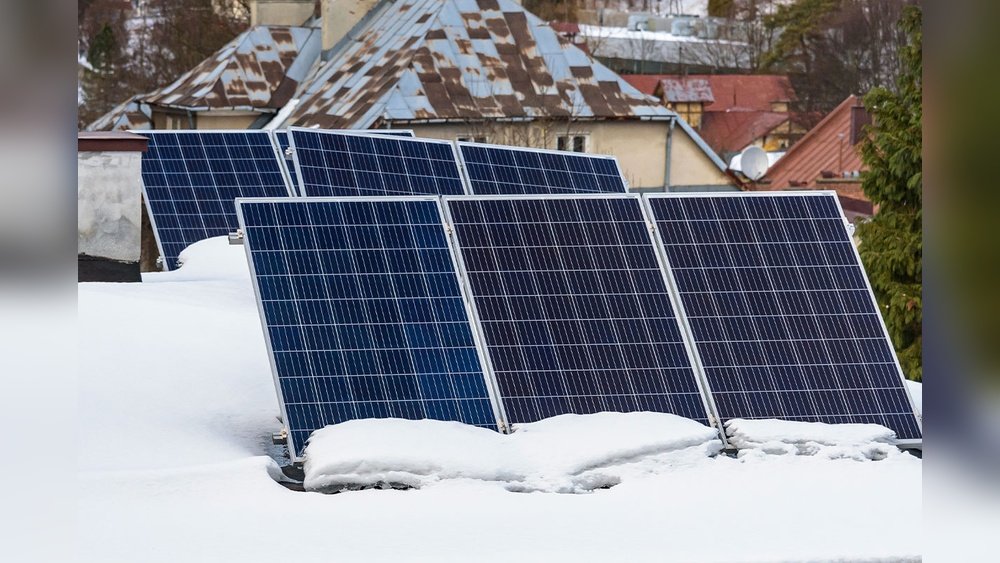
- Off-grid systems: Seriously consider it — winter performance is critical for battery autonomy, and the steep winter angle also helps snow slide off panels faster
How to Use These Numbers
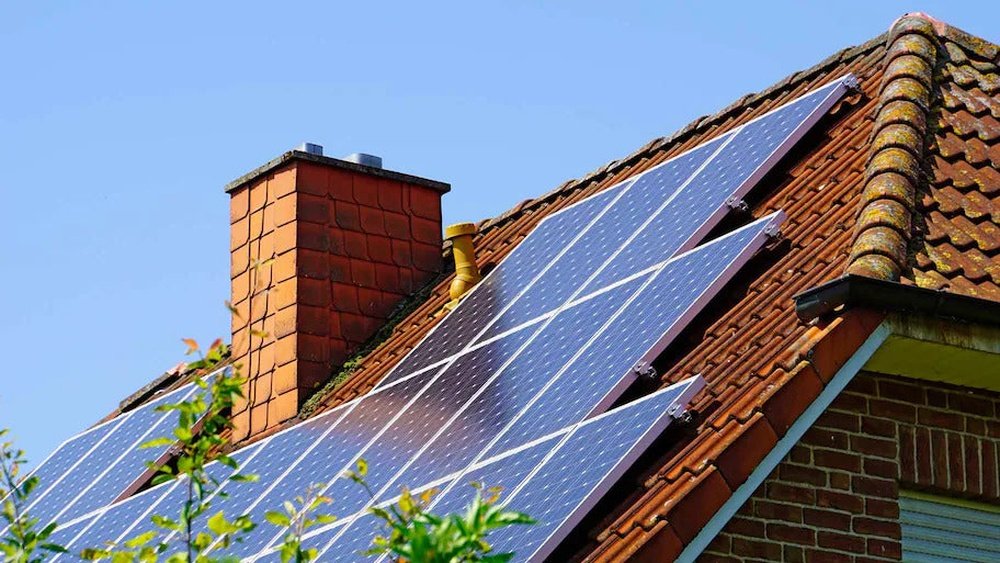
Step 1 — Find your city or state in the tables above. Use the year-round tilt as your target installation angle for a standard fixed rooftop system.
Step 2 — Compare to your actual roof pitch. Convert your roof pitch to degrees using this quick reference:
- 4:12 pitch = 18.4° (common US roof — below optimal for most northern states)
- 5:12 pitch = 22.6° (most common US residential)
- 6:12 pitch = 26.6° (moderate slope)
- 7:12 pitch = 30°
- 8:12 pitch = 33.7°
- 9:12 pitch = 36.9°
- 10:12 pitch = 40° (close to optimal for Chicago, NYC, Denver latitude)
Step 3 — Decide on tilt racking if needed. If your roof pitch is more than 10° below your optimal tilt, tilt-up racking frames are worth the investment. For example: A Minneapolis homeowner (optimal 33.6°) with a 4:12 roof (18.4°) has a 15° gap — tilt racking meaningfully improves annual output. A Phoenix homeowner (optimal 28.5°) with a 5:12 roof (22.6°) has only a 6° gap — tilt racking is optional, the energy gain is modest.
Step 4 — Adjust your PSH for non-optimal tilt. As covered in the previous article, if your actual tilt deviates significantly from optimal, multiply your standard location PSH by the tilt efficiency factor before plugging it into the system sizing formula. Every 10° below optimal at mid-latitudes (35°–45° N) costs approximately 8–12% of annual energy production.
State-by-State Insights
Florida (23°–29°): The shallowest tilt angles in the contiguous US. Miami’s optimal is just 23.5° — panels are nearly flat compared to northern states. The shallow angle is correct because Florida’s low latitude means the sun passes high overhead. A 5:12 roof (22.6°) is close to ideal for most of Florida — one of the few states where a standard US roof pitch nearly matches the optimal angle naturally.
Texas (23°–34°): Massive variation across the state. El Paso in west Texas (31.8° N) needs a 29° tilt. Brownsville in south Texas (25.9° N) needs just 23°. Houston (26.5°) and Dallas (28.1°) are in the middle. Don’t use a single “Texas” tilt angle — find your specific city latitude.
California (30°–40°): Almost as much variation as Texas. San Diego (28.1°) is nearly the same as Phoenix. San Francisco (30.5°) needs more. Far Northern California near Oregon border needs 38°+. Palm Springs (33.8° N) needs about 31°. Always use your specific city — “California” is not one solar environment.
Colorado (34°): Denver’s optimal is 31.4° — slightly lower than its latitude of 39.7° due to the refined formula. High altitude means strong irradiance reaches the panels regardless of season, making Colorado one of the best mid-latitude solar states despite its northern position. The optimal tilt captures this effectively year-round.
Arizona (29°): Phoenix’s 28.5° optimal is surprisingly shallow for a state most people associate with the desert Southwest. That’s because Phoenix sits at only 33.4° N latitude. The city’s legendary solar output comes from its exceptional clear-sky irradiance — 7.0+ PSH at this modest tilt — not from any extreme panel angle.
New York (32°–43°): New York City (31.8°) and northern Adirondack or border areas (up to 45° N) need very different tilt angles. NYC’s 31.8° optimal is achievable on most standard roofs. Northern NY homeowners need 42°+ — requiring either a steep roof or tilt racking.
Washington & Oregon (34°–47°): Seattle’s 34.6° optimal is moderate but the marine cloud layer from the Pacific reduces effective winter sun regardless of tilt. Eastern Washington (drier, sunnier) benefits more from proper tilt angle optimization than coastal western Washington where diffuse cloud light is dominant.
Minnesota & Wisconsin (33°–44°): Northern tier states where optimal tilt is highest among contiguous states — approaching 45°+ in the northernmost parts. Cold winter temperatures actually boost panel efficiency (panels run closer to rated output in cold vs. hot conditions), partially compensating for the lower sun angle and shorter winter days. Proper steep tilt also helps snow slide off panels faster — a real practical benefit in heavy snowfall areas.
Alaska (52°–64°+): Extreme tilt angles — over 60° optimal in Anchorage (61.2° N latitude). The extreme seasonality of Alaska (long summer days, very short winter days) makes annual tilt optimization less meaningful than for the contiguous states. Off-grid Alaskan solar systems typically prioritize steep winter tilt for maximum winter autonomy since summer surplus is easily handled by battery storage.
Frequently Asked Questions
What is the best tilt angle for solar panels in the US overall?
For the contiguous 48 states, the optimal annual tilt angle ranges from approximately 23° in southern Florida to 47° in northern Minnesota and Montana. The most common range for American homeowners is 28°–42° — covering most of the southern, central, and mid-Atlantic states where the majority of the population lives. There is no single “best US tilt angle” — it depends entirely on your specific latitude.
Which states need the steepest solar panel tilt angle?
The northern-tier states need the steepest angles: Minnesota, Wisconsin, Michigan, Montana, North Dakota, Washington, and Maine — all requiring 40°–47° year-round tilt for optimal annual performance. Alaska is the extreme case at 52°–64°+. These high tilt angles are necessary because the sun stays relatively low in the sky at high latitudes, requiring a steep panel angle to face the sun more directly.
Which states need the shallowest solar panel tilt angle?
Florida, Hawaii, Louisiana, and southern Texas have the shallowest optimal angles — ranging from 23° in Miami to 27° in Houston. Hawaii’s optimal is even lower — 17°–20° depending on island and specific latitude. At these low latitudes, the sun passes nearly overhead in summer, and a shallow panel angle keeps the panel surface more perpendicular to the sun’s path throughout the year.
Does the best solar panel angle change by season?
Yes — significantly. Summer optimal angles are roughly 15° shallower than the annual average, and winter optimal angles are roughly 15° steeper. For a fixed rooftop installation, use the year-round annual optimal (latitude minus 2.5°). For adjustable ground-mount systems, switching between summer and winter angles at the equinoxes improves annual energy production by 5–8% — worth doing if your system allows easy adjustment.
What if my roof pitch doesn’t match the optimal tilt angle?
Most American roofs have a 4:12 to 6:12 pitch (18°–27°), which is below optimal for states north of roughly 30° N latitude. The energy penalty for being 10° below optimal is approximately 8–12% annually. For northern states (above 38° N) where the gap between roof pitch and optimal tilt is large — 15°+ — tilt racking frames are worth the investment. For southern states, standard roof pitches are closer to optimal and the loss from suboptimal tilt is smaller.
Should I use the summer or winter tilt angle for year-round fixed installation?
Neither — use the year-round annual optimal angle (latitude minus 2.5° using the refined formula). Summer tilt is too shallow for winter months and winter tilt is too steep for summer — both reduce annual production compared to the annual average compromise. The summer and winter angles are only useful if you’re actually adjusting your panels seasonally.