
Can You Charge A Solar Panel With A Light Bulb
Ever looked at your solar panel sitting indoors and wondered, “Could I just point a lamp at it and get some power? ” You’re not alone. It sounds almost too simple—swap out the sun for a light bulb and keep those panels working day and night.
But does it actually work, or is it just wishful thinking? Let’s break it down together, just like two friends chatting about a science experiment at your kitchen table.
The Short Answer
Yes, you *can* charge a solar panel with a light bulb, but there’s a catch. The amount of power you get is much, much lower compared to direct sunlight. Most solar panels are designed to capture the intense, broad-spectrum light from the sun. Light bulbs, even very bright ones, simply don’t put out enough of the right kind of energy. In other words, your solar panel will react to a bulb, but don’t expect miracles—or even enough power for most practical uses.
Why is this? Not all light is created equal. The sun gives off a huge range of light, including the kinds that solar cells love. Most household bulbs, on the other hand, are far less powerful and don’t cover the full spectrum that solar panels need.
Plus, light bulbs are usually much weaker than the sun—sometimes by a factor of a hundred or more. In the next sections, we’ll dig into what really happens when you try, which bulbs work best, and why the results are often disappointing.
How Solar Panels Really Work
To understand why a bulb can charge a panel (but not very well), let’s get a quick grip on how solar panels operate. Solar panels use photovoltaic (PV) cells, which turn light energy into electricity. When light hits these cells, it knocks electrons loose, creating a flow of electric current.
But not just any light will do. PV cells are tuned to respond best to visible light and, to some extent, the infrared and ultraviolet portions of the spectrum. The sun gives off all these types of light, and it does so with a huge amount of intensity—on a bright day, about 1,000 watts per square meter hits the ground.
Most solar panels are rated for use in sunlight, not artificial light. That means their power output drops sharply indoors or under lamps, unless those lamps are extremely bright and close.

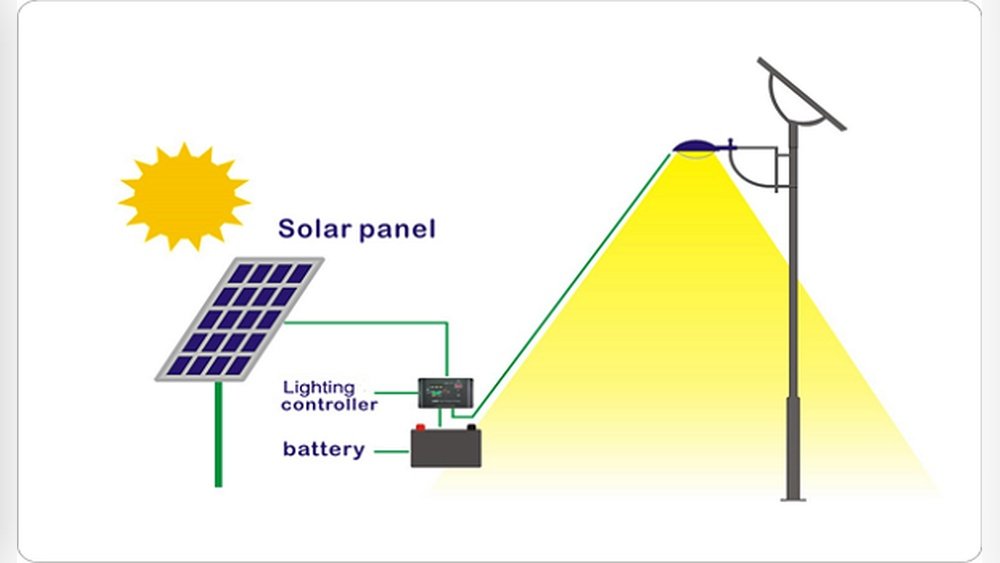
Credit: charge-solar-panel-with-a-battery.hashnode.dev
Comparing Sunlight To Light Bulbs
How different is sunlight from your average bulb? Here’s a look at the numbers:
| Light Source | Intensity (Watts/m²) | Spectrum Coverage | Typical Distance |
|---|---|---|---|
| Sunlight | ~1,000 | Full (UV, visible, IR) | 93 million miles |
| Incandescent Bulb (100W) | ~100 (very close) | Mostly visible, some IR | 1-2 feet |
| LED Bulb (15W) | ~30 (very close) | Narrow visible | 1-2 feet |
| Fluorescent Tube (40W) | ~50 (very close) | Visible + some UV | 1-2 feet |
As you can see, sunlight is more intense and covers a wider range of light. Even a powerful household bulb, held just a foot away from the panel, can’t match what the sun delivers naturally.
Types Of Light Bulbs And Their Effectiveness
Not all bulbs are equal for charging solar panels. The type of bulb and its wattage matter a lot. Here’s how the most common types compare:
Incandescent Bulbs
These give off light across a broad spectrum, including visible and infrared. They get hot and are inefficient as room lighting, but they have one advantage: their spectrum is closer to sunlight than most other bulbs. If you want to try charging a solar panel indoors, a high-wattage incandescent is the best bet among common bulbs. Still, you’ll get only a fraction of the power compared to sunlight.
Led Bulbs
LEDs are efficient as room lights but not as solar panel chargers. They emit light in a narrow range, often missing the wavelengths that panels need most. Placing an LED very close to a panel may generate a tiny amount of power, but it won’t be impressive.
Fluorescent Bulbs
Fluorescents emit some ultraviolet light (which panels can use), but their spectrum is still limited. They are better than LEDs but not as good as incandescents for this purpose. Some specialized “full-spectrum” fluorescents can do a bit better.
Halogen Bulbs
Halogens are a type of incandescent, but they run hotter and brighter. Their spectrum is good for solar panels, so a powerful halogen can give decent results—still, nothing close to the sun.
Specialty Grow Lights
Some grow lights are designed to mimic sunlight for plants. These can be quite effective at charging panels, especially if they cover both visible and infrared. However, they are expensive and use a lot of electricity just to simulate the sun.
Real-world Example: Charging A Small Solar Panel
Let’s say you have a 5-watt solar panel that works well in direct sunlight. You want to try charging it with a 100-watt incandescent bulb.
- In direct sunlight, the panel might give close to its rated 5 watts.
- Under a 100-watt bulb, placed a foot away, the output might drop to 0.5 watts or less.
- If you use a 15-watt LED, you might see just a few milliwatts—barely enough to light a tiny LED.
Why so little? The bulb’s intensity drops off rapidly with distance (the inverse square law), and much of the energy is lost as heat or in wavelengths the panel can’t use.
The Inverse Square Law: Why Closer Is Better (but Still Not Enough)
Ever notice how a light seems much dimmer when you move away? That’s the inverse square law in action: as you double the distance from a light source, the intensity drops by a factor of four. For solar panels, this means that even the brightest bulb becomes weak if it’s not nearly touching the panel.
If you want to maximize the effect, put the bulb as close as you safely can. But even then, the total energy available from the bulb is much lower than what you get from sunlight.
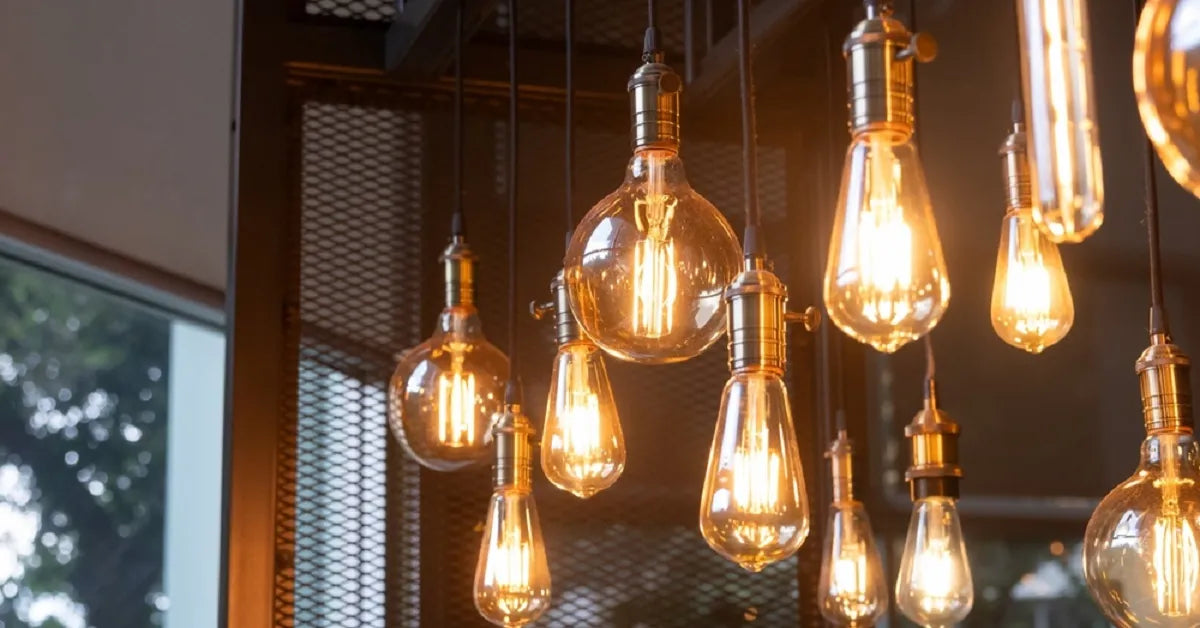
Credit: intelamp.com
Efficiency Of Solar Panels With Artificial Light
Let’s look at solar panel efficiency under different lighting:
| Lighting Condition | Expected Panel Output | Efficiency Loss (%) |
|---|---|---|
| Direct Sunlight | Near rated power | 0 |
| 100W Incandescent Bulb (1 ft) | ~10% of rated | ~90% |
| 15W LED Bulb (1 ft) | ~1-2% of rated | ~98-99% |
| Fluorescent Tube (1 ft) | ~5% of rated | ~95% |
Panels are simply not built for indoor bulbs. If you’re doing an experiment for fun, you’ll see a response—but if you’re hoping to run a device, you’ll be disappointed.
Which Solar Panels Work Best With Bulbs?
There are several types of solar panels. Some work slightly better with artificial light:
- Amorphous silicon panels: More sensitive to low light, but much less efficient overall.
- Monocrystalline panels: Highest efficiency in sunlight, but drop sharply indoors.
- Polycrystalline panels: Similar to monocrystalline, but slightly less efficient.
If you want to use a solar panel with a bulb, choose amorphous or “thin film” panels. These work better in weak light, but don’t expect magic.
Practical Uses: When Does Charging With A Bulb Make Sense?
Is there ever a real reason to do this? Sometimes, yes:
- Educational experiments: Great for classrooms or science fairs to show how solar panels respond to different light sources.
- Testing panels indoors: If you want to check if a panel works, a bright lamp can prove it without needing sunshine.
- Emergency trickle charging: In a pinch, you might use a strong lamp to slowly charge a small battery—but it will be very slow.
For anything beyond these, the cost of running the bulb will be far higher than the tiny bit of energy you get out.
Common Mistakes And Misconceptions
Many people think that any bright light will charge a solar panel quickly. Here are a few traps to avoid:
- Using weak LEDs: Most room LEDs are too weak and have the wrong spectrum.
- Placing bulbs too far: Even a 200-watt bulb does little if it’s more than a foot away.
- Expecting outdoor performance indoors: Even the best setup indoors can’t match sunlight.
Another common mistake is to cover a large panel with several small bulbs. The total energy delivered is still much less than what the sun provides.

Credit: www.heisolar.com
Is It Efficient To Charge A Panel With A Bulb?
In short: No. There’s a huge energy loss. Let’s do the math:
- A 100-watt bulb uses 100 watts of electricity.
- Your panel might recover 1-5 watts at best.
- That means 95-99% of the energy is lost as heat or wasted light.
So, you’re better off using the electricity directly, rather than converting it to light and back to electricity again.
Safety Considerations
If you try this experiment, stay safe:
- Don’t put bulbs too close to the panel, especially with hot bulbs—they can damage the panel or start a fire.
- Avoid handling bulbs when hot.
- Use a stable stand to keep everything from falling.
- Never use very high-wattage bulbs unsupervised indoors.
A Fun Experiment To Try
Curious to see it yourself? Here’s a simple way:
You’ll need:
- A small solar panel (like one from a garden light)
- A multimeter to measure voltage or current
- Several bulbs: An LED, an incandescent, and a fluorescent
Steps:
- Take your panel outside. Measure and note the voltage/current in sunlight.
- Take it indoors. Hold the incandescent bulb one foot from the panel, measure, then try with the LED and fluorescent.
- Move each bulb closer and farther, recording the numbers.
You’ll see the output drop sharply with weaker bulbs or greater distance. It’s a great way to learn how much stronger the sun really is.
When Artificial Light Charging Is Actually Useful
There are a few niche cases where charging with artificial light makes sense:
- Solar calculators and watches: These tiny panels can work with strong indoor lighting because they need very little power.
- Remote sensors: In places with no sun, you might use a special lamp for backup charging—often with custom-made panels.
- Demonstrations: For teaching, artificial light is handy and predictable.
But for charging your phone, running a fan, or powering a home? Artificial light just can’t compete.
Real-world Data: Energy Input Vs Output
Let’s compare the energy you put in (via the bulb) to what the solar panel gives back:
| Setup | Bulb Power Used | Solar Panel Output | System Efficiency (%) |
|---|---|---|---|
| 100W Incandescent, 1 ft away | 100 watts | 1-3 watts | 1-3% |
| 15W LED, 1 ft away | 15 watts | 0.1-0.3 watts | 0.7-2% |
| Sunlight (no bulb) | 0 (free) | 5 watts (for a 5W panel) | n/a (direct) |
This shows why using a bulb isn’t practical for real energy needs.
Environmental Impact
Using a bulb to charge a solar panel is not green. You use electricity (often from fossil fuels) to power the bulb, then lose most of that energy as heat. The sun, on the other hand, is free and renewable.
If you’re thinking about sustainability, use your solar panels outdoors. That’s their real strength.
Non-obvious Insights
- Spectrum mismatch: Most people focus on brightness, but *wavelength* is just as important. Panels need certain wavelengths to work well. Even a very bright bulb can miss these, making it much less effective.
- Panel temperature: Panels work less efficiently when hot. Placing a strong bulb close can heat them up, further lowering their output—something the sun does less, thanks to air movement outdoors.
Final Thoughts
So, can you charge a solar panel with a light bulb? Technically yes, but only a tiny bit. If you’re hoping to power something meaningful, you’ll be disappointed. The main value is for small experiments, educational demonstrations, or testing. For anything else, stick to real sunlight—it’s what your panel was built for.
Artificial light just can’t match the power, spectrum, or efficiency of the sun.
If you want to dig even deeper into how solar panels react to different light sources, check out this resource from the Wikipedia: Photovoltaics.
Frequently Asked Questions
Can Any Light Bulb Charge A Solar Panel?
Any bulb that produces visible light can cause a reaction in a solar panel, but not all bulbs are equally effective. High-wattage incandescents or specialty grow lights work better than standard LEDs, but none come close to sunlight.
Why Is My Solar Panel Not Charging Under A Light Bulb?
Most likely, the bulb is not bright enough or does not emit the right spectrum of light. Distance matters too—if the bulb is even a few feet away, the intensity drops off sharply.
Is It Safe To Leave A Light Bulb Close To A Solar Panel?
Be careful. Incandescent and halogen bulbs can get very hot, possibly damaging the panel or starting a fire. Always keep an eye on the setup and don’t leave it unattended.
How Much Power Can I Get From A Solar Panel Using A Bulb?
Expect only 1–10% of the panel’s rated power, even with a strong bulb held close. For a 5-watt panel, that’s 0. 05 to 0. 5 watts—enough for a tiny device, but not much more.
What’s The Most Efficient Way To Test A Solar Panel Indoors?
Use a high-wattage incandescent bulb, positioned as close as safely possible. Measure output with a multimeter. For most accurate results, test outside under sunlight when you can.
Charging a solar panel with a light bulb is a fun experiment, but for real energy needs, nothing beats the sun.