
Ever sign up for something that sounded great at first, but later felt stuck or even misled? If you’re reading this, you might be facing buyer’s remorse with your solar panel contract. Maybe the numbers don’t add up. Maybe the installation is delayed for months. Or maybe you just changed your mind after talking to a neighbor. No matter your reason, you want out—but cancelling a solar contract often feels confusing and stressful.
You’re not alone. Many homeowners find themselves searching for a way out of a solar deal that’s no longer right for them. The good news? You usually have options, but the steps are not always obvious. Let’s break down how you can cancel your solar panel contract—simply, confidently, and with as little pain as possible.
Short Answer: How To Cancel A Solar Panel Contract
If you want the quick solution, here it is:
- Read your contract carefully for cancellation and cooling-off clauses.
- Act fast—most contracts have a short period (3–10 days) where you can cancel with no penalty.
- Send a written cancellation notice (email or letter) to the solar company, following their stated instructions.
- If you’re outside the cooling-off period, check for early termination fees or other penalties.
- Negotiate with the company if you have a strong reason (like delays or misrepresentation).
- If needed, get legal advice or contact your state’s consumer protection office.
Now, let’s go step-by-step. You’ll learn what to look for, common mistakes to avoid, and how to protect yourself—even if the company tries to make things difficult.
Why People Want To Cancel Solar Panel Contracts
Not all solar deals go smoothly. Here are some of the most common reasons people want to back out:
- Change of mind: You realized solar isn’t right for your home or finances.
- High costs or hidden fees: The real costs are more than what you were told.
- Delays in installation: The company keeps pushing back dates.
- Aggressive sales tactics: You felt pressured to sign up.
- Better offers elsewhere: You found a better deal or technology.
- Home issues: Your roof needs work, or your HOA says no.
Understanding your reason matters—it can affect how easy (or hard) it is to cancel, and what arguments you can use.

Credit: microgridmedia.com
What’s Actually In Your Solar Contract?
Before doing anything, grab your contract. Here’s what you need to check:
- Cooling-off period: This is a legally required time (often 3–10 days) when you can cancel for any reason and get all your money back.
- Cancellation clauses: Rules about when and how you can cancel.
- Penalties or fees: Amounts you must pay if you cancel after the cooling-off period.
- Obligations: What you promised to do (like keeping the panels for 20 years).
- Transferability: Can you transfer the contract if you sell your house?
Pay extra attention to anything labeled “Right to Cancel,” “Termination,” “Early Exit,” or similar.
Example: Cooling-off Period Length By State
Here’s how cooling-off periods compare in a few places:
| State | Cooling-Off Period | Where to Find Rule |
|---|---|---|
| California | 3 Business Days | California Civil Code |
| Texas | 3 Business Days | Texas Business & Commerce Code |
| New York | 3 Business Days | General Business Law |
| Florida | 10 Days | Florida Statutes |
Insight: Many people miss that weekends and holidays often don’t count as “business days.” You may have more time than you think.
Step-by-step: How To Cancel Your Solar Panel Contract
Let’s walk through each stage with tips and examples.
1. Check The Cooling-off Period
Most states require solar contracts to have a short no-penalty cancellation window. This is your best chance to cancel easily.
- Find the “Right to Cancel” section in your contract.
- See how many days you have (usually from the day you sign, not the install date).
- If you’re within this window, act immediately.
Tip: Even if the salesperson says “it’s too late,” the law usually wins over what they say.
2. Write A Clear Cancellation Notice
Don’t just call. Put it in writing. Here’s what a simple cancellation email/letter should include:
- Your name and address
- Contract number (if listed)
- Statement: “I am exercising my right to cancel my solar contract under the cooling-off period.”
- Today’s date
- Your signature (if a letter)
Example:
> Subject: Solar Contract Cancellation – [your Name]
>
> Dear [Company Name],
>
> I am cancelling my solar panel contract signed on [date], under the cooling-off period. Please confirm this cancellation in writing.
>
> Thank you,
>
> [your Name]
> [your Address]
> [contract Number]
Send it to the address/email in the contract, and keep a copy.
3. If You’re Past The Cooling-off Period
This is where things get tricky. You’ll need to look for:
- Early termination fees (often $1,000–$10,000+)
- Other penalty clauses
- What counts as a valid “cause” for cancellation
Tip: If the company hasn’t started work, you often have more leverage to cancel with a lower fee.
4. Negotiate With The Solar Company
If your contract has big penalties, don’t give up yet. Try to negotiate. Companies sometimes reduce fees or agree to cancel if:
- You haven’t received equipment or installation hasn’t started.
- There are repeated delays.
- You were misled about costs, savings, or incentives.
- Your roof is not suitable (found after inspection).
Be polite but firm. Explain your reason, and reference any delays, incomplete work, or unfulfilled promises.
Non-obvious insight: If you threaten to leave negative reviews or contact consumer protection agencies, many companies become more flexible.
5. Get Help If You’re Stuck
If the company won’t budge, consider:
- Contacting your state’s consumer protection office
- Filing a complaint with the Better Business Bureau
- Speaking to a lawyer (especially if you feel misled)
- Contacting your utility company (sometimes they have advice or can help mediate)
Comparing Penalties: What Can You Lose?
Not all contracts are equal. Here’s a quick look at typical cancellation costs:
| Contract Type | Typical Early Termination Fee | When Fee Applies |
|---|---|---|
| Lease | $2,000–$10,000 | After cooling-off period, before install |
| Loan | Varies (up to full loan balance) | After installation, or if panels are removed early |
| Purchase | Usually deposit only | Before panels delivered/installed |
| PPA (Power Purchase Agreement) | $2,500–$20,000 | After cooling-off period |
Pro tip: If your panels aren’t installed yet, you may only lose your deposit. If they’re already on your roof, you may owe much more.
How Different Contract Types Affect Cancellation
Not all solar contracts are the same. Here’s how the most common ones break down:
Solar Lease
- You pay monthly for the system, but don’t own it.
- Usually 20–25 years.
- Cancelling can mean big fees, especially after installation.
Solar Loan
- You borrow money to buy the panels.
- If you cancel before installation, you may lose only your deposit.
- After install, you’re on the hook for the loan.
Power Purchase Agreement (ppa)
- You buy power from the company at a set rate.
- Contract usually 20–25 years.
- Early exit fees are common and can be high.
Direct Purchase
- You pay for the system upfront.
- If you cancel before delivery/installation, you may lose your deposit.
- After installation, it’s hard to “cancel”—you own the system.
Key insight: Many buyers don’t realize solar loans and PPAs are harder to exit than leases—mainly due to the financing terms.
What If The Company Misled You?
If you were promised savings, tax credits, or rebates that don’t exist, or the company lied about costs or your roof’s suitability, you may have legal grounds to cancel with no penalty.
Look for:
- False claims in advertising or during the sales pitch
- Promises that are not in the contract
- Hidden fees that were not disclosed
Write down everything the salesperson said and keep all emails, brochures, or texts.
Practical tip: State and federal consumer protection laws are on your side. In some cases, you can void a contract based on misrepresentation or fraud.
For more on consumer protection, see the Federal Trade Commission’s advice on solar power: FTC: Going Solar.
Steps To Take Before Signing Any Solar Contract
If you’re still deciding, here’s how to avoid trouble later:
- Ask for a blank contract copy—read all cancellation and penalty clauses.
- Check reviews of the company on Google, BBB, and social media.
- Ask about cooling-off period—get the answer in writing.
- Look for arbitration clauses (these can limit your right to sue).
- Never sign under pressure or without time to review.
Non-obvious insight: Some contracts automatically renew or extend if you don’t cancel at the end—mark your calendar to review before the term ends.
How To Reduce Or Avoid Cancellation Fees
If you’re out of the cooling-off period, there are still ways to lower or avoid fees:
- Document delays or broken promises—companies may waive fees if they are at fault.
- Ask to transfer the contract if you’re moving—sometimes a new homeowner can take over.
- Offer to let them keep your deposit in exchange for full cancellation.
- Point out local laws—in some states, heavy penalties are not enforceable.
Real-life Example: Canceling After The Cooling-off Period
Let’s say you signed a lease, then found out your HOA won’t allow solar panels. The cooling-off period is over. Here’s what you can do:
- Contact the solar company with proof from your HOA.
- Ask for release on the grounds that you can’t legally install.
- If refused, ask your HOA to contact the company directly.
- As a last resort, check if your state law protects homeowners in this situation.
Result: Many companies will cancel rather than fight with a homeowners’ association. But you may lose your deposit.
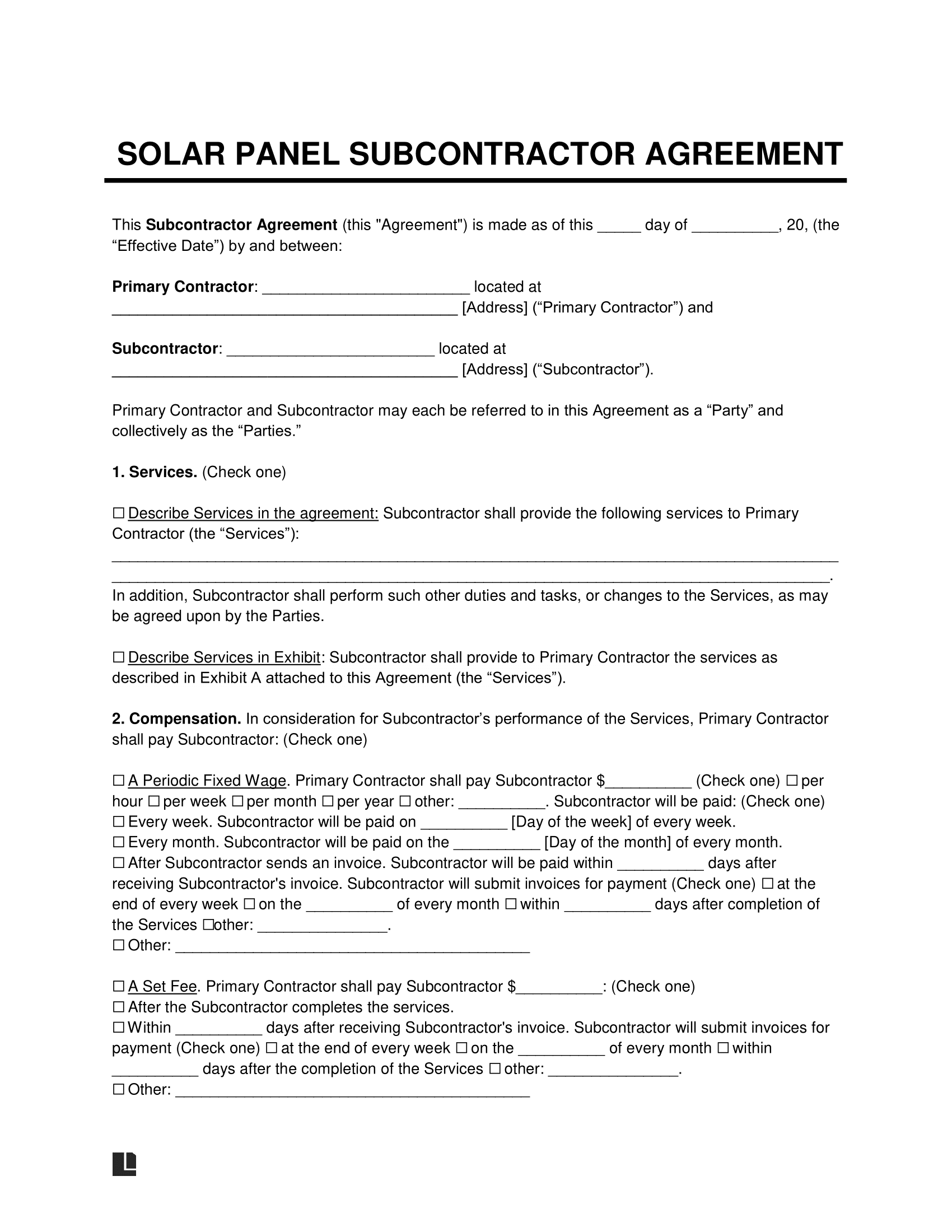
Credit: legaltemplates.net
Common Mistakes When Cancelling
Avoid these traps:
- Waiting too long to act—time matters!
- Only calling, not writing—get everything in writing.
- Not reading the contract for penalties.
- Ignoring your state’s consumer laws.
- Paying a fee you don’t actually owe.
Bonus tip: Some companies claim you owe more than you do. Ask for an itemized bill and double-check against your contract.
What To Do If Panels Are Already Installed
If the system is already on your roof:
- Review your contract for removal fees (these can be $5,000+).
- If the system doesn’t work or is unsafe, demand fixes before considering cancellation.
- Talk to your lender if you used a loan—they may have options.
- Selling your house? Ask if the buyer can take over the contract.
How To Handle Pushback From Solar Companies
Many companies will try to discourage you from cancelling. Here’s how to stand your ground:
- Stay calm and professional—don’t get angry.
- Repeat your request as needed.
- Reference your rights and the contract’s cancellation clause.
- If they refuse, mention you’ll contact consumer protection.
Tip: Some companies offer “retention bonuses” (like free months of power) to keep you—consider if this is worth staying.
Checklist: Steps To Cancel Your Solar Panel Contract
Here’s a quick checklist to guide you:
- Read your contract for cancellation rights.
- Find out your cooling-off period and act quickly.
- Write and send a formal cancellation notice.
- Save all communications and proof of delivery.
- If outside the cooling-off period, check for penalties.
- Try to negotiate if fees are high.
- Contact consumer protection or a lawyer if needed.
Sample Timeline: Cancelling A Solar Contract
How long will this take? Here’s a typical timeline:
| Action | Estimated Time |
|---|---|
| Read contract & find cancellation clause | 1 hour |
| Send written notice | Same day |
| Company confirms receipt | 1–5 days |
| Refund (if owed) | 1–4 weeks |
| Dispute resolution (if needed) | 2–8 weeks |
Frequently Asked Questions
How Long Do I Have To Cancel A Solar Panel Contract?
The cooling-off period is usually 3–10 days, depending on your state and contract. After that, you may owe a fee. Always check your contract’s “Right to Cancel” section and act quickly.
Will I Lose My Deposit If I Cancel?
If you cancel during the cooling-off period, you should get your full deposit back. If you cancel later, you may lose part or all of your deposit, depending on your contract’s terms.
Can I Cancel After The Panels Are Installed?
It’s much harder to cancel after installation. You may owe the full contract value or a large removal fee. Sometimes, you can transfer the contract to a homebuyer or negotiate a settlement.
What If I Was Misled By The Solar Company?
If you were misled or lied to, you may have legal grounds to cancel without penalty. Collect all proof and contact your state’s consumer protection office or a lawyer.
Who Can Help Me If I Have A Problem Cancelling?
Try your state’s consumer protection office, the Better Business Bureau, or a local attorney. Utility companies sometimes help mediate disputes too.
Dealing with a solar contract cancellation can be stressful, but you don’t have to face it alone. With the right steps, you can protect your money and your peace of mind. Read every contract, act fast, and don’t be afraid to ask for help.
Your home—and your wallet—are worth it.
 "How to Cancel Solar Panel Contract: A Step-by-Step Guide 3")
Credit: www.energysage.com