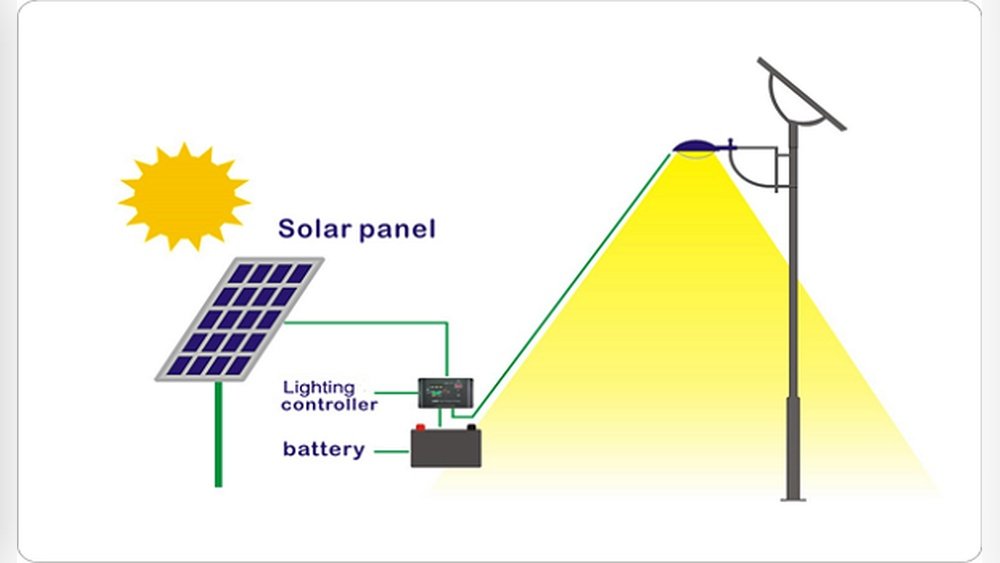

Ever looked at your roof and wondered, “How many solar panels can I actually fit up there? ” Maybe you’ve seen neighbors go solar, or gotten quotes that left you confused. You might have tried using online calculators, but they never seem to match your roof’s real shape.
It’s easy to feel lost, especially when you want a straight answer without technical jargon.
Let’s clear things up. I’ll walk you through everything you need to know, step by step. We’ll cover the basics, real examples, and even mistakes people make. By the end, you’ll know exactly how to figure out the right number for your own roof, without guessing or relying only on sales pitches.
Short Answer: How Many Solar Panels Fit On Your Roof?
Most standard residential roofs can fit between 15 and 40 solar panels, depending on the size, shape, and obstacles like vents or chimneys. If you have a typical roof size of 1,500–2,000 square feet with moderate shading and no major obstructions, you’ll likely fit around 20–28 panels.
But your answer depends on three main things:
- Usable roof area (not total square footage)
- Panel size (most common is 65 x 39 inches)
- Obstructions and orientation (like skylights, vents, or steep angles)
In the next sections, I’ll show you how to measure, calculate, and check all these factors for your own home.
Why The Number Of Panels Matters
You might wonder: why does this number even matter? Well, here’s why:
- Cost: More panels mean higher upfront cost, but also more electricity produced.
- Savings: If you fit more panels, you can cover more of your energy needs.
- Appearance: Crowding panels can look messy, while a balanced layout looks better.
People often make the mistake of thinking “the more, the better,” but that’s not always true. Sometimes, a few high-efficiency panels can do the job of many cheaper ones.
Understanding Your Roof’s Usable Area
Let’s break this down. Not all of your roof is usable for panels. Here’s what affects the real space:
- Obstacles: Chimneys, skylights, vents, satellite dishes, and roof edges.
- Shade: Trees, neighboring buildings, and roof angles.
- Orientation: South-facing roofs are best in the US, but east/west can work too.
Measuring Your Roof
The simplest way is to look at your roof’s layout from above. You can use satellite images (like Google Maps) or climb up with a tape measure. But let’s keep it safe and simple.
- Measure the length and width of each roof section (in feet).
- Multiply to get the area for each section.
- Subtract areas with obstacles or shading.
Let’s say you have a rectangular section that’s 20 feet by 30 feet:
- Area = 20 x 30 = 600 sq. Ft.
If your chimney takes up 4 x 4 feet, subtract that:
- Chimney area = 16 sq. Ft.
- Usable area = 600 – 16 = 584 sq. Ft.
Repeat for each section. Add up all usable areas.
Example Calculation
Suppose your roof has:
- Front section: 25 x 40 feet (1,000 sq. Ft.)
- Back section: 15 x 30 feet (450 sq. Ft.)
- Two skylights: 3 x 5 feet each (15 sq. Ft. x 2 = 30 sq. Ft.)
Total usable area = (1,000 + 450) – 30 = 1,420 sq. ft.
How Big Are Solar Panels?
Most panels for homes are about 65 inches x 39 inches (roughly 5.4 ft x 3.25 ft). Each panel covers about 17.5 square feet.
Here’s a quick reference:
| Panel Type | Dimensions (inches) | Area (sq. ft.) | Wattage |
|---|---|---|---|
| Standard Residential | 65 x 39 | 17.5 | 350–400W |
| Large Commercial | 77 x 39 | 21 | 450–500W |
| Compact/High-Efficiency | 60 x 30 | 12.5 | 300–350W |
Most installers use the standard residential size.
Calculating Maximum Number Of Panels
Here’s the simple formula:
Usable roof area (sq. ft.) ÷ panel area (sq. ft.) = Maximum number of panels
Let’s use the example above:
- Usable area: 1,420 sq. Ft.
- Panel area: 17.5 sq. Ft.
1,420 ÷ 17.5 = 81 panels
But in reality, you’ll fit less because panels need space between them, and not all roof sections are perfect rectangles. Most people lose 10–20% of space due to layout and gaps.
Adjusting For Real Layout
Subtract about 15% for gaps and fitting issues:
- 81 x 0.85 = 68 panels
That’s your realistic maximum. Most homes don’t need that many panels, but it’s good to know the upper limit.
How Many Panels Do You Actually Need?
You don’t always need to fill your roof. The number of panels should match your electricity use.
Find Your Monthly Electricity Use
Check your electric bill for kilowatt-hours (kWh) used per month.
- Average US home: 900–1,100 kWh per month
Estimate Panel Output
A 350W panel produces about 30–45 kWh per month, depending on location and sunlight.
- 20 panels x 40 kWh = 800 kWh/month
- 30 panels x 40 kWh = 1,200 kWh/month
This gives you a ballpark. If your home uses 1,000 kWh monthly, you’ll need about 25–28 panels.
Regional Differences
Sunlight varies by state. California gets more sun than Maine. Here’s a quick comparison:
| City/Region | Average Sun Hours/Day | Panel Output (kWh/month) |
|---|---|---|
| Los Angeles, CA | 5.5 | 45 |
| New York, NY | 4.0 | 32 |
| Houston, TX | 5.0 | 41 |
| Seattle, WA | 3.2 | 27 |
Multiply your panel output by the number of panels to estimate monthly production.
Roof Type And Layout: Shapes Matter
Not all roofs are equal. Some are easy to fill, others are tricky. Here’s how roof type affects panel placement:
- Gable Roof: Two sloped sides, easiest for panels.
- Hip Roof: Four sloped sides, can fit panels but less area.
- Flat Roof: Panels can be placed anywhere, but need tilt racks.
- Mansard/Roof with multiple angles: Harder to fit panels, loses space.
Obstacles And Spacing
Every obstacle needs space around it. National Electric Code requires at least 3 feet around roof edges for safety.
- Panels cannot be right up against chimneys, vents, or edges.
- Panels need to be spaced to allow access for maintenance.
Mistakes People Make
- Ignoring obstacles: People forget about vents, pipes, or skylights.
- Wrong measurements: Estimating instead of measuring.
- Overestimating output: Not considering local weather or shading.
Real-life Example: Average Us Home
Let’s walk through a realistic scenario.
Home Details
- Roof: 1,800 sq. Ft. (split into 2 sections)
- Obstacles: 1 chimney (16 sq. Ft.), 2 vents (10 sq. Ft. total), skylight (20 sq. Ft.)
- Usable area: 1,800 – 16 – 10 – 20 = 1,754 sq. Ft.
Panel Size
Standard panel: 17.5 sq. ft.
Maximum Number
1,754 ÷ 17.5 = 100 panels
Adjust for layout (15% loss):
100 x 0.85 = 85 panels
But the home only uses 1,000 kWh/month, so only 25–28 panels are needed.
Installer’s Layout
Installers will group panels together, avoiding obstacles, and keeping safety spaces. Usually, they’ll suggest fewer panels than the absolute maximum.
High-efficiency Panels: Fit More Power In Less Space
If your roof is small, you can use high-efficiency panels. These produce more power per square foot.
- Standard panel: 350W, 17.5 sq. Ft.
- High-efficiency: 400W, same size.
If you use high-efficiency panels, you need fewer to cover your energy needs.
Quick Comparison
| Panel Efficiency | Panel Size (sq. ft.) | Monthly Output (kWh) | Panels Needed for 1,000 kWh/month |
|---|---|---|---|
| Standard (350W) | 17.5 | 40 | 25 |
| High-Efficiency (400W) | 17.5 | 46 | 22 |
This shows you can fit the same number of panels, but get more power if you choose high-efficiency models.
Orientation And Tilt: Making The Most Of Your Space
The direction your roof faces affects panel output.
- South-facing: Best for US homes, gets the most sunlight.
- East/West: Good, but produces less power.
- North-facing: Not recommended unless you have no other option.
Panels should be angled to match your location’s latitude for best results.
Panel Spacing
Installers leave small gaps between panels to avoid shading and allow airflow. This is why you rarely fill 100% of the space.
How To Check Your Roof Yourself
Here’s a simple step-by-step guide:
- Use a tape measure or satellite image to find roof dimensions.
- Identify obstacles (chimneys, vents, skylights).
- Calculate usable area by subtracting obstacles.
- Divide usable area by panel size (17.5 sq. Ft.).
- Adjust for layout (subtract 15%).
- Check your monthly electricity use.
- Decide how many panels you actually need.
Online Tools
You can use free tools like Google Project Sunroof or solar calculators to get estimates. But always double-check with real measurements and local installers.
Installer’s Role: Why Professional Assessment Matters
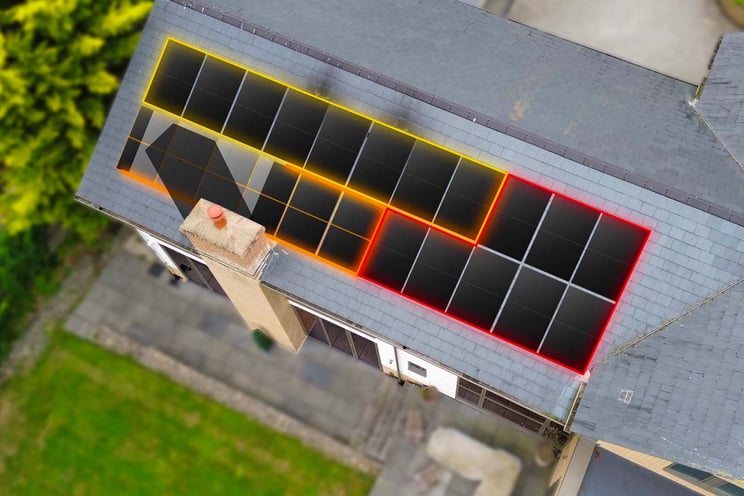
Installers use advanced software to map your roof, including shading, angles, and local sun data. They often find ways to fit panels you might miss, or spot obstacles you didn’t notice.
- They know local codes and safety requirements.
- They optimize layout for maximum output.
- They help you choose the right panel type.
Don’t rely only on online calculators—get a professional assessment for best results.
Credit: blog.spiritenergy.co.uk
Common Mistakes To Avoid
- Guessing roof size: Measure, don’t estimate.
- Ignoring obstacles: Count every chimney, vent, skylight.
- Not considering shade: Trees and nearby buildings affect output.
- Buying too many panels: Only buy what you need for your energy use.
- Forgetting about panel efficiency: Higher efficiency can mean fewer panels.
- Overlooking local codes: Safety spaces are required.
- Assuming all roof areas are usable: Sloped or irregular sections lose space.
Practical Tips For Maximum Solar Panel Fit
- Plan panel placement with a professional.
- Use high-efficiency panels for small roofs.
- Trim trees or remove obstacles if possible.
- Consider battery storage if you want to maximize use.
- Regularly clean panels for best performance.
Other Factors That Can Limit Panel Placement
Besides roof size, several things can affect how many panels you can install:
- Weight limits: Roofs must support the panels’ weight.
- Age of roof: Old roofs may need repairs before installation.
- Local codes: Fire and safety regulations might limit placement.
- Aesthetics: Homeowner associations sometimes limit visible panels.
Should You Fill Your Roof Completely?
Not always. Filling every inch isn’t always smart. Here’s why:
- Overproduction: If you make more power than you use, you may not benefit unless you have net metering.
- Maintenance: Panels need space for cleaning and repairs.
- Upgrades: You might want space for future battery storage or upgrades.
Solar Panel Layout Examples
Let’s look at two common layouts:
Example 1: Small Roof With Obstacles
- Roof size: 900 sq. Ft.
- Obstacles: Skylight (20 sq. Ft.), vent (10 sq. Ft.)
- Usable area: 900 – 20 – 10 = 870 sq. Ft.
- Panels: 870 ÷ 17.5 = 49 panels, adjust for layout: 49 x 0.85 = 41 panels
Example 2: Large Roof, No Obstacles
- Roof size: 2,000 sq. Ft.
- Usable area: 2,000 sq. Ft.
- Panels: 2,000 ÷ 17.5 = 114 panels, adjust for layout: 114 x 0.85 = 97 panels
But again, most homes only need 25–30 panels for their energy use.
Is There A Limit To How Many Panels You Can Install?
Yes. Limits include:
- Roof area
- Local regulations
- Electrical system size
- Utility company rules
Some utility companies cap the size of home solar systems for net metering.
How Solar Panel Placement Affects Performance
Where you place panels changes how much power you get.
- Avoid shaded areas.
- Place panels where they get morning and afternoon sun.
- Tilt panels for your location.
Can You Install Panels On Multiple Roof Sections?
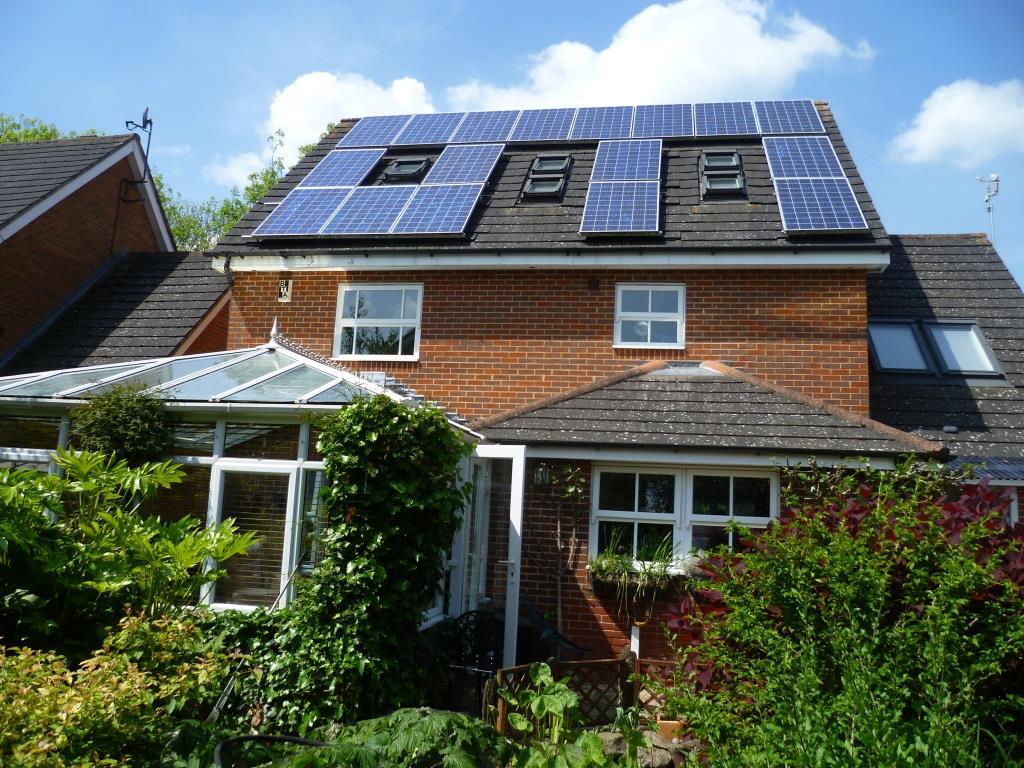
Yes, you can mix panels across different roof sections. Installers can connect panels on the front, back, or garage roof. But each section may get different sunlight, so output varies.
Comparing Roof Types For Solar
Here’s a quick look at which roof types are best for panels:
| Roof Type | Ease of Installation | Max Panels (Avg. Home) | Notes |
|---|---|---|---|
| Gable | Easy | 30–40 | Best for panels |
| Hip | Medium | 20–30 | Less usable area |
| Flat | Easy | 40–50 | Needs tilt racks |
| Mansard/Complex | Hard | 10–20 | Many obstacles |
Should You Install More Panels Than You Need?
Only if you plan to add electric vehicles, heat pumps, or batteries in the future. Otherwise, it’s usually best to match panels to your current usage.
How To Future-proof Your Solar Installation
- Leave space for extra panels if you might buy an EV.
- Choose panels with higher efficiency for upgrades.
- Install a system that can expand later.
Getting A Professional Quote
Always get at least two quotes from certified installers. They’ll check your roof, measure, and give you a custom layout. Ask about:
- Panel efficiency
- Warranty
- Maintenance
- Output estimates
Credit: www.thegreenage.co.uk
Where To Learn More
For more technical details and industry standards, check the US Department of Energy’s solar guide.
Frequently Asked Questions
How Do I Measure My Roof For Solar Panels?
Use a tape measure to find the length and width of each roof section. Multiply to get the area. Subtract space taken by chimneys, vents, and skylights. Then divide by the size of one panel (about 17. 5 sq. Ft.
).
Can Solar Panels Be Installed On Shaded Roofs?
Panels work best in full sun. If your roof has shade from trees or buildings, you’ll get less power. Installers can use microinverters or optimizers to reduce losses, but you may need fewer panels or higher efficiency models.
What Happens If I Install More Panels Than I Need?
You may produce more power than you use. If your utility offers net metering, you can earn credits. But if not, you may lose out on the extra production. Only install more panels if you plan to increase your energy use.
Do Solar Panels Work On All Roof Types?
Most roof types can support panels, but some are easier than others. Gable and flat roofs are best. Complex or steep roofs may need special mounting systems and lose usable space.
How Much Space Should I Leave Between Panels?
Installers usually leave 3–6 inches between panels for airflow and maintenance. You must also keep safety distances from roof edges and obstacles (about 3 feet).
—
Thinking about solar doesn’t have to feel complicated. By measuring your roof, checking obstacles, and matching panel numbers to your energy use, you’ll get a clear answer for your home. Don’t rush—take your time, ask questions, and use professional help when needed.
The right number of panels means better savings, easier maintenance, and a system that fits your needs. Ready to make your roof work for you? Start measuring, and you’ll be surprised how straightforward it can be.

Credit: www.energysage.com