
If you’ve ever looked at a solar panel and wondered, “Can I use a flashlight to charge it? ”, you’re not alone. Maybe you’re stuck indoors, or it’s cloudy outside, and you want to test your solar gadget. Or you bought a small solar charger and hope to power it with a strong flashlight.
It sounds simple, right? Just shine a bright light and watch the magic happen. But does this actually work? Most people are surprised by the real answer—and the reasons behind it.
Short Answer
A flashlight can charge a solar panel—but the amount of energy is tiny, and it’s not practical. Solar panels need lots of light to work well. Flashlights are not powerful enough to produce useful electricity from a solar panel. In short, yes, it’s possible, but it won’t give you enough power for most needs.
How Solar Panels Really Work
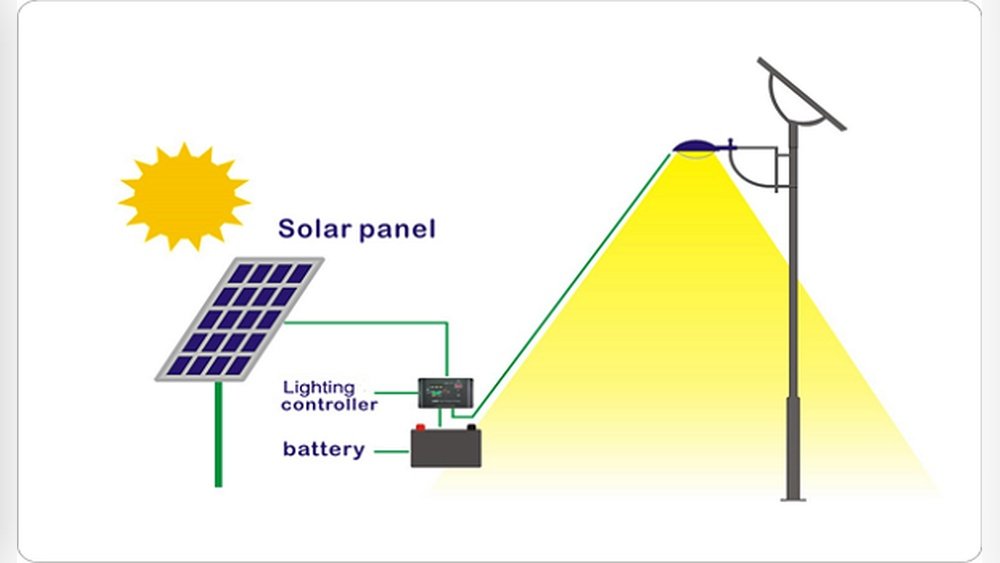
Solar panels use photovoltaic cells to turn light into electricity. These cells are most efficient with direct sunlight. The energy from the sun is intense; it’s about 1,000 watts per square meter on a clear day. A typical flashlight is much weaker.
Most panels convert light into electricity using this basic process:
- Light hits the panel
- Electrons move, creating an electric current
- Current flows to charge batteries or power devices
The more intense the light, the more electricity is produced.
Comparing Sunlight And Flashlight Power
Let’s look at the difference between sunlight and flashlight output.
| Source | Light Intensity (Lux) | Power (Watts/m²) |
|---|---|---|
| Direct Sunlight | ~100,000 | ~1,000 |
| LED Flashlight (High-End) | ~1,000 | ~1 |
| Incandescent Flashlight | ~300 | ~0.3 |
You can see the numbers don’t even come close. Sunlight is hundreds to thousands of times stronger than any flashlight.
What Happens If You Try It?
If you shine a flashlight at a solar panel:
- The panel will produce a tiny amount of electricity
- It might be enough to run a small LED (if you’re lucky)
- It will not charge a phone, battery, or most devices
Most solar panels need at least 20–50 milliwatts to power tiny gadgets. Flashlights usually provide less than this, unless you use an extremely powerful one—something not found in most homes.
Example Test
Suppose you use a 100-watt LED flashlight (an expensive, rare model) and aim it at a small solar panel. You might get enough to power a digital clock. But a regular flashlight (like a 5-watt one) won’t even light up a tiny bulb connected to the panel.
Why Flashlights Don’t Work Well
Flashlights simply don’t have enough power. Here’s why:
- Light intensity drops quickly with distance
- Most flashlights scatter light, not focused like the sun
- Solar panels are designed for broad, intense light, not narrow beams
Even if you use multiple flashlights, the combined power is still much less than sunlight.
The Efficiency Factor
Solar panels are only about 15–22% efficient. This means most light energy is lost and not converted to electricity. With weak flashlight light, the loss is even bigger.
Can You Boost The Output?
Some people try to use multiple flashlights or strong lamps. While this can increase the output a little, it’s still far below what sunlight can do.
| Number of Flashlights | Total Power (Watts) | Solar Panel Output (Watts) |
|---|---|---|
| 1 | 5 | 0.8 |
| 5 | 25 | 4 |
| 10 | 50 | 8 |
Even with ten strong flashlights, you only get a few watts—still much less than the sun.
The Type Of Flashlight Matters
LED flashlights are brighter and more efficient than old-style bulbs. But even the best LED models can’t match the sun’s power. The color of the light matters too. Solar panels work best with light that’s similar to sunlight (white or blue). Red or yellow flashlights are less effective.
Types Of Light Sources
- Incandescent: Weak, not efficient for solar panels
- LED: Brighter, better, but still not strong enough
- Halogen: Stronger, but uses lots of energy and gets hot
Practical Uses: Can You Ever Use A Flashlight?
If you want to test a solar panel indoors, a flashlight can help you see if it works. For example:
- Shine a flashlight on a small panel to check if it produces any voltage
- Use a bright lamp to test wiring or connections
But for charging devices or storing energy, flashlights are not practical.
Real-life Situations
Let’s say you’re camping and it’s cloudy. You hope to use a flashlight to charge your solar power bank. It won’t work. You’d need a special light source (like a grow lamp or high-powered floodlight) that uses much more energy than you get back from the panel.
Or maybe you’re in a classroom and want to demonstrate solar energy. A flashlight can show the principle, but it won’t produce useful power.
Why Not Just Use Artificial Light?
Artificial light sources (lamps, LEDs, etc. ) Can charge a solar panel—but only if they are very powerful. Most home lamps are not strong enough. You’d need a professional light source used for testing solar panels, which is expensive and uses lots of electricity.
| Light Source | Typical Power (Watts) | Solar Output (Watts) |
|---|---|---|
| Grow Lamp | 100 | 15 |
| Desk Lamp | 40 | 4 |
| Flashlight | 5 | 0.8 |
Notice the output is always much lower than the input power. You spend more energy than you get back.
Common Mistakes And Misunderstandings
Many people think a bright flashlight is “just like the sun.” But even the brightest household flashlight is only a small fraction of sunlight’s strength. Here are some common mistakes:
- Using a weak flashlight and expecting to charge a phone
- Holding the flashlight too far from the panel
- Using colored lights (red, yellow) that don’t match solar panel sensitivity
- Assuming all solar panels work the same with artificial light
If you want to test a solar panel, use a white LED flashlight as close as possible, but don’t expect much.
Non-obvious Insights
Most beginners don’t realize that:
- The distance between the light source and the panel matters. The closer, the better.
- The angle of the light affects output. Light should hit the panel straight on, not at an angle.
- Even in “bright” rooms, solar panels get less than 1% of what they get from direct sunlight.

Credit: www.ebay.com
Is It Worth Using A Flashlight?
For practical charging, no. You will use more energy powering the flashlight than you get from the panel. It’s not efficient. If you need to charge something, it’s better to use the original power source directly.
For quick tests or demonstrations, a flashlight is fine. Just don’t expect real charging power.
What Are Good Alternatives?
If you can’t use sunlight, consider these options:
- Grow lights: Designed to mimic sunlight, but expensive
- Halogen lamps: Powerful, but hot and energy-hungry
- LED floodlights: Better, but still less efficient than sunlight
For real charging, nothing beats actual sunlight.

Credit: www.amazon.com
Expert Data And Research
Studies show that solar panels perform best with natural sunlight. Artificial lights are weaker and less efficient. According to Wikipedia, the efficiency of solar cells drops quickly with low light intensity.
Testing labs use special lamps that cost hundreds of dollars to simulate sunlight. Home flashlights and lamps are not made for this purpose.
Frequently Asked Questions
Can A Flashlight Charge A Phone Using A Solar Panel?
No. Even the strongest flashlight won’t provide enough power to charge a phone through a solar panel. The energy output is too low.
What Kind Of Flashlight Works Best For Solar Panels?
A white LED flashlight is the best for testing, but it’s still not powerful enough for real charging. The light should be as close and direct as possible.
Is It Safe To Use Flashlights On Solar Panels?
Yes, it’s safe. Flashlights won’t harm the solar panel. Just don’t use super-hot lamps (like halogen) for long periods.
Can Artificial Light Ever Replace Sunlight For Solar Charging?
In theory, yes—with professional, high-intensity lamps. But in practice, it’s too expensive and inefficient for home use.
Why Do Solar Panels Need Sunlight Instead Of Artificial Light?
Sunlight provides much more energy and the right spectrum for solar panels. Artificial lights are weaker and don’t match the panel’s needs.

Credit: www.amazon.com
Final Thoughts
If you’re curious about solar panels and flashlights, you’re not alone. Many people hope to use a flashlight for charging, but the reality is simple: it’s not practical. Flashlights are great for testing, learning, or demonstrations, but not for actual charging. If you want to make full use of a solar panel, natural sunlight is always the best choice. Understanding these differences can save you time, energy, and a lot of frustration. Next time you’re tempted to shine a flashlight at your panel, remember—it’s good for curiosity, not for real power.