
Ever stared up at your roof, wondering if those shiny solar panels are actually pulling their weight? Maybe you’ve heard stories of people powering their entire home, while others barely see a dent in their electric bill. If you’re thinking about going solar, or you already have panels but don’t know what to expect, you’re not alone. Most people just want a simple, straight answer: How much energy do solar panels really produce per day? Why do some systems outperform others? And how do you know if your roof is a sun magnet or just wishful thinking?
Let’s clear the confusion right now. Whether you’re a homeowner, a curious renter, or planning a big solar investment, this guide will walk you through the real numbers, key factors, and easy ways to estimate solar panel output. You’ll even see how different locations, weather, and panel types affect your daily energy harvest.
Let’s get started.
Short Answer: How Much Energy Do Solar Panels Produce Per Day?
The average residential solar panel produces about 1.5 to 2.5 kilowatt-hours (kWh) of electricity per day. For a typical 6 kW home system (about 15–20 panels), you can expect 18 to 30 kWh per day—enough to cover most or all of an average household’s needs.
But that’s just a starting point. Real-world energy production depends on several things:
- Panel size and efficiency
- Sunlight hours in your area
- Angle and direction of your roof
- Weather and shading
- How clean your panels are
Let’s dig deeper to see how these factors add up—or subtract—from your daily solar output.
What Determines Daily Solar Panel Output?
Understanding what affects energy production helps you estimate your system’s real potential. Here’s what matters most:
1. Sunlight Hours
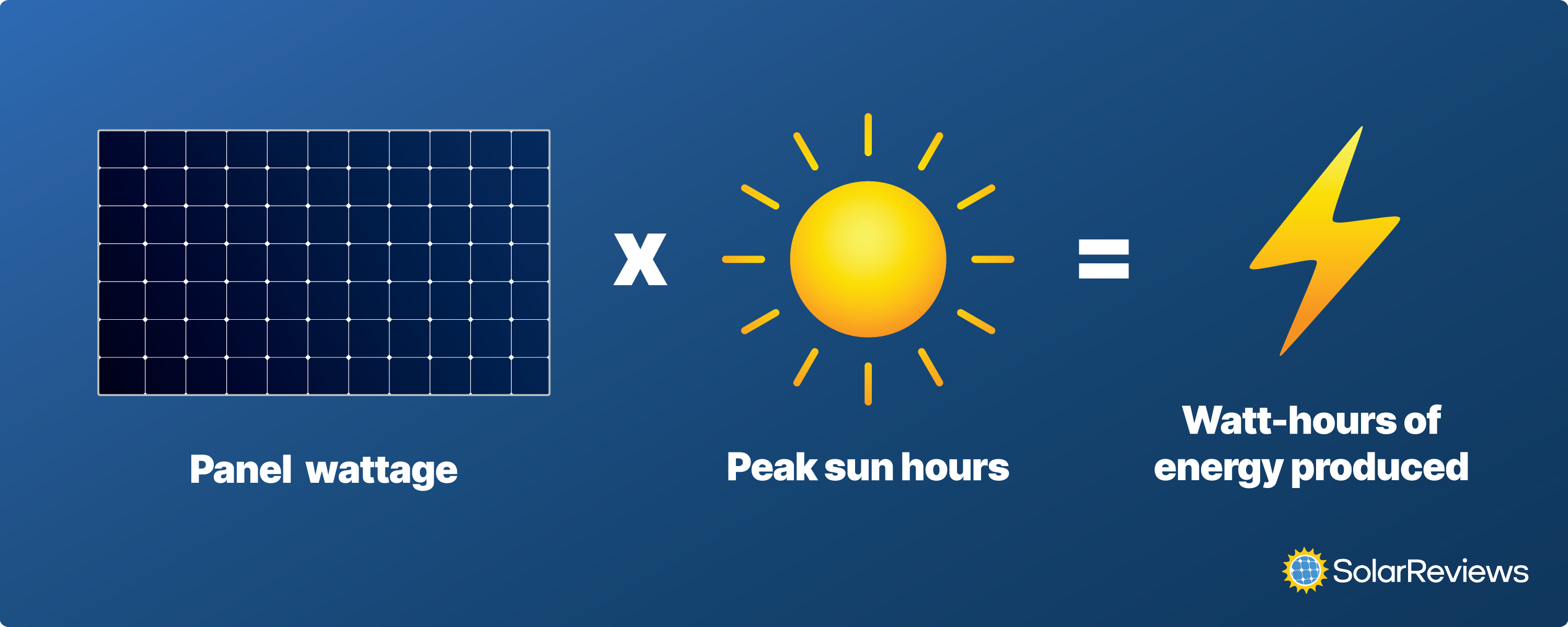
Solar panels need sunlight to work. The more sun your panels get, the more energy they produce. Sunlight is measured in peak sun hours—the number of hours each day when sunlight is strong enough for panels to operate at full power.
- Sunny areas (like Arizona or California): 5–7 peak sun hours per day
- Cloudy or northern locations (like Seattle or New York): 3–4 peak sun hours per day
If you get 5 peak sun hours, a 1 kW system could produce about 5 kWh per day.
2. Panel Wattage And Efficiency
Panels come in different sizes, measured in watts (W). Most home panels are between 350W and 450W. Higher wattage means more energy per panel.
Efficiency means how well the panel turns sunlight into electricity. Most panels are 18–22% efficient today. High-efficiency panels cost more but give you more power in less space.
3. Number Of Panels
A single panel’s output might not sound like much, but systems combine many panels. More panels = more energy.
For example, 20 panels × 400W = 8,000W or 8kW system size.
4. Roof Direction And Angle
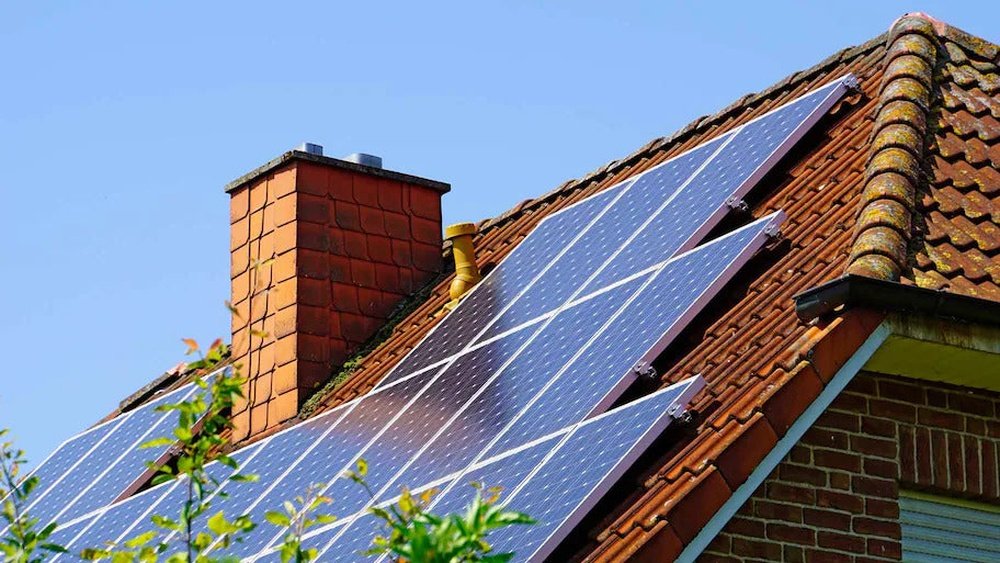
- South-facing roofs (in the US) get the most sun.
- East or west-facing get a bit less.
- Flat or steep roofs may lose some sunlight if not angled right.
The ideal angle is usually equal to your latitude.
5. Weather, Seasons, And Shading
Clouds, rain, snow, and shade from trees or buildings can all reduce output. Even a little shade on one panel can drop the whole system’s production.
In winter, days are shorter and the sun is lower, so you get less energy.
6. Panel Age And Maintenance
Over time, panels lose a bit of power. Most lose about 0.5% efficiency each year. Dirt or debris can also block sunlight—clean panels work better.
Credit: www.solarreviews.com
Estimating Your Solar Panel’s Daily Output
Let’s turn theory into practice. Here’s a simple way to estimate daily energy production.
The Basic Formula
Daily Output (kWh) = Panel Wattage × Sunlight Hours × Number of Panels ÷ 1000
Let’s break it down:
- Panel Wattage: The power rating on each panel (for example, 400W)
- Sunlight Hours: Average peak sun hours per day (e.g., 5)
- Number of Panels: How many panels you have
- Divide by 1,000 to convert watts to kilowatts
Example:
If you have 16 panels × 400W each, and 5 sunlight hours:
16 Panels × 400w = 6,400w
6,400w × 5 Sunlight Hours = 32,000 Wh
32,000 Wh ÷ 1,000 = 32 Kwh Per Day
Quick Reference: Common System Sizes
Here’s how much energy different system sizes might produce each day, assuming 5 hours of good sun.
| System Size (kW) | Number of Panels (400W each) | Estimated Daily Output (kWh) |
|---|---|---|
| 4 kW | 10 | 20 |
| 6 kW | 15 | 30 |
| 8 kW | 20 | 40 |
| 10 kW | 25 | 50 |
Remember, these are estimates. Real output can be higher or lower depending on your exact conditions.
Real-world Examples
Let’s see how daily solar energy output changes based on different homes and locations.
Example 1: Sunny California
- 6 kW system (15 panels, 400W each)
- Average 6 peak sun hours per day
6,000W × 6 = 36,000 Wh ÷ 1,000 = 36 kWh/day
This can cover most or all of a typical home’s daily use.
Example 2: Cloudy Seattle
- 6 kW system (15 panels, 400W each)
- Average 3.5 peak sun hours per day
6,000W × 3.5 = 21,000 Wh ÷ 1,000 = 21 kWh/day
Still helpful, but you might need a bigger system to cover all your needs.
Example 3: Small Roof, High-efficiency Panels
- 5 kW system (12 panels, 420W each)
- 5 sun hours per day
5,040W × 5 = 25,200 Wh ÷ 1,000 = 25.2 kWh/day
Using high-efficiency panels helps make the most of limited space.
How Do Different Types Of Solar Panels Compare?
Not all solar panels are created equal. Let’s compare the three main types:
| Panel Type | Efficiency (%) | Average Wattage | Space Needed | Cost |
|---|---|---|---|---|
| Monocrystalline | 19–22 | 350–450W | Least | High |
| Polycrystalline | 15–17 | 250–350W | Medium | Medium |
| Thin-film | 10–13 | 100–200W | Most | Low |
- Monocrystalline panels are the most efficient and best for small roofs, but they cost more.
- Polycrystalline panels are a bit less efficient but cheaper.
- Thin-film panels are light and flexible, but you need a lot more space for the same power.
If you want the most energy per panel, monocrystalline is usually the top pick.
How Does Weather And Season Affect Output?
Solar panels love clear skies, but they still work (just less) on cloudy days. Here’s what to expect:
- Cloudy days: You’ll get about 10–25% of usual output.
- Rainy days: Similar to clouds, but rain can help clean your panels.
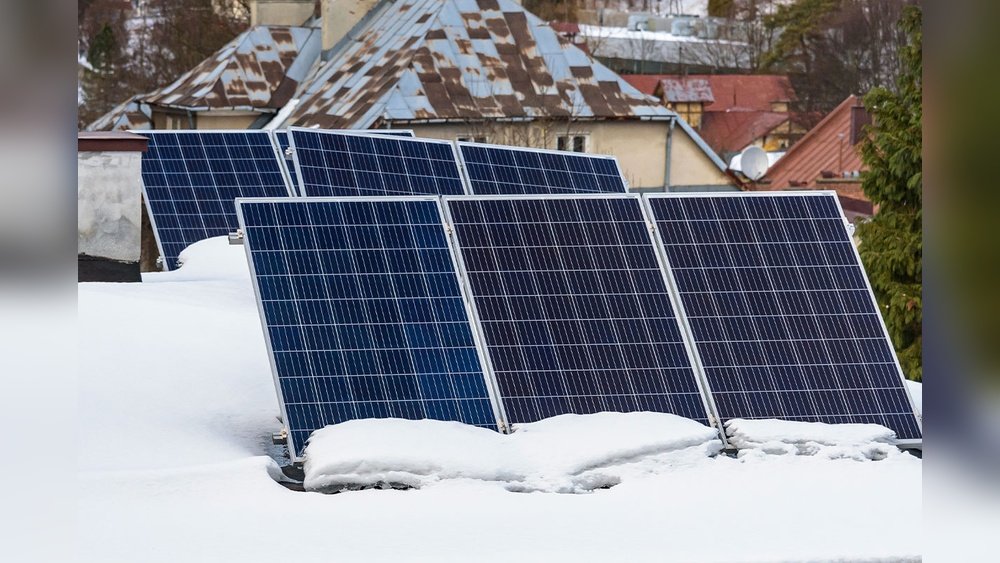
- Snow: Panels don’t work if covered, but snow often slides off quickly. Cold weather can actually improve efficiency.
- Winter: Short days mean less energy. Expect 30–60% of summer output.
Tip: If your energy needs are higher in winter, you may need a larger system or a backup source.
Common Mistakes When Estimating Solar Output
Many first-time buyers over- or under-estimate their solar production. Here are pitfalls to avoid:
- Ignoring local sun hours: National averages can be misleading. Always check your area’s peak sun hours.
- Forgetting about shade: Even small shadows can cut output sharply. Watch for trees or nearby buildings.
- Assuming panels work at max power all day: They only hit peak output when the sun is strong.
- Not accounting for losses: Wiring, inverters, and dirt can cause 10–20% losses. Factor this into your calculations.
- Thinking more panels always help: If your roof is shaded or faces the wrong way, adding panels may not boost output.
How Much Energy Does A Solar Panel Produce In Different States?
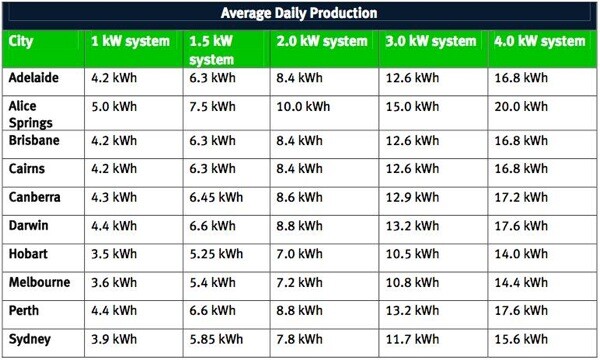
Let’s compare average daily output for a standard 400W panel in different US locations. This shows how much location matters.
| State | Average Sun Hours | Daily Output per Panel (kWh) |
|---|---|---|
| California | 6 | 2.4 |
| Texas | 5.5 | 2.2 |
| Florida | 5 | 2.0 |
| New York | 4 | 1.6 |
| Washington | 3.5 | 1.4 |
A single panel might make double the power in California compared to Washington. That’s why location is key.
Credit: www.solarchoice.net.au
How To Maximize Your Solar Panel Output
Want to get the most from your system? Here’s what works:
- Keep panels clean: Dust, leaves, or bird droppings block sunlight. Clean every few months.
- Trim trees and remove shade: Even small branches can lower output.
- Install panels at the right angle: Match your latitude for best results.
- Face panels south (in the US): This direction gets the most sun.
- Use high-efficiency panels: Especially if your roof space is limited.
- Monitor your system: Many inverters have apps to show real-time output. Spot problems early.
Non-obvious tip: If you live in a snowy area, consider panels with a slick surface coating. Snow slides off faster, and you lose less energy.
How Solar Panel Output Compares To Home Energy Use
You might wonder: Will solar cover all your energy needs? Let’s look at some averages.
- Average US home uses 28–30 kWh per day
- A 6 kW system in a sunny location can produce 30 kWh per day
So, a well-sized system can meet most or all of your electricity needs, especially if you use energy-efficient appliances.
Important: Your actual needs depend on home size, family habits, and whether you have electric heating, cooling, or charge an electric car.
How To Check Your Own Solar Potential
Before you install panels, find out what your roof can do.
- Step 1: Find out your average daily energy use (check your electric bill).
- Step 2: Look up your area’s peak sun hours (search “solar sun hours [your city]”).
- Step 3: Use the formula:
System size needed (kW) = Daily energy use (kWh) ÷ Sun hours
For example, if you use 30 kWh per day and get 5 sun hours:
30 Kwh ÷ 5 = 6 Kw System
- Step 4: Check your roof space. Each panel is about 18 square feet. For a 6 kW system (15 panels), you’ll need about 270 sq. Ft.
What Surprises Most First-time Solar Owners?
Many new solar users are surprised by:
- Seasonal swings: Output drops a lot in winter, so summer bills may be $0, but winter bills can be higher.
- Maintenance needs: Panels are low-maintenance, but not maintenance-free. Occasional cleaning really helps.
- Energy monitoring: Watching your system’s daily output can reveal when you use the most power. Many people shift chores (like laundry) to sunny hours.
- Utility rules: Some power companies pay you for extra energy; others don’t. Check net metering policies before buying.
Real-world Insight: Panel Output Isn’t Everything
Here’s something people often miss: Your lifestyle can impact solar savings as much as panel output. For example, if you run air conditioning all afternoon, your solar panels may cover it only on sunny days. If you work from home and use lots of devices during the day, you’ll use more of your solar energy directly.
Pro tip: Try shifting big energy use (like dishwashers or electric vehicles) to daylight hours. This way, you use your own solar power instead of selling it back at a low rate.
Should You Oversize Your Solar System?
Some people add extra panels to cover cloudy days or future needs (like adding an EV). Oversizing can make sense if:
- Your utility pays little for extra energy you send to the grid.
- You plan to add more electric devices soon.
- You want to be ready for battery storage.
But if your roof is small or your budget is tight, focus on right-sizing for your current needs.
How Does Solar Compare To Other Power Sources?
Solar is clean and gets cheaper every year, but it’s not always perfect. Here’s a quick comparison:
| Power Source | Daily Output (kWh, per $10,000 installed) | Maintenance | Emissions |
|---|---|---|---|
| Solar Panels | 25–35 | Low | Zero |
| Natural Gas | 70–90 | Medium | High |
| Wind Turbine (residential) | 10–30 | Medium | Zero |
Solar may not always deliver the highest daily output per dollar, but it’s reliable, silent, and has no emissions.
For more details, see this U.S. Department of Energy guide.
Frequently Asked Questions
How Many Solar Panels Do I Need To Power My House?
The average US home needs 15–20 panels (350–400W each) to cover daily energy use. The exact number depends on your electricity usage, roof size, and local sun hours. Check your electric bill to see how much you use, and use the formula above to estimate your needs.
Do Solar Panels Work On Cloudy Or Rainy Days?
Yes, but output drops to about 10–25% of sunny day levels. Panels still capture some diffuse sunlight, but you’ll generate less energy. If your area is often cloudy, you may need a larger system.
How Long Do Solar Panels Last?
Most panels last 25–30 years or more. They lose about 0.5% efficiency each year, so after 25 years they still work at 85–90% of their original power. Warranties often guarantee at least 80% output after 25 years.
What Happens If My Panels Produce More Energy Than I Use?
Extra energy usually goes back to the grid. Many utilities offer net metering, which gives you credit for this energy. Rules vary by state and company, so check your local policy.
How Much Does Weather And Dirt Affect Solar Panel Output?
Heavy dirt, leaves, or snow can block sunlight and cut output by 5–30%. Rain helps clean panels, but if you live in a dusty area, clean them twice a year. Shading from nearby trees or buildings can also make a big difference—try to keep panels as clear as possible.
Solar power can be a game changer, but only if you understand what to expect. By knowing your local conditions and following a few simple tips, you’ll get the most from your system and enjoy years of clean, reliable energy.
If you’re ready to see if solar works for you, start with your own sun hours and energy use. The numbers might surprise you—in a good way.
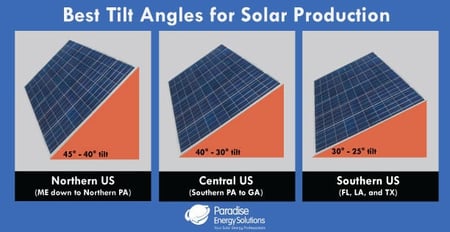
Credit: www.paradisesolarenergy.com