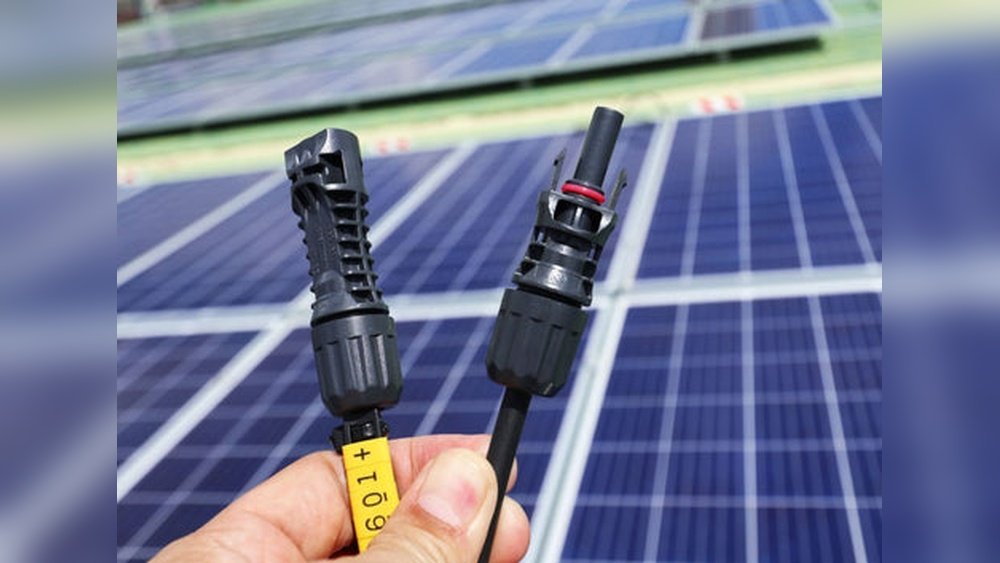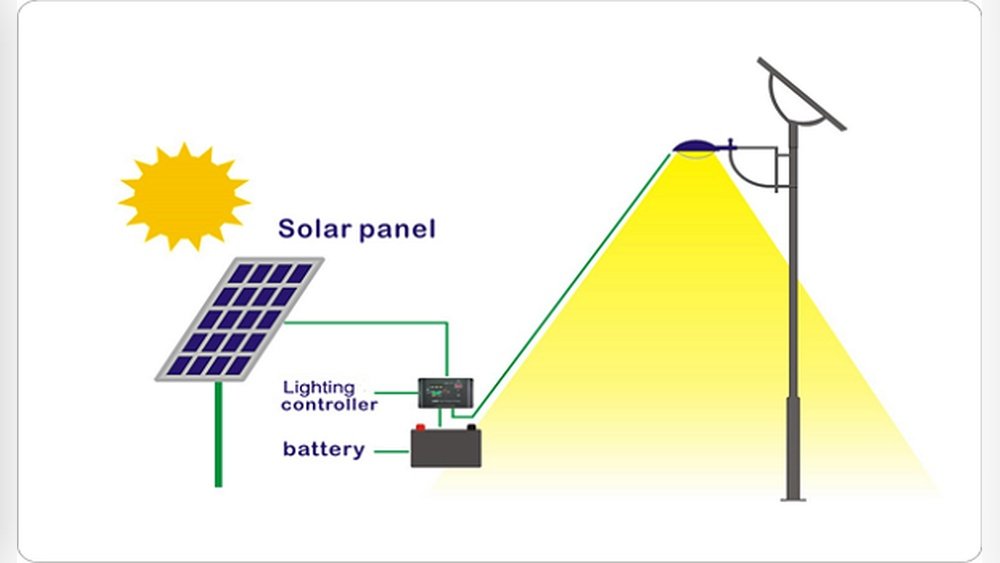

Switching to lithium batteries is one of the best upgrades you can make for your RV, boat, or solar setup, but it comes with a caveat: you can’t simply attach an old lead-acid charger to them and expect the best results. To protect your investment and ensure longevity, you need the best lithium battery charger specifically designed to handle the unique Constant Current/Constant Voltage (CC/CV) charging profile of lithium cells.
Whether you need a heavy-duty onboard marine charger for a weekend on the lake or a simple trickle charger to keep your classic car ready for spring, the right equipment makes all the difference. In this guide, we’ve rounded up five of the top performers on the market, ranging from high-tech smart chargers with Bluetooth to rugged, waterproof units that can survive the elements.
Compare The Top Lithium Battery Chargers
| Charger Model | Amperage | Voltage | Best For | Top Pick Label |
| NOCO GENIUS1 | 1A | 6V/12V | Maintenance & Small Batteries | Best Value Maintainer |
| NOCO GEN5X2 | 10A (5A/Bank) | 12V | Marine / 2-Battery Systems | Best Onboard Marine |
| LiFePO4 10A Charger | 10A | 14.6V | Budget LiFePO4 Charging | Best Budget Pick |
| Victron Blue Smart IP22 | 30A | 12V | RVs, High-End Setups | Premium Choice |
| VATRER POWER 20A | 20A | 14.6V | Fast Charging & BMS Reset | Best for Speed |
Best Lithium Battery Charger for Cars, Boats, RVs and Home
NOCO GENIUS1 Smart Charger

If you have a motorcycle, ATV, or a car that sits in the garage for weeks at a time, the NOCO GENIUS1 is likely all you need. It isn’t built for speed; it’s built for precision. This tiny device acts as a charger, maintainer, and desulfator all in one. It’s incredibly easy to use—you just plug it in, select the mode (it supports 12V Lithium, Lead-Acid, and even 6V), and walk away. It’s smart enough to detect the battery’s health and adjust the charge to avoid overcharging, which is a common killer of lithium batteries. The thermal sensor detects ambient temperature to alter the charge, ensuring you don’t undercharge in freezing winter or overcharge in baking summer heat.
Pros:
- Extremely compact and affordable.
- Safe to leave connected 24/7 (zero overcharge risk).
- Charges dead batteries as low as 1-volt.
- Universal compatibility (Lead-acid, AGM, Lithium).
Cons:
- At 1 Amp, it is too slow for charging large deep-cycle batteries quickly.
- Cables are somewhat short for larger vehicle setups.
NOCO Genius GEN5X2 Onboard Charger

For boat owners or those with dual-battery setups, the NOCO GEN5X2 is a game-changer. This is an “onboard” charger, meaning you mount it permanently inside your boat or vehicle. It features two separate banks, delivering 5 Amps to each battery simultaneously. This is perfect if you run a trolling motor battery separate from your starting battery. The standout feature here is ruggedness; it is fully waterproof (IP68 rated) and ignition protected. You don’t have to worry about water splashes or engine fumes. It also includes a force mode to manually charge dead batteries that have dropped to 0 volts, a lifesaver if you forgot to turn off a switch.
Pros:
- Charges two separate battery banks independently.
- 100% Waterproof and rugged for marine environments.
- Simplified mounting system for permanent installation.
- Safe for mixing battery types (e.g., one Lithium, one AGM).
Cons:
- Max output is 5A per bank, which is moderate speed, not ultra-fast.
- Requires permanent installation mounting (screws included).
14.6V 10A LiFePO4 Battery Charger

Sometimes you don’t need fancy apps or waterproof casings; you just need a charger that does one thing really well. This dedicated 10A charger is optimized specifically for 12V Lithium Iron Phosphate (LiFePO4) batteries. Unlike multi-mode chargers, this unit outputs a constant 14.6V, which is the “sweet spot” for fully charging LiFePO4 cells to 100% capacity. It’s simple, lightweight, and effective. The built-in cooling fan keeps it running efficiently, and the LED indicator gives you a clear red/green status update. If you are building a DIY battery box or need a reliable charger for your kayak battery, this is a cost-effective workhorse.
Pros:
- Optimized specifically for LiFePO4 voltage (14.6V).
- 10A output charges medium-sized batteries relatively quickly.
- Simple “plug and play” operation.
- Includes overheat and short-circuit protection.
Cons:
- Not compatible with standard Lead-Acid or AGM batteries.
- Fan can be audible during operation.
Victron Energy Blue Smart IP22
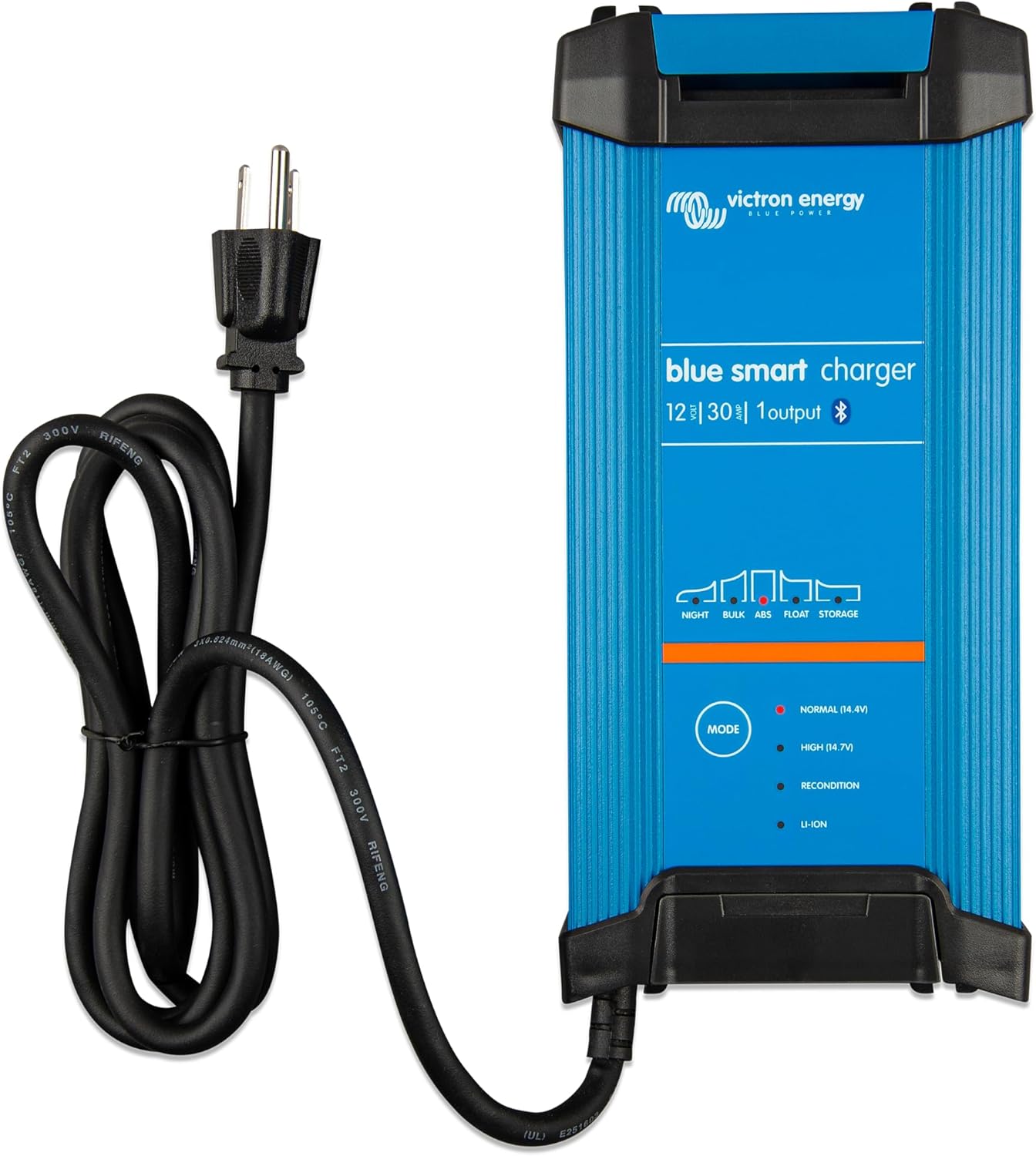
The Victron Energy Blue Smart IP22 is widely considered the “Gold Standard” for serious RVers and van lifers. With a massive 30A output, it can charge a 100Ah lithium battery in roughly 3-4 hours. The real magic, however, is the built-in Bluetooth. You can monitor voltage, current, and charging stage directly from your smartphone via the VictronConnect app. This transparency is invaluable for diagnosing battery health. It also boasts 93% efficiency, generating four times less heat than industry standards. If you have an expensive battery bank and want total control over how it charges, this is the charger to buy.
Pros:
- High 30A output for very fast charging.
- Bluetooth connectivity for monitoring and custom settings.
- “Night Mode” makes it silent (fan off) for sleeping.
- Adaptive 6-stage charging algorithm extends battery life.
Cons:
- Higher price point than standard chargers.
- IP22 rating means it is not waterproof (keep it dry!).
VATRER POWER 12V 20A Charger
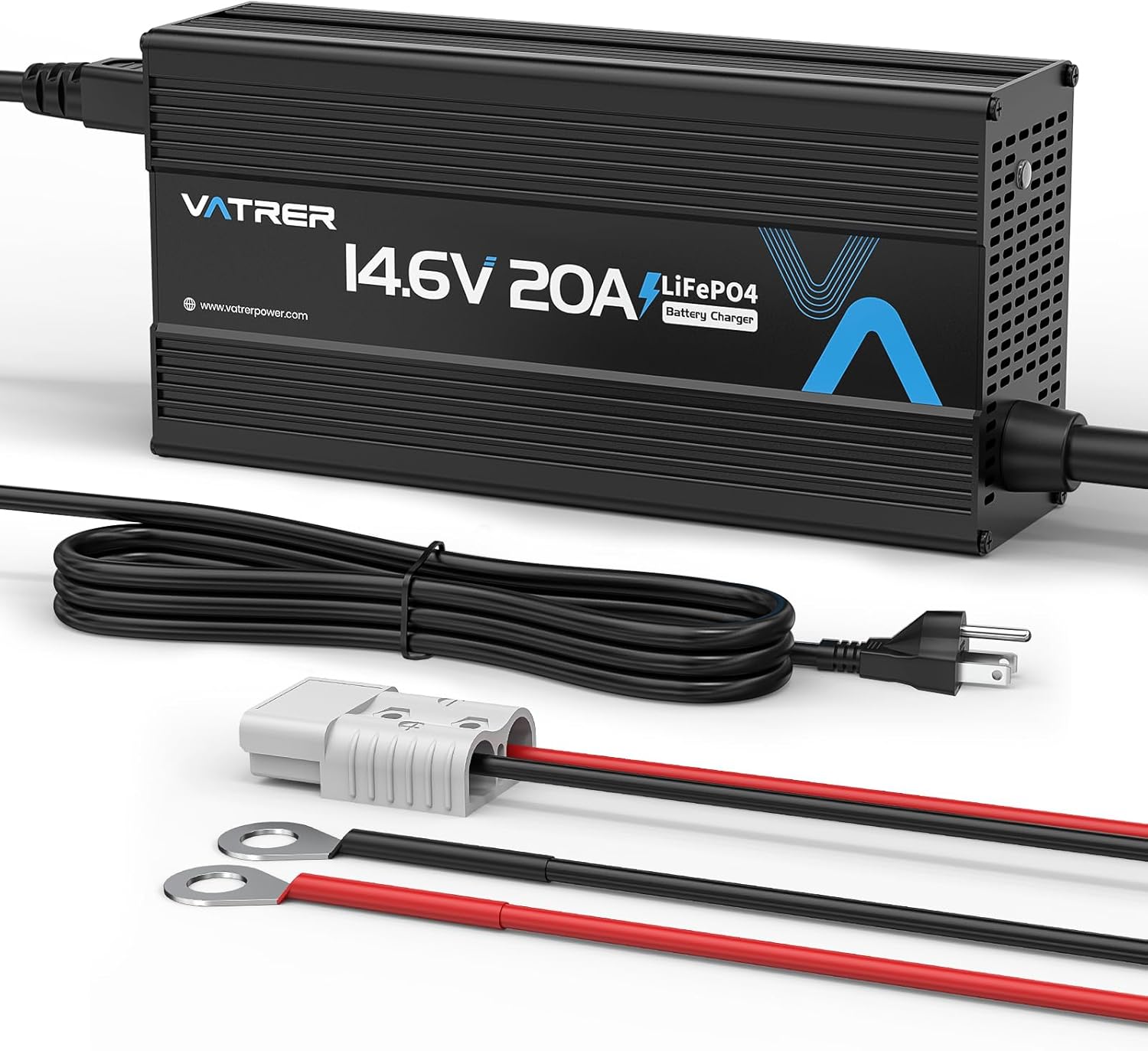
The Vatrer Power 20A charger bridges the gap between budget and high-performance. At 20 Amps, it is powerful enough to handle larger battery banks quickly. A standout feature is the 0V Activation function. Many lithium batteries have a Battery Management System (BMS) that shuts the battery down completely if it detects a short or low voltage. Standard chargers often fail to recognize these “sleeping” batteries. The Vatrer can wake them up and start charging again. It also comes with an Anderson connector, which is a favorite among DIY solar enthusiasts for quick, secure connections.
Pros:
- 0V Activation wakes up “dead” BMS-protected batteries.
- 20A output offers a great balance of speed and price.
- Includes Anderson connector for versatile hookups.
- Sturdy aluminum alloy shell for heat dissipation.
Cons:
- Fan runs continuously during charging.
- Specifically designed for Lithium (not for Lead-Acid).
How to Choose the Best Lithium Battery Charger
Buying a charger for lithium batteries (specifically LiFePO4) is different than buying one for your standard car battery. Here are the three critical factors to check before you buy.
1. Voltage Matching (The 14.6V Rule)
Lithium batteries require a higher charging voltage than lead-acid batteries to reach 100% capacity. A standard lead-acid charger usually stops at 13.8V or 14.2V. A proper LiFePO4 charger will boost voltage to 14.4V – 14.6V during the bulk phase. While a standard charger can work in a pinch, it will rarely charge your lithium battery to its full capacity, reducing your runtime.
2. Amperage vs. Battery Capacity
The “Amp” rating determines how fast the battery charges. A simple rule of thumb is to look for a charger that is roughly 20% to 50% of your battery’s Amp Hour (Ah) rating.
- 100Ah Battery: A 20A to 50A charger is ideal.
- 50Ah Battery: A 10A to 20A charger is great.
- Small (10-20Ah) Battery: A 2A to 5A charger is sufficient.
- Note: Using a massive charger (like 50A) on a tiny battery can overheat the cells. Always check your battery’s “Max Charge Current” spec.
3. Smart Features & BMS Protection
Lithium batteries have internal computers called BMS (Battery Management Systems). If you accidentally drain your battery to 0%, the BMS will turn the battery off to protect it. Some older chargers will see 0 volts and think “no battery connected” and refuse to charge. Look for a charger with “0V Activation” or “Force Mode” (like the NOCO and Vatrer models above) to ensure you can wake up a tripped battery.
Final Verdict
For most users needing a reliable, set-it-and-forget-it solution for their car or small boat, the NOCO GENIUS1 is the safest bet for maintenance. However, if you are powering an RV or a substantial off-grid setup, investing in the Victron Blue Smart IP22 will give you the speed and data visibility you need to keep your power system healthy for years.