
Choosing a solar charge controller isn’t about buying the biggest amp rating or the cheapest box with an LCD. It’s about matching the controller to your panels, batteries, and how you actually use power. Some models shine in small RV setups, while others are built for serious off-grid systems that run all day, every day. This guide breaks down the top 7 solar charge controller options based on real-world usability, compatibility, and practical limits. If you want stable charging, longer battery life, and fewer headaches, the differences here matter more than marketing specs.
Top 7 Solar Charge Controller Comparison
| Product | Controller Type | Max Current | Battery Voltage | Best For |
| Victron Energy SmartSolar 100/30 | MPPT | 30A | 12V / 24V | High-efficiency systems |
| Renogy Wanderer 10A | PWM | 10A | 12V / 24V | Small budget setups |
| 30A Solar Charge Controller (Upgraded) | PWM | 30A | 12V / 24V | Entry-level installs |
| PowMr 60A MPPT Controller | MPPT | 60A | 12V–48V | Medium to large systems |
| POWLAND 120A MPPT Controller | MPPT | 120A | 12V–96V | High-power off-grid |
| ECO-WORTHY 30A Bluetooth Controller | PWM | 30A | 12V / 24V | Monitoring-focused users |
| Waterproof 10A Thin Solar Controller | PWM | 10A | 12V / 24V | Outdoor compact installs |
Victron Energy SmartSolar MPPT Solar Charge Controller (Bluetooth)

This controller is built for users who care about efficiency and long-term reliability. The MPPT design consistently pulls more usable power from panels, especially in partial shade or cold weather. Bluetooth monitoring works smoothly and gives clear insight into charging behavior without extra hardware.
The downside is price and simplicity. It doesn’t include a built-in display, and setup options may feel overwhelming for first-time users.
Verdict: Buy this if you want maximum efficiency and clean monitoring. Skip it if you want cheap or plug-and-play simplicity.
Renogy 10 Amp 12V/24V PWM Solar Charge Controller
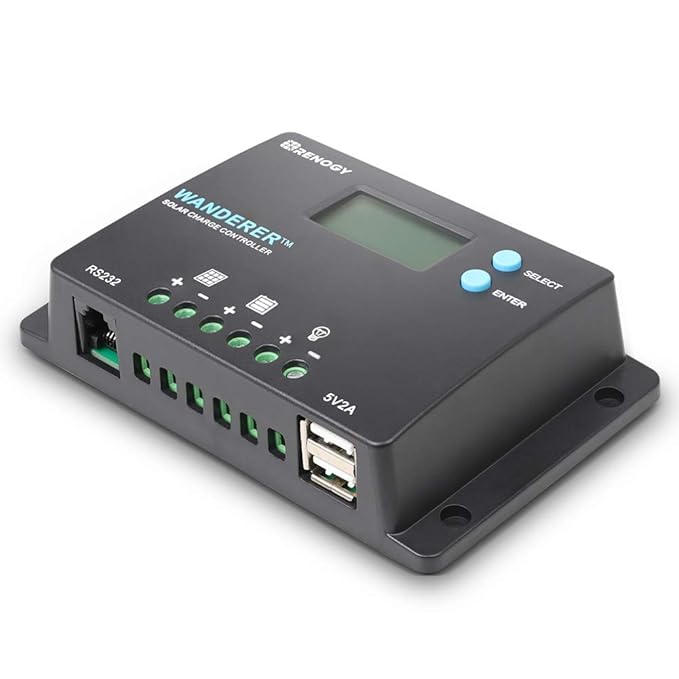
This is a straightforward PWM controller meant for small systems like single-panel setups or battery maintenance. It’s reliable, compact, and easy to configure, making it popular for beginners.
Its low amperage rating limits expansion, and PWM efficiency means some power is always left on the table.
Verdict: Good for small, simple systems. Not suitable for growing or power-hungry setups.
30A Solar Charge Controller, 12V/24V Regulator

This controller offers a lot of features for its price, including adjustable settings, USB ports, and a bright LCD. For basic solar installations, it does the job without feeling flimsy.
However, PWM technology limits efficiency, and long-term durability is not on the same level as premium brands.
Verdict: Solid for low-cost systems. Avoid if efficiency and longevity are priorities.
PowMr 60A MPPT Solar Controller
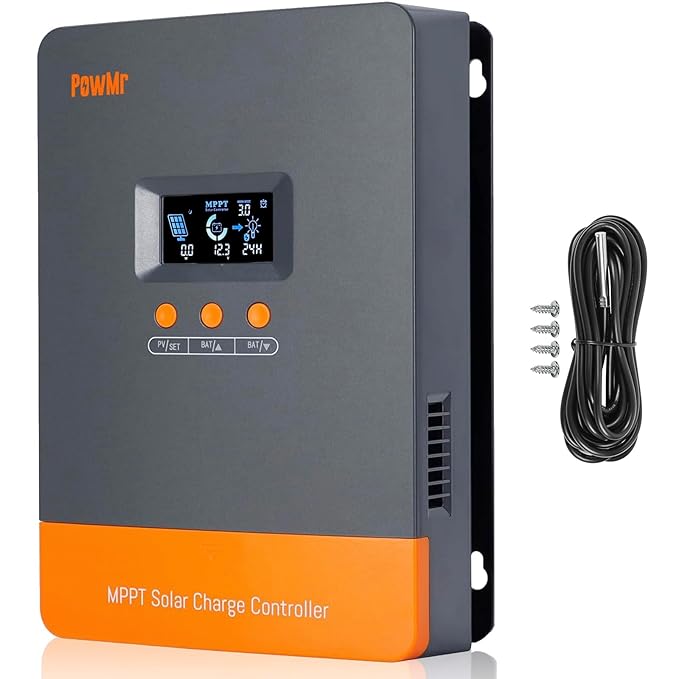
This controller hits a sweet spot for larger home or cabin systems. It supports higher voltages, lithium batteries, and parallel operation, giving real flexibility. MPPT efficiency is strong under varying sunlight conditions.
The interface isn’t beginner-friendly, and installation requires careful configuration.
Verdict: Ideal for mid-sized off-grid systems. Not recommended for first-time solar users.
POWLAND 120A MPPT Solar Charge Controller

This is a high-capacity controller designed for serious power systems. It handles wide voltage ranges and large battery banks without strain. Performance stays stable even under heavy loads.
Size, cost, and complexity are the trade-offs. This isn’t a casual install.
Verdict: Best for advanced off-grid users. Overkill for RVs or small systems.
ECO-WORTHY 30A Solar Charger Controller Bluetooth
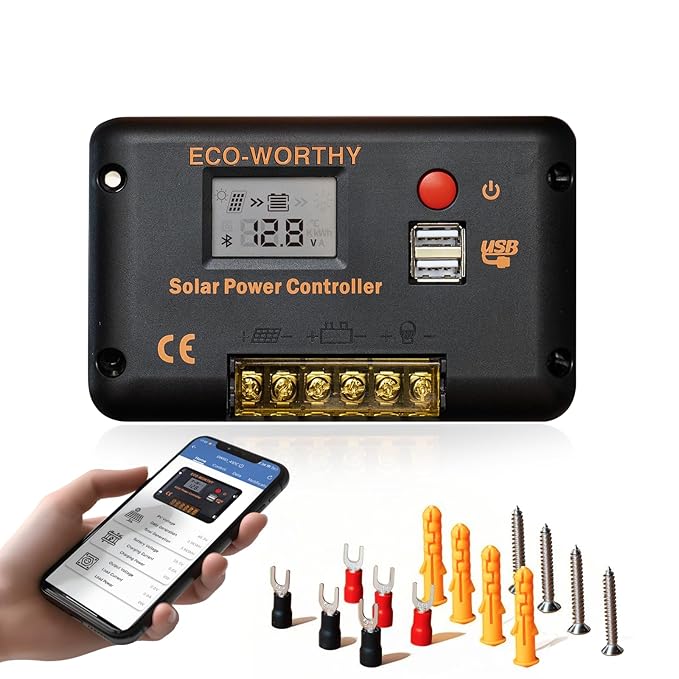
This controller balances affordability with convenience. Bluetooth monitoring adds value, and the unit handles standard 12V and 24V systems well.
As a PWM controller, efficiency lags behind MPPT models, especially with larger arrays.
Verdict: Good for monitoring-focused users on a budget. Not ideal for maximizing panel output.
Waterproof 10A Solar Charge Controller
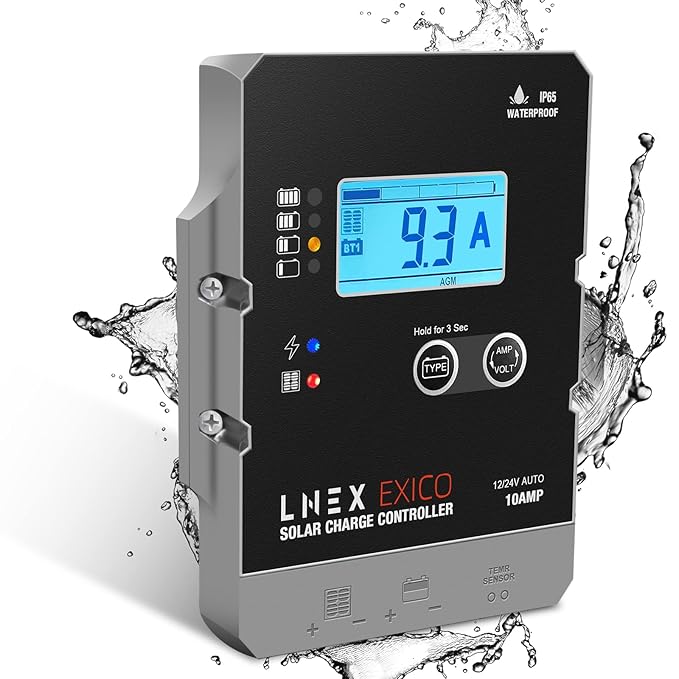
Designed for outdoor or space-constrained installations, this controller is slim and weather-resistant. It works well for small loads like lighting or trickle charging.
Limited amperage and basic controls restrict its use to very small systems.
Verdict: Great for compact outdoor setups. Not meant for expandable systems.
Reality Check: Most Buyers Miss
Amp rating alone doesn’t tell the full story. A lower-rated MPPT controller often delivers more usable energy than a higher-rated PWM unit, especially in real-world conditions.
Final Takeaway,
The right solar charge controller depends on system size, battery type, and how much efficiency matters to you. Small setups benefit from simple PWM models, while larger systems gain real advantages from MPPT controllers. Match capacity to your current needs with room to grow, and avoid paying for power you’ll never use. A well-matched controller protects batteries, improves performance, and keeps your solar investment working longer.