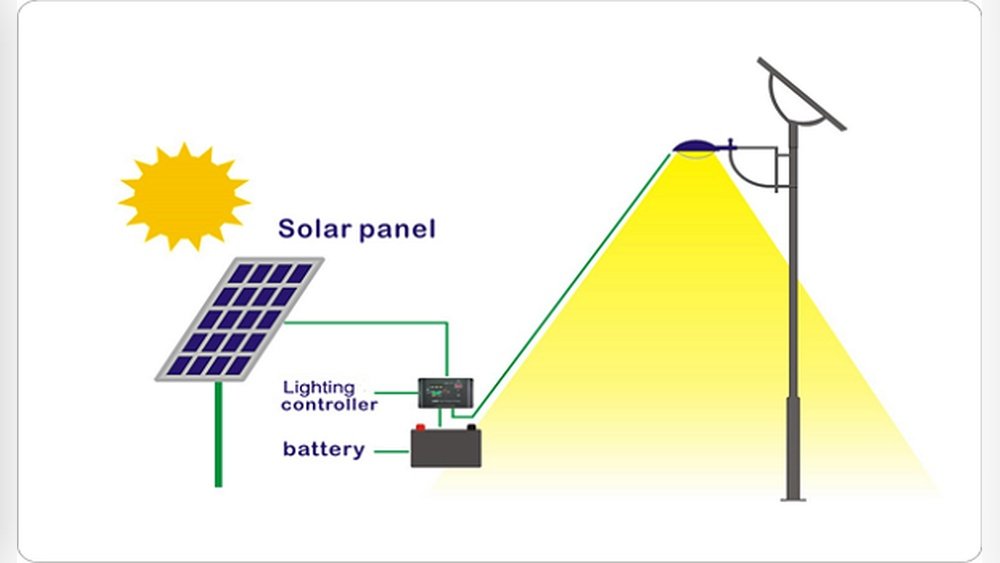

If you’re shopping for a solar powered battery charger, you’re probably trying to solve one specific problem: keeping devices or batteries charged without relying on outlets. The challenge is that “solar charger” can mean very different things depending on the design. Some are meant to maintain a car battery for months, others are built to recharge phones on the trail, and a few can actually feed serious power into a battery system.
This guide breaks down five very different options so you can choose based on how you actually plan to use solar power, not marketing claims.
Best solar powered battery charger comparison
| Solar Charger | Power Output | Best Use Case | Portability | Battery Type |
| Arlo Solar Panel Charger | Low (device-specific) | Security cameras | Fixed install | Camera batteries |
| BigBlue 28W Solar Panel Charger | 28W | Phones & small devices | High | USB-powered devices |
| POWOXI 15W Trickle Charger | 15 Watts | Battery maintenance | Medium | 12V lead-acid |
| SUNAPEX 20W Trickle Charger | 20W | Faster 12V upkeep | Low | 12V lead-acid |
| FlexSolar 100W Portable Panel | 100W | Serious off-grid power | Medium | Power stations & banks |
Arlo Solar Panel Charger

This charger is built for one job only: keeping compatible Arlo cameras topped off. In that role, it does exactly what it should. Once installed, it reduces or eliminates the need to manually recharge camera batteries, even with moderate sunlight.
As a solar powered battery charger, it’s extremely limited. It won’t charge phones, power banks, or vehicles, and it only works within the Arlo ecosystem. Output is intentionally low and tightly regulated.
Verdict: Buy this if you own supported Arlo cameras and want hands-off battery maintenance. Skip it if you need a general-purpose solar charger.
BigBlue 28W Solar Battery Charger

The BigBlue 28W is designed for people charging devices directly from the sun. In good sunlight, it reliably powers phones, GPS units, small power banks, and tablets. The foldable design makes it easy to clip onto a backpack or set up at camp.
It’s important to understand what it doesn’t do. This panel does not store power on its own, and cloud cover can noticeably slow charging. It’s also not meant for maintaining 12V vehicle batteries.
Verdict: Ideal for campers and hikers who want device charging during daylight hours. Not suitable for vehicle batteries or overnight charging without a power bank.
POWOXI Solar Trickle Charger Maintainer
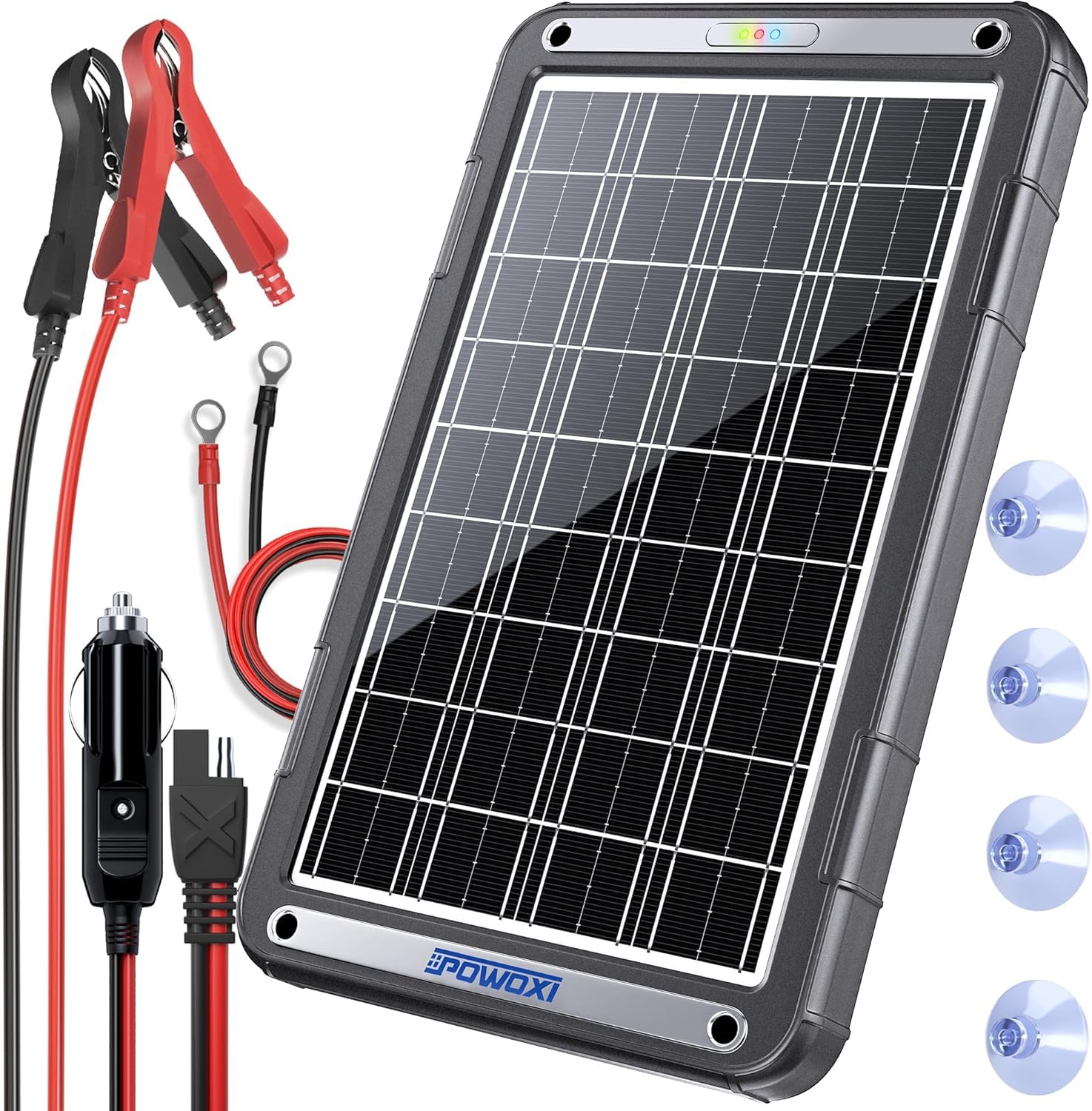
This is a classic solar trickle charger meant to prevent dead batteries rather than revive them. It works well for cars, motorcycles, boats, and RVs that sit unused for long periods. Installation is simple, and the waterproof design handles outdoor exposure without fuss.
At 15 watts, charging is slow by design. It won’t bring a deeply drained battery back quickly, and it’s useless for USB devices.
Verdict: A smart choice for long-term battery maintenance.
SUNAPEX 12V 20 Watt Solar Trickle Charger Maintainer
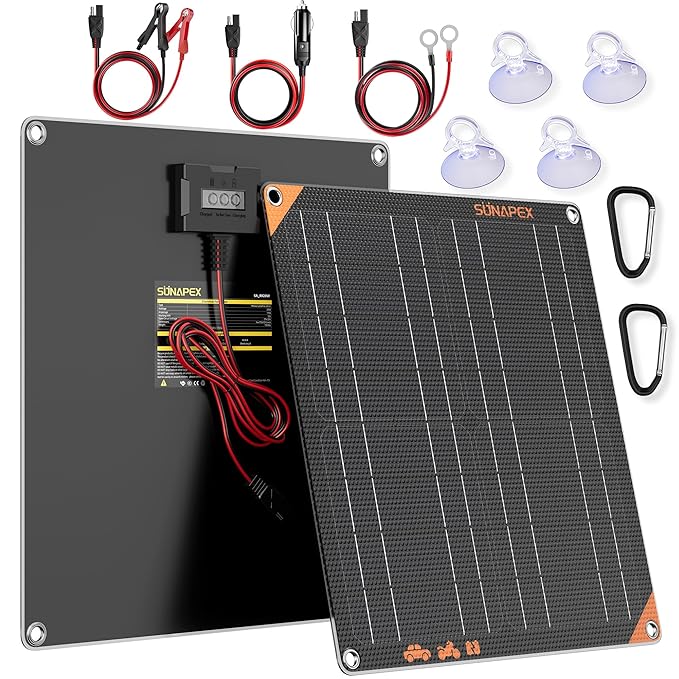
The SUNAPEX steps things up with more power and a built-in charge controller. Compared to smaller trickle chargers, it maintains batteries more efficiently and can recover mildly depleted batteries over time.
Portability is limited, and it’s clearly meant for fixed or semi-permanent installations. Like other 12V maintainers, it won’t help with phones or small electronics.
Verdict: Best for users who want faster, smarter 12V battery upkeep. Skip it if you need a lightweight or multi-device solution.
FlexSolar 100W Portable Solar Battery Chargers
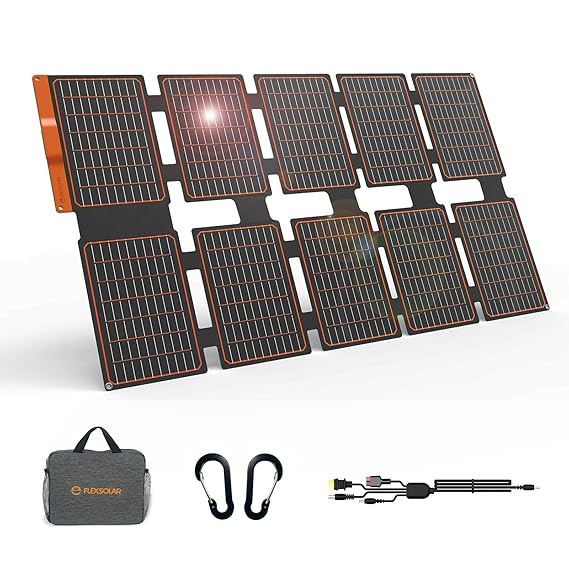
This is the most capable option in the lineup. With 100W output and multiple connection types, it can meaningfully recharge power stations, large power banks, and multiple devices at once. In full sun, it delivers real charging performance rather than slow maintenance.
The trade-offs are size, cost, and setup time. It’s portable, but not something you casually throw in a glove box.
Verdict: The right pick for off-grid setups and emergency power users. Overkill for basic battery maintenance or casual travel.
Reality check: solar chargers don’t replace outlets
Many buyers expect solar powered battery chargers to work like wall chargers. In reality, sunlight quality, panel size, and battery type make a huge difference. Solar works best as a supplement or maintenance tool, not instant power.
Final takeaway,
The best solar powered battery charger depends entirely on what you’re charging. Camera owners need device-specific panels, travelers benefit from USB-focused designs, vehicle owners should look at trickle maintainers, and off-grid users need high-wattage panels. Match the charger to the battery, not the other way around. And solar power becomes a reliable solution instead of a frustration.