
Most “educational” toys end up in the junk drawer by next Tuesday. These solar kits are different. They get kids off screens and into the light—literally. We’re looking at kits that range from simple fan assemblies for classrooms to complex 36-in-1 builds that will keep a bright kid busy for an entire weekend.
Just a heads up: “Solar” means sun. Don’t expect these to zip across the floor under a dim bedside lamp.
Top 5 DIY Solar Panel Learning Kits
| Kits name | Models to Build | Best For | Complexity | Piece Count |
| Bottleboom 13-in-1 | 13 | Varied builds | Medium | 190+ |
| 36+ Model Mega Kit | 36+ | Long-term play | High | 434 |
| STEM 13-in-1 DIY | 13 | Entry-level solar | Medium | Standard |
| Solar Fan 8-Pack | 1 (x8) | Groups/Classrooms | Low | Bulk |
| COBFDHA Space Set | 6 | Space enthusiasts | Medium | 120 |
Best DIY Solar Panel Learning Kit with Features For Every Budget
If you want your kid to actually understand green energy, you need more than a textbook. These kits provide the “aha!” moment when the motor kicks in. Whether you need a fleet for a birthday party or a deep-dive engineering project, these picks cover the spread.
Bottleboom 13-in-1 Solar Robot for Kids
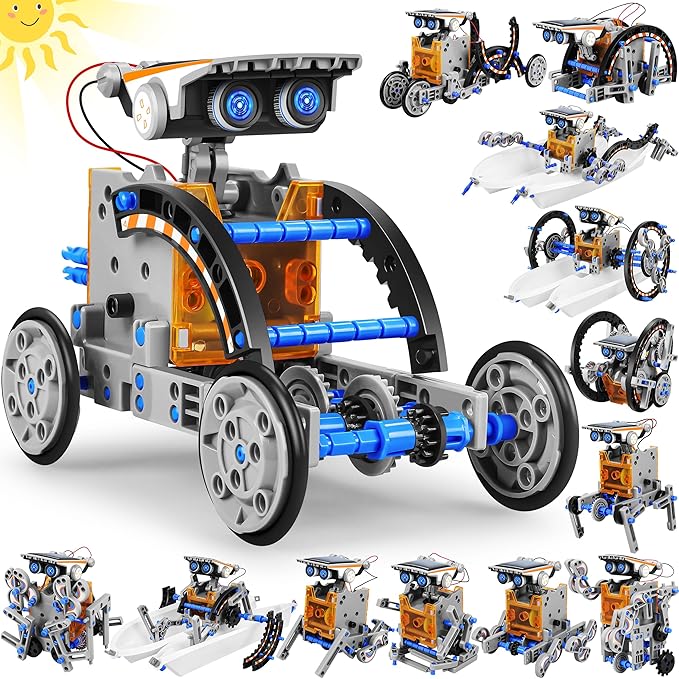
This kit is like the Swiss Army knife of solar toys. It lets kids build 13 different bots—some that walk on land and others that actually float and move on water. It’s a solid choice for an 8-to-12-year-old who likes to tear things down and start over.
This set features two levels of building complexity, making it a “grow-with-me” toy. It uses a real solar panel to drive a gear-based motor, teaching the basics of mechanical transmission without needing a single AA battery.
Why It Rocks & Where It Rolls
Pros:
- Versatile land and water models
- Clear instructions for younger builders
- Great price-to-play ratio
Cons:
- Small parts can be a pain to organize
- Requires very bright, direct sunlight
If your kid likes options and wants a bot that can hit the pool, grab this. It’s the most well-rounded “starter” set in the bunch.
36-in-1 Mega Solar Engineering Set for Children

This is the “big kahuna” of the solar world. With 434 pieces, it’s basically a bucket of endless engineering. It moves beyond just robots to include various mechanical models, making it a heavy-duty choice for kids who are serious about building.
This kit stands out because it includes sensors and gears that provide a more realistic “engineering” feel. It’s designed to challenge older kids while remaining accessible enough for younger ones with a bit of help.
The Highs & Lows
Pros:
- Massive variety of 36+ models
- High-quality sensors and gear sets
- Keeps kids engaged for weeks, not hours
Cons:
- Overwhelming for kids who lack patience
- Sorting 434 pieces is a chore
Buy this if you have a “Lego master” at home who needs a serious upgrade. Skip it if your kid gets frustrated easily by complex instructions.
STEM 13-in-1 Solar Building Toy Set for Kids
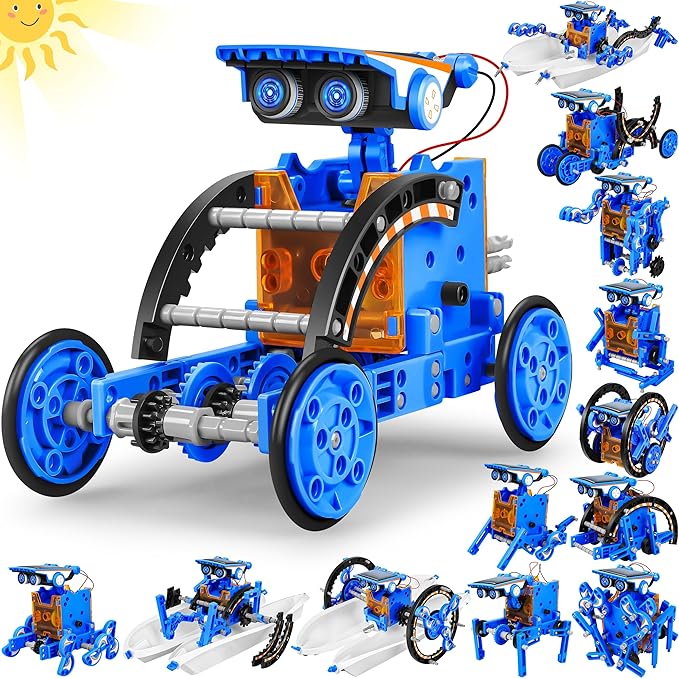
A classic DIY kit that focuses on the fundamentals. It’s a no-frills, high-impact way to show how sun rays turn into movement. It’s rugged, straightforward, and built to handle the typical “oops” moments of an 8-year-old builder.
The kit includes a unique functional gearbox that acts as the heart of every build. It’s particularly good at demonstrating how different gear ratios affect speed and power.
Wins & Woes
Pros:
- Extremely durable plastic components
- Great educational value for the price
- Includes a boat mode that actually works
Cons:
- The solar panel is small and picky about angles
- Labels on parts can be hard to read
This is the reliable “old school” pick. It’s perfect for a weekend project that doesn’t require a PhD to figure out.
8-Pack Bulk Solar Fan Kit

Need to entertain a whole squad or a classroom? This 8-set pack of solar fans is your best bet. It’s a simple build—a motor, a blade, and a panel—but it’s a total crowd-pleaser for school projects or birthday party activities.
These kits are focused on a single outcome: making the fan spin. It’s a high-success-rate project because there aren’t a million gears to misalign.
The Good & The Bad
Pros:
- Perfect for group activities/classrooms
- Very high success rate for builders
- Individual packs make distribution easy
Cons:
- Limited play value once built
- Very basic compared to the robot kits
If you’re a teacher or a scout leader, this is a no-brainer. If you’re buying for one kid, stick to the robots.
COBFDHA Solar Space Fleet Toy Kits
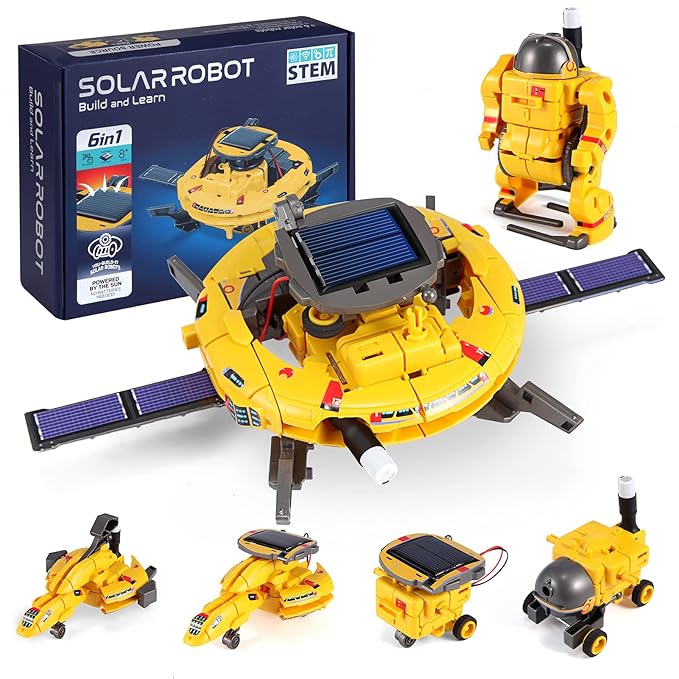
For the kid who wants to be an astronaut. This kit pivots away from generic robots and focuses on space stations, rovers, and shuttles. The yellow and gray color scheme gives it a “NASA” vibe that looks great on a desk once finished.
It features 120 pieces that snap together easily. The builds are compact and sturdy, making them better for actual play compared to some of the more spindly robot models.
Space Perks & Problems
Pros:
- Coolest aesthetic of the bunch
- Easier to assemble for the 8-10 age range
- Sturdy enough for light play
Cons:
- Fewer model options than the 13-in-1 kits
- Tiny wires need careful handling
Grab this for the space-obsessed kid. It’s a focused, thematic kit that feels more like a “mission” than a science experiment.
Smart Moves Before You Buy
- Check the Weather: Solar kits are “paperweights” on rainy days. If you live in a cloudy climate, look for kits that also allow for battery power.
- Organize First: Before you snap a single piece, get some plastic baggies. These kits have hundreds of tiny parts that look identical but aren’t.
- Light Matters: A standard LED lightbulb won’t cut it. You need an old-school 100W halogen bulb or—ideally—the actual sun to get these motors turning.
Avoid the “One-and-Done” trap. If you buy a solar power learning kit with only one model, the fun ends in 20 minutes. Always aim for the multi-build sets, so they can tear it down! And try a new design when they get bored.