
Can You Charge Solar Panel With Light Bulb
Ever wondered if you could use a simple light bulb to charge a solar panel indoors? Maybe you’ve heard someone say, “Hey, just shine a lamp on your solar panel and it’ll work!” Let’s dig into what’s really possible—because the truth is more interesting (and surprising) than you might think.
The Short Answer
Yes, you can charge a solar panel with a light bulb—but it’s not as easy, fast, or efficient as using sunlight. Most light bulbs just don’t give off enough of the right kind of light to generate much power. While you might see a small result, don’t expect to run your home or charge big batteries this way. Still, it’s a fascinating experiment and teaches a lot about how solar panels work.
Let’s break down why this is the case, what actually happens when you try it, and what factors really matter.
How Solar Panels Work: The Basics
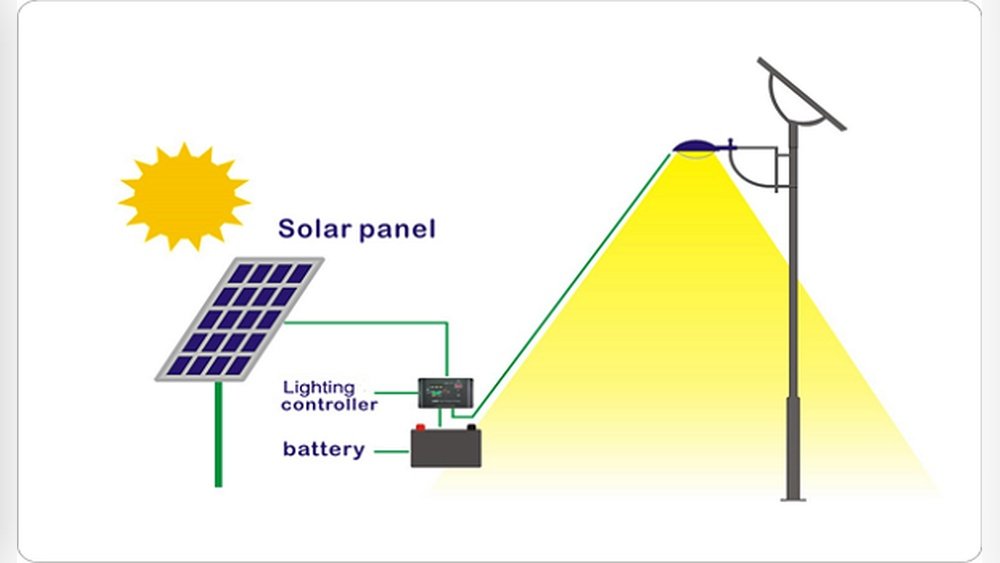
Solar panels turn light energy into electricity using photovoltaic (PV) cells. These cells are made from materials like silicon. When light hits them, it knocks electrons loose, creating an electric current.
But not all light is created equal. Solar panels are designed to use sunlight, which is strong and contains a mix of wavelengths. Light bulbs, on the other hand, give off different amounts and types of light. This changes how well a solar panel can work.
Here’s a quick summary of what matters:
- Intensity: Sunlight is much stronger than most indoor bulbs.
- Spectrum: Sunlight has a broad spectrum. Most bulbs are limited.
- Distance: The closer the light source, the better.
If you want to see a solar panel make power with a bulb, you’ll need to understand these factors.
Types Of Light Bulbs And Their Impact
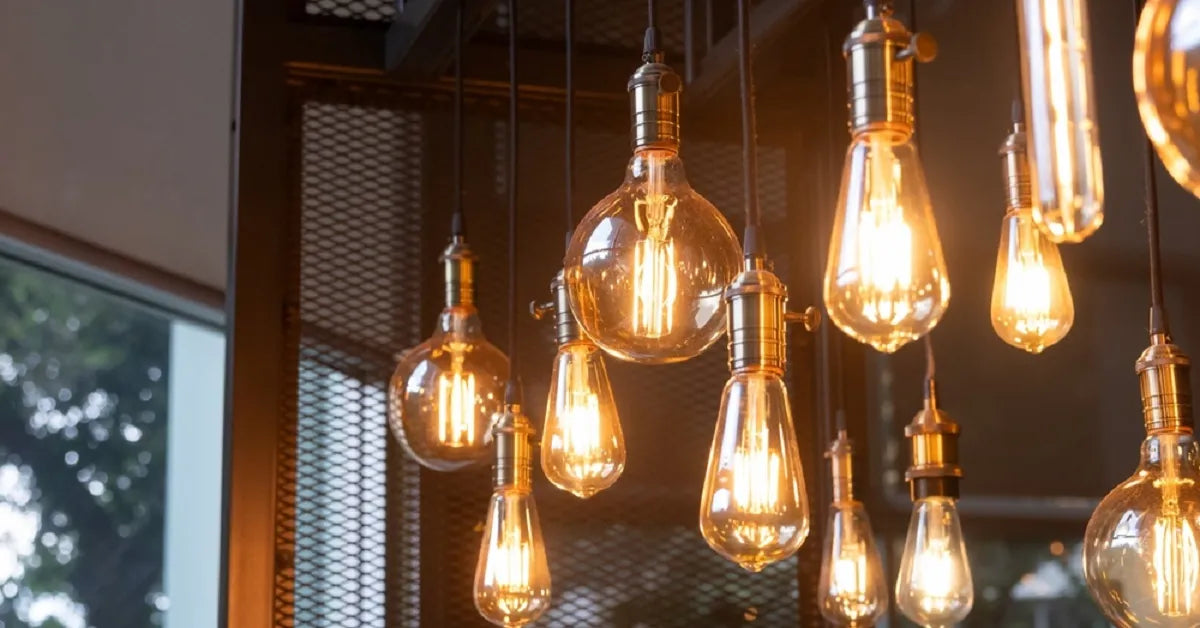
The type of bulb you use makes a big difference. Let’s compare the main ones:
| Light Bulb Type | Light Intensity (Lux) | Spectrum | Energy Use (Watts) |
|---|---|---|---|
| Incandescent | 500–800 (at 1m) | Broad, warm | 40–100 |
| LED | 300–1500 (at 1m) | Tunable, cooler | 5–20 |
| Fluorescent | 1000–2000 (at 1m) | Cool, limited UV | 15–40 |
| Halogen | 1500–2500 (at 1m) | Very broad | 35–70 |
| Sunlight | ~100,000 (outdoor noon) | Full spectrum | — |
Key Takeaway: Even the brightest bulbs are much dimmer than the sun. And their spectrum may not match what solar panels need.
Why Solar Panels Prefer Sunlight
Sunlight gives solar panels what they crave: high-intensity, full-spectrum light. Here’s why indoor bulbs don’t compare:
- Lower Power: The sun gives about 1,000 watts per square meter at noon. Most bulbs give less than 1% of that.
- Spectrum Mismatch: Solar cells are most sensitive to certain colors (wavelengths). Bulbs may lack those.
- Heat vs. Light: Some bulbs waste energy as heat instead of useful light.
For example, a small solar panel might produce 5 watts in the sun—but only a fraction of a watt under a bulb.

Credit: www.youtube.com
Experiment: Charging A Small Solar Panel With A Bulb
Let’s say you want to try this at home. Here’s what happens:
- Pick a Small Solar Panel: Something like a 5V, 1W panel (often used in small gadgets).
- Choose a Bulb: The higher the wattage and the closer the spectrum to sunlight, the better. Halogen or full-spectrum LED works best.
- Distance Matters: Place the bulb just a few centimeters from the panel.
- Measure Output: Use a multimeter to check voltage and current.
Real-world result: With a 60W incandescent bulb, you might get 0.2–0.5V (instead of the full 5V). Current (amps) will be much lower, too.
Pro tip: Many beginners forget that the panel’s output depends on both voltage and current. Even if you see “some” voltage, if the current is tiny, you can’t actually charge a battery.
Comparing Light Bulb Vs. Sunlight For Charging
Here’s a clear side-by-side look at what you can expect:
| Source | Max Power Output (5W Panel) | Charging Time (1000mAh battery) | Notes |
|---|---|---|---|
| Sunlight (noon) | 4–5W | 2–3 hours | Optimal conditions |
| Halogen bulb (100W, close) | 0.5–1W | 8–15 hours | High heat risk |
| Incandescent (60W, close) | 0.1–0.4W | 20–40 hours | Very inefficient |
| LED (20W, close) | 0.05–0.2W | 40+ hours | Low spectrum match |
Notice: Even the best bulb is 5–10x slower than sunlight, and often much less.
The Science: Why Light Bulbs Fall Short
Photons are what really matter. Solar panels need lots of photons—especially in the blue and green parts of the spectrum. Most household bulbs are optimized for human eyes, not for powering electronics.
- Incandescent bulbs: Mostly red/yellow light, lots of heat.
- LED bulbs: Can be tuned, but usually miss UV and some blue.
- Halogen bulbs: Closer to sunlight, but get extremely hot.
Another key point: As you move the bulb away from the panel, the light intensity drops fast (inverse-square law). Double the distance, and you get only a quarter as much light.
Practical Uses: When Would You Do This?
Charging a solar panel with a light bulb is not practical for daily use. But it’s helpful in some situations:
- Education: Demonstrating how solar panels work in classrooms.
- Testing: Checking if a solar panel or device works without needing sunlight.
- DIY Projects: Powering tiny gadgets, like solar-powered toys, for a few minutes.
Insight: Some small devices (solar calculators, garden lights) are designed to work with low light and may charge from bulbs. Most larger devices will not.
Common Mistakes And Misconceptions
Many people believe that “any light” will work. Here are common errors:
- Using a weak bulb: A 5W night light produces almost no useful energy for a solar panel.
- Too far away: Light intensity drops dramatically with distance.
- Wrong spectrum: Cool white or daylight spectrum bulbs work better than warm white.
- Overheating: Placing a panel too close to a hot bulb can damage the panel.
- Expecting speed: Charging even a small phone could take days with a bulb.
Tip: For best results, use a high-wattage halogen bulb, place it very close, and monitor heat.
The Role Of Light Spectrum In Solar Charging
Solar panels have a “sweet spot” in the light spectrum—usually around 400–700 nm (nanometers), which covers visible light.
- Red and infrared: Not very useful for most panels.
- Blue and green: Most effective.
- Ultraviolet: Some panels can use it, but it’s rare in household bulbs.
Most indoor bulbs miss part of the spectrum needed for peak efficiency. Full-spectrum LED or special “grow lights” for plants are closer, but still weaker than sunlight.
Real-world Example: Solar-powered Devices Indoors
Let’s look at a solar garden light. These usually have a tiny panel (about 1–2V, 0. 1–0. 5W). If you shine a 60W incandescent bulb on it from 10 cm away, it might light up the LED—but charging the internal battery fully could take 20–30 hours.
Interesting insight: Some solar calculators are so efficient, they can run from basic indoor lighting—but they rarely actually charge; they just use the electricity directly.
Indoor Solar Lighting: Is It A Thing?
Companies have created indoor solar panels designed for artificial light. They use special materials (like amorphous silicon or dye-sensitized cells) that work better with low, diffuse light.
- These panels are used in wireless sensors, calculators, and some smart home devices.
- Their power needs are tiny (microwatts to milliwatts).
- Regular solar panels (like those for rooftops) are not made for this.
So, if you want to power a remote sensor in an office, special panels can work. For charging phones or batteries, you’ll need much more power.
Credit: intelamp.com
Efficiency: How Much Energy Gets Wasted?
Charging with a bulb is inefficient for two main reasons:
- Bulb efficiency: Most electricity becomes heat, not light. Incandescent bulbs are only about 5–10% efficient at making visible light.
- Panel efficiency: Even with the right light, most panels only convert 15–22% of light into electricity.
Example calculation: If you use a 100W bulb and your panel gets 1W of power, you’re using 100 watts to get 1 watt out—a 1% total efficiency!
What About Led Bulbs?
LED bulbs are more efficient than incandescents, but they still have limits:
- They use less power to make the same brightness.
- The spectrum is often missing deep blue and UV.
- Most are diffused, so the light spreads out (less focused on the panel).
If you use a “daylight” LED (5000–6500K), you’ll get better results than with a “warm white” (2700K) LED.
Can You Boost The Output With Multiple Bulbs?
Yes, using more bulbs or higher wattage bulbs will increase the light intensity and help the panel make more power. But the cost and energy waste increase rapidly.
Example: Three 100W halogen bulbs may let a small panel reach 2–3W of output, but you’re using 300W of electricity to get a tiny return.
Non-obvious insight: Instead of more bulbs, using a reflector (like a foil dish) to focus the light on the panel can help—just watch out for overheating.
The Cost Factor: Is It Worth It?
Let’s compare the energy cost:
- 100W bulb running for 10 hours = 1 kWh (kilowatt-hour)
- Average US electricity cost: $0.13/kWh
- The solar panel may store only 0.1–0.5 kWh in that time
Bottom line: It’s much cheaper and more efficient to plug your device directly into the wall. Charging with a bulb is only for experiments or very special cases.
Safety Concerns
Don’t ignore safety:
- Heat: High-wattage bulbs get hot. Placing a panel too close can cause burns or melt plastic.
- Fire risk: Never leave bulbs and panels unattended when close together.
- Electric shock: Be careful with wiring and connections, especially around kids.
If you want to try this, do it for a short time, and keep an eye on temperatures.
When It Makes Sense To Use Bulbs
There are a few cases where charging with bulbs is useful:
- Laboratory testing: Checking solar panel quality and response.
- Science fair projects: Showing the basics of solar technology.
- Calibration: Setting up sensors or devices that will use solar indoors.
Advanced tip: Some industrial labs use special solar simulators—giant, expensive lamps that mimic sunlight exactly. These aren’t practical for home use but are the gold standard for testing.
Myths About Solar Charging Indoors
Let’s clear up some common myths:
- Myth: Any light will do.
Fact: Only strong, broad-spectrum light gives good results.
- Myth: Solar panels can charge as fast indoors as outdoors.
Fact: Indoor charging is usually 10–100 times slower.
- Myth: LED bulbs are perfect for solar panels.
Fact: Most are not, unless specially designed.
Understanding these myths helps set realistic expectations.
How To Maximize Solar Panel Output With Bulbs
If you need to use a bulb, here’s how to get the most from it:
- Use the brightest bulb you have (halogen or full-spectrum LED).
- Place the panel as close as safely possible to the bulb without overheating.
- Use a reflector to focus more light on the panel.
- Keep the panel clean—dust and fingerprints reduce output.
- Match the spectrum—“daylight” or “full spectrum” bulbs are best.
Hidden tip: Allow the bulb to warm up fully before measuring output. Some take a few minutes to reach full brightness.
Case Study: Classroom Solar Panel Demo
A teacher wants to show how solar panels work. They use a 5V, 1W panel and a 100W halogen bulb.
- The panel is placed 5 cm from the bulb.
- Output is measured at 0.8V, 0.15A (about 0.12W).
- The class sees the panel power a small fan, but not a phone charger.
This demonstrates the principle, but also shows the limits—real charging power is much lower than with sunlight.
Alternatives: Solar Simulators And Specialized Lighting
Professional labs use solar simulators—devices that create light almost identical to sunlight. These are expensive (thousands of dollars) and overkill for most people.
Some grow lights (used for plants) have a spectrum closer to sunlight. They can boost a panel’s output compared to standard bulbs, but still won’t match real sunlight.

Credit: charge-solar-panel-with-a-battery.hashnode.dev
Environmental Impact
Charging a solar panel with a bulb defeats the purpose of clean energy. You’re using grid electricity (often from fossil fuels) to power a bulb, then recapturing a tiny fraction with the panel.
Key insight: True solar power should capture energy from the sun, not just recycle electricity from another source.
Summary: The Realistic View
Charging a solar panel with a light bulb is possible, but it’s slow, inefficient, and not practical for real-world energy needs. It’s a cool experiment or demo, but don’t expect to power your gadgets this way. The best use is for learning, testing, or very low-power applications.
If you want to dive deeper into how solar panels respond to different light sources, the Wikipedia page on solar cells offers solid background.
Frequently Asked Questions
Can Any Light Bulb Charge A Solar Panel?
Most light bulbs can produce some electricity in a solar panel, but only strong bulbs (like halogen or high-wattage LEDs) give measurable results. Low-power bulbs (like night lights) are too weak to matter.
Is It Safe To Put A Solar Panel Close To A Light Bulb?
It can be safe for short periods, but watch for overheating. High-wattage bulbs get very hot and can damage the panel or cause burns.
Can I Charge My Phone By Shining A Lamp On A Solar Panel?
In most cases, no. The output from a light bulb is too low to charge a phone in a reasonable time. Even with strong bulbs, it could take days.
What Kind Of Bulb Works Best For Indoor Solar Charging?
Halogen bulbs and full-spectrum LEDs work best, especially those labeled “daylight. ” Grow lights also provide a better spectrum than standard bulbs.
Why Does My Solar Panel Not Work Under A Lamp?
The most common reasons are too little light, wrong spectrum, or the panel being too far from the bulb. Use a bright, cool-spectrum bulb close to the panel for the best results.
Solar energy is most powerful when it comes directly from the sun. Experiments with bulbs are fun and educational, but nothing beats the real thing for charging power and efficiency.