
Can A Light Bulb Charge A Solar Panel?
Ever stared at your desk lamp and wondered if you could use it to charge a solar panel? You’re not alone. The idea sounds simple—light is light, right? But the reality is more interesting, and a bit tricky. Let’s break down exactly what happens when you try to charge a solar panel with a regular light bulb, using clear language, real data, and practical advice.
The Short Answer
Yes, a light bulb can charge a solar panel, but the results are usually disappointing. While solar panels turn light into electricity, not all light is created equal. The kind of light, how strong it is, and how much actually hits the panel all change how well it works. Most home light bulbs just don’t have the power or the right type of light to charge a solar panel the way sunlight does.
Still, in some situations, you can use a light bulb for small experiments or to test if a solar panel is working. But if you expect to fully charge a battery or run a device using indoor bulbs, you’ll be let down.
Let’s explore why, and what really happens when you try this.
How Solar Panels Create Electricity
Solar panels work by converting light energy into electricity through the photovoltaic effect. When photons (tiny packets of light) hit the surface of a solar cell, they knock electrons free, creating an electric current. The more photons that hit the panel, the more electricity it can produce.
But it’s not just the amount of light—the quality of the light matters too. Sunlight is strong and has a broad range of wavelengths, from red to blue to ultraviolet. Solar panels are designed to work best with this kind of light. Artificial light, like that from a bulb, is often weaker and doesn’t have the same mix of wavelengths.
Key Factors That Affect Charging
- Light Intensity: Brighter light means more energy for the panel.
- Wavelength (Color): Solar cells respond best to certain colors, especially blue and visible light.
- Distance and Angle: The closer and better aligned the light source, the more energy hits the panel.
- Panel Efficiency: Not all the light gets turned into electricity; some is lost as heat.
Comparing Sunlight And Light Bulbs
To see why a solar panel charges slowly—or barely at all—under a bulb, it helps to compare the two main light sources.
| Source | Intensity (W/m2) | Wavelength Range | Efficiency for Solar Panels |
|---|---|---|---|
| Sunlight (Direct) | ~1000 | Broad (UV to Infrared) | Very High |
| Incandescent Bulb | 10–50 (at close range) | Mainly Red/Infrared | Low |
| LED Bulb | 10–100 (at close range) | Narrower, customized | Medium |
| Fluorescent Bulb | 20–80 (at close range) | Visible, some UV | Medium |
Sunlight is much stronger and covers the right range of colors for solar panels. Even a bright bulb, just inches away, produces only a small fraction of the energy the sun provides.
Types Of Light Bulbs: Do Some Work Better Than Others?
Not all bulbs are the same, and some give better results than others when trying to charge a solar panel.
Incandescent Bulbs
These are the old-fashioned bulbs with a glowing wire inside. They produce more heat than light, and most of their energy is in the infrared range, which solar panels don’t use well. You might see a small current in your solar panel, but it will be very low.
Led Bulbs
LED bulbs are much more efficient, and you can even buy ones that are designed to mimic sunlight. Their light is closer to what solar panels need, but the total power output is still much lower than the sun. If you put a solar panel right under a strong LED, you’ll get a small charge, but nothing close to real sunlight.
Fluorescent Bulbs
Fluorescent bulbs (like those long tubes in offices) give off more visible light than incandescents and can do a bit better with solar panels. Some “full spectrum” versions are made to be similar to sunlight, but the intensity is still limited.
Halogen Bulbs
Halogen bulbs are a type of incandescent, but a bit more efficient. They produce more visible light, so a solar panel will work a little better under a halogen than a standard incandescent. Still, don’t expect miracles.
Specialty Grow Lights
Some grow lights are designed to match sunlight for plants. These can give good results in a laboratory or greenhouse, but they are much more expensive and use a lot of power. For most people, these are not practical for charging solar panels.
Real-world Example: How Much Power Can You Expect?
Let’s say you have a small solar panel, about the size used for a calculator or a garden light (roughly 10 cm x 10 cm). If you place it outside on a sunny day, it might produce about 1 watt of power.
But under a bright 10-watt LED bulb, just a few centimeters away, you might get only 0. 05 to 0. 1 watts—a tiny fraction.
Here’s a simple comparison:
| Situation | Expected Output | Time to Charge 1 AA Battery (2000 mAh, 1.2V) |
|---|---|---|
| Direct Sunlight | ~1 watt | ~3 hours |
| 10W LED Bulb (close) | 0.05–0.1 watt | 30–60 hours (theoretical) |
| 60W Incandescent Bulb (close) | 0.02–0.05 watt | 60–120 hours (theoretical) |
This is a big difference. In reality, it’s even less because some energy is lost as heat, and the battery won’t charge efficiently at such a low current.
Why Don’t Light Bulbs Work Like The Sun?
It’s not just about brightness. The spectrum of the light is key. Solar panels are tuned to absorb visible light, especially in the blue and green range. Many indoor bulbs put out a lot of red or infrared, which isn’t as useful. Also, bulbs spread their light in all directions, so only a tiny part actually hits the panel, unless you place it very close.
Another issue is energy loss. When you use a bulb to charge a solar panel, you’re converting electricity into light, and then back into electricity. Each step wastes energy as heat. In the end, you use a lot more electricity from the wall than you get out of the solar panel.
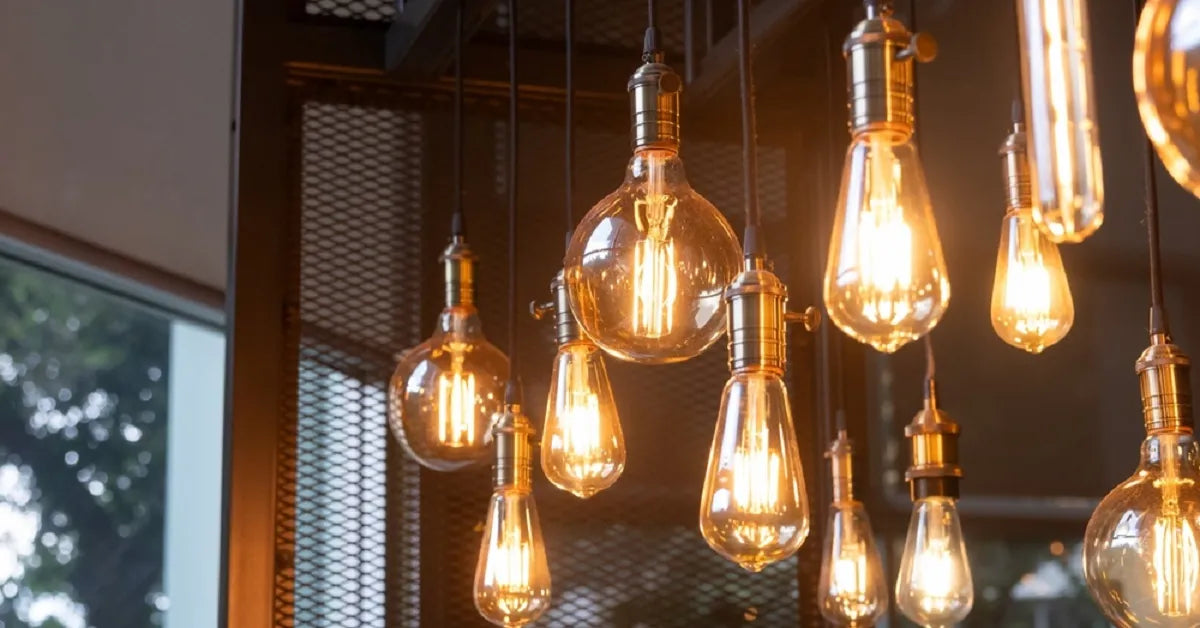
Credit: intelamp.com
Can You Use A Light Bulb For Solar Panel Testing?
Yes, you can. For quick tests—like checking if a panel is working at all, or for small science projects—a strong bulb can help. Just remember:
- The current (amps) and voltage will be much lower than in sunlight.
- Results won’t show what the panel can do outside.
- Use a white LED or halogen bulb for the best results.
Practical Experiments: What Happens If You Try?
Imagine you have a 5V, 1W mini solar panel. You want to test if it works using a regular 9W LED bulb at home. Here’s what you’ll notice:
- Voltage: The panel might show 3–4 volts if you put it very close to the bulb.
- Current: The current will be very small, maybe 10–50 milliamps, depending on the bulb.
- Charging a Device: It’s not enough to charge a phone or power a motor. But you might be able to light a small LED.
If you move the panel just a little farther away, the output drops quickly. This shows how sensitive solar panels are to both the strength and quality of the light.
Hidden Insights Most Beginners Miss
Many people think that any light source will work, as long as it’s bright. But two key ideas are often overlooked:
- Most bulbs use electricity to make light, which you’re then turning back into electricity. This double-conversion wastes a lot of power. It’s much more efficient to just use the electricity directly.
- Even a very bright bulb is much weaker than sunlight. For example, a 100-watt bulb placed 20 cm from a panel gives far less energy than the sun does outdoors.
Another surprise: Some solar panels have a “cutoff” voltage—they won’t work at all under weak light, even if you can see the panel is lit up. This means your experiment might show zero output, even when the bulb looks bright.
When Would Charging With A Bulb Make Sense?
There are a few situations where using a bulb is useful:
- Classroom experiments: To show how solar panels work, without needing sunlight.
- Quality testing: Checking if a panel is working before installing it.
- Nighttime projects: If you need to demonstrate a solar device at night, a strong bulb can help.
But for real charging—like powering a battery, phone, or lamp—bulbs just can’t compete with daylight.

Credit: www.amazon.com
Cost And Efficiency: Is It Worth It?
If you want to use a light bulb to charge a solar panel, remember you’re paying for the electricity twice. First, to power the bulb, and then you get only a tiny bit of that energy back from the solar panel.
For example, powering a 10-watt bulb for 10 hours uses 100 watt-hours of energy. If your solar panel gives you back just 1 watt-hour, you’ve lost 99% of the electricity. This is not just inefficient—it’s expensive if you do it often.
If you’re interested in energy-saving or sustainability, this method is the opposite of what you want. Solar panels shine (pun intended) when used with real sunlight, which is free and powerful.
Ways To Improve Charging From Indoor Lights
If you must charge a solar panel with a bulb, here are some tips to get the best results:
- Use the right bulb: Full-spectrum LEDs or halogen bulbs are better than regular incandescents.
- Get close: Place the panel as near to the bulb as possible, but don’t let it overheat.
- Use reflectors: Mirrors or white surfaces can help bounce more light onto the panel.
- Angle correctly: Tilt the panel so it faces the bulb directly.
- Reduce obstructions: Keep the glass or plastic covering the panel clean.
Still, don’t expect miracles—these tricks help a little, but can’t make up for the missing power of sunlight.
Real-life Applications: Where Is This Useful?
While charging with bulbs is not practical for daily use, it does have some special uses:
- Educational kits: Science kits often include a small lamp to show how solar power works indoors.
- Product testing: Manufacturers sometimes test panels with strong artificial lights before shipping.
- Photography and sensors: Some cameras or sensors use solar panels indoors as a backup, and strong lights can help test them.
But for real-world charging—like running a home, charging batteries, or powering tools—only the sun gives enough energy.
Myths And Misunderstandings
There are some common myths about solar panels and light bulbs:
- Myth: Any bright bulb can charge a solar panel well.
Fact: Most indoor bulbs are much weaker than sunlight, and many have the wrong spectrum.
- Myth: You can use a lamp to “cheat” and get free energy from a solar panel.
Fact: You’ll always lose energy in the process; it’s never free.
- Myth: “Full-spectrum” bulbs are the same as sunlight.
Fact: They are closer, but still not as powerful or as broad in spectrum as the sun.
Understanding these facts can save you time and money.

Credit: solarpanelsvenue.com
Simple Experiment: Try It Yourself
If you want to see how this works, here’s a safe experiment:
- Get a small solar panel (like from a garden light or a calculator).
- Place it under a strong LED desk lamp.
- Connect a small voltmeter or LED to the panel.
- Move the panel closer to and farther from the bulb, and observe the voltage.
You’ll notice the voltage and brightness drop quickly as you move away from the bulb. Try the same test outside in the sun—you’ll see a big difference.
Efficiency Comparison: Sunlight Vs. Bulbs
To help you visualize the difference, here’s a quick efficiency chart.
| Light Source | % of Sunlight’s Power | Practical Charging? |
|---|---|---|
| Direct Sunlight | 100% | Yes |
| Strong LED Bulb (10cm away) | 5–10% | Very limited |
| Incandescent Bulb (10cm away) | 2–5% | Mostly for testing |
| Fluorescent Tube (10cm away) | 3–8% | Limited |
This shows why bulbs are no match for the sun.
Environmental Impact
Charging solar panels with bulbs doesn’t help the planet. In fact, it increases your carbon footprint because you use more electricity to power the bulb than you get back. If you care about saving energy, use solar panels with real sunlight or look for more efficient solutions, like direct charging.
For more on solar energy and efficiency, you can check out this Wikipedia article on solar cells.
Frequently Asked Questions
Can Any Type Of Light Charge A Solar Panel?
Most types of light can produce some electricity in a solar panel, but sunlight is far more effective. Bulbs with more blue and visible light, like LEDs and some fluorescents, work better than others.
Is It Possible To Fully Charge A Battery Using A Bulb And A Solar Panel?
Technically yes, but it would take a very long time, a lot of electricity, and is not practical. The process is inefficient and costs more than using wall power directly.
Do Solar Panels Work Under Indoor Lighting?
Solar panels do work under indoor lights, but the power produced is much lower compared to outdoor sunlight. This is why solar calculators and small devices can run indoors, but bigger tasks are not possible.
Why Do My Solar Lights Sometimes Charge Indoors?
Some very efficient solar lights can charge a little indoors if placed very close to a strong bulb. But the charge will be weak, and the light will not last long. For best results, charge them outdoors.
What Is The Best Artificial Light For Testing Solar Panels?
A high-powered, full-spectrum LED or a halogen bulb is best for testing. Place the panel as close as possible to the bulb, and use a reflector to focus the light.
Solar panels and light bulbs both use light, but they work best in different worlds. If you want strong, fast charging, sunlight is still unbeatable. For testing or small experiments, a bulb can do the trick—but don’t expect more. Understanding the limits helps you get the most from your solar technology, without wasted energy or frustration.