
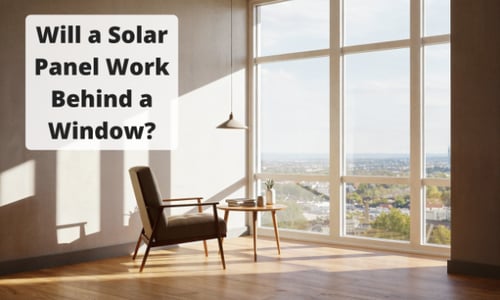
Have you ever wondered if you could use solar panels indoors or behind a window? Maybe you live in an apartment, or your roof isn’t ideal for direct sunlight. You see sunlight streaming through your glass, so it feels logical to ask: “Can a solar panel work through glass?” This is a common question for people trying to use solar energy in new ways. Many are surprised by what actually happens.
Maybe you’ve seen small solar panels in calculators or on indoor gadgets. Or you noticed a solar charger left inside a car, hoping it would fill up your phone. The results are often disappointing. This article clears up the confusion and gives you solid, real-world answers.
By the end, you’ll know exactly what to expect—and why.
Short Answer
Solar panels can work behind glass, but performance drops a lot. Most glass blocks or reflects some sunlight, so the solar panel gets less energy. If you put a solar panel behind a window, it might produce 10–30% less power compared to direct sunlight. Thick or tinted glass can reduce output even more. For most practical uses, especially when you need lots of power, placing solar panels behind glass is not recommended.
Why Glass Changes Solar Panel Performance
Solar panels are built to catch sunlight. They turn light energy into electricity using special materials, usually silicon. When sunlight hits the panel, it creates a flow of electrons. This is how you get power.
But glass changes things:
- Reflection: Some light bounces off the glass and never reaches the panel.
- Absorption: Glass absorbs some sunlight, especially certain wavelengths.
- Diffusion: Glass scatters light, making it less direct.
So, even if your room feels bright, your solar panel isn’t getting the full energy it needs.
Example: Window Vs. Outdoor
Imagine two solar panels:
- One outside, facing direct sunlight.
- One inside, right behind a clear window.
If the panel outside makes 100 watts, the indoor panel might only produce 70–90 watts. With tinted or double-pane glass, the output could drop to 50 watts or less.
How Much Power Do You Lose?
The loss depends on the type of glass. Here’s a simple comparison:
| Glass Type | Estimated Power Loss | Typical Uses |
|---|---|---|
| Clear single-pane | 10–20% | Home windows |
| Double-pane | 20–30% | Modern windows |
| Tinted glass | 30–50% | Car windows, offices |
| Laminated or coated | 40–60% | Safety glass, skylights |
Most people don’t realize how much tinted or coated glass reduces sunlight. Even clear glass can block more than you expect.
Real-world Example: Charging A Phone
Let’s say you have a 10-watt solar charger. You place it outside on a sunny day, and it charges your phone quickly. If you put it behind a window, you might only get 6–8 watts. If your window is tinted, maybe just 4–5 watts.
Some people try to charge devices inside cars or rooms, thinking the sunlight is strong enough. The output usually isn’t reliable. If you need steady power, always place the panel outside.
Solar Panel Types: Does It Matter?
Not all solar panels are the same. Here’s how the main types react to glass:
| Panel Type | Efficiency Behind Glass | Notes |
|---|---|---|
| Monocrystalline | Higher | Best for weak light |
| Polycrystalline | Medium | Lower cost |
| Thin-film | Lower | Flexible, but less efficient |
Monocrystalline panels can handle low light better than others. But even the best panel loses power behind glass.
Indoor Solar Panels: Is It Possible?
Some products use indoor solar panels. Usually, these are for low-power devices like calculators, clocks, or small sensors. They’re designed for weak light and don’t need much energy. You’ll see these panels in places where direct sunlight isn’t possible. But they don’t power big devices.
If you want to run lights, fans, or charge phones indoors, standard solar panels won’t work well through glass. You’ll need:
- Direct sunlight
- Very efficient panels
- Low power needs
Credit: blog.powerfilmsolar.com
Why Not Just Use Bigger Panels?
Some people think, “If I use a bigger panel, I’ll get more power indoors.” It sounds logical, but it’s not practical. Here’s why:
- Bigger panels cost more.
- You need space for installation.
- The loss from glass doesn’t change—only the starting power does.
If your window blocks 30% of sunlight, even a big panel loses that much. You might need a panel twice as large to make up for the loss, which isn’t efficient.
Common Mistakes People Make
Many beginners try to use solar panels indoors and wonder why their devices don’t charge. Here are mistakes to avoid:
- Expecting full power indoors: Panels need direct sunlight for best results.
- Ignoring glass type: Tinted or thick glass blocks more light.
- Not testing before installing: Always check panel output behind your glass before making a decision.
- Using the wrong panel: Some panels are not designed for low light.
- Missing panel angle: Panels should face the sun directly, even behind glass.
How To Test Your Own Setup
Want to see how your panel performs behind glass? Here’s a simple method:
- Place your panel outside in full sun. Record the voltage and current.
- Move the panel behind your window. Record again.
- Compare the numbers. This shows real loss in your situation.
Most panels come with a watt meter or display. If not, use a cheap multimeter to measure output.
Special Cases: Solar Panels Built Into Windows
There are new technologies where solar cells are built into the glass itself. This is called BIPV (Building Integrated Photovoltaics). Some modern buildings use windows that double as solar panels.
But these are very expensive and less efficient than regular panels. They’re mostly used in commercial buildings, not homes. If you’re curious, you can read more at Wikipedia.

Credit: www.susenergy.co.uk
Practical Tips For Best Results
If you want to use solar panels indoors or through glass, here’s what helps:
- Use clear, single-pane glass.
- Clean the glass often—dust blocks light.
- Place the panel as close to the glass as possible.
- Angle the panel toward the sun.
- Use monocrystalline panels for low-light conditions.
- Lower your power needs—use energy-efficient devices.
Even with these tips, you’ll never match outdoor performance. If you need real power, always put panels outside.
Comparing Outdoor Vs. Indoor Solar Performance
Let’s look at some sample numbers for a typical 100-watt panel:
| Location | Expected Output | Notes |
|---|---|---|
| Outdoor (direct sunlight) | 100 watts | Full power |
| Behind clear window | 80–90 watts | Loss from glass |
| Behind tinted window | 50–70 watts | More loss |
| Indoor, away from window | 10–30 watts | Very weak light |
These numbers are averages and can change with weather, glass type, and panel quality.
What About Car Windows?
Many people try to use solar panels inside cars. Car windows are often tinted and curved. This means even more light is lost.
- Tinted glass: Blocks both visible and UV light.
- Curved windows: Change the angle, reducing sunlight.
If you want to use solar chargers in a car, it’s best to place them on the dashboard, close to the glass. Still, expect lower output.
Solar Panels In Greenhouses
Greenhouses use clear glass or plastic to let in sunlight. Some people use solar panels inside to run fans or pumps. Even here, panels work better outside.
If you must use panels inside a greenhouse:
- Choose clear glass or plastic.
- Place panels near the roof, where light is strongest.
- Check the output regularly.
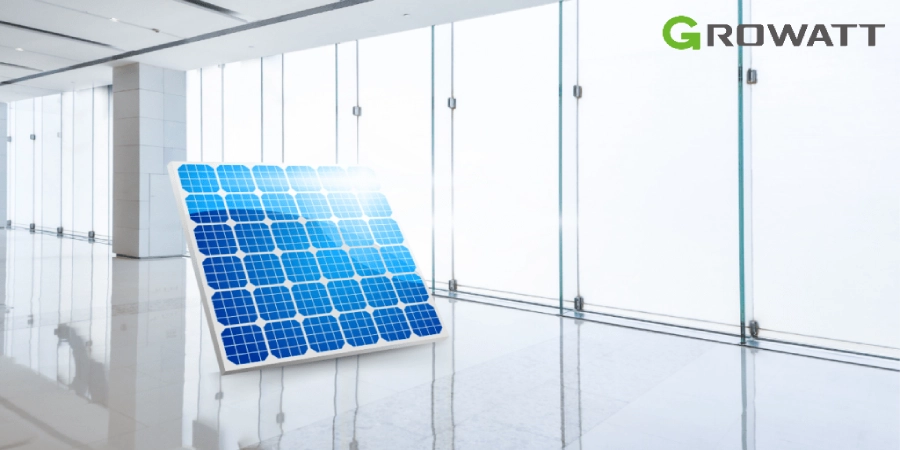
Credit: igrowattinverter.com
Non-obvious Insights Most Beginners Miss
- Glass blocks invisible light: Solar panels need both visible and invisible light (like infrared and ultraviolet). Many glass types block these, not just visible rays.
- Old or dirty glass cuts power: Even small amounts of dirt, water stains, or age-related cloudiness on glass can reduce panel output sharply.
- Multiple glass layers multiply loss: Double or triple-pane windows lose more sunlight than single-pane. The loss is not just additive—it can compound.
When Does Indoor Solar Make Sense?
There are a few cases where indoor solar panels are practical:
- Small gadgets: Calculators, remote sensors, clocks.
- Experimental setups: Science projects, low-power prototypes.
- Emergency backup: If you have no outdoor space and low power needs.
For most people, though, outdoor installation is the way to go.
Frequently Asked Questions
Can I Use Solar Panels Behind My House Window?
Yes, but power drops by 10–30%. It’s okay for small devices, but not for high-power needs.
Will A Solar Panel Charge My Phone Indoors?
Rarely. If the panel is behind a window, it may charge slowly or not at all. Outdoors is much better.
Does The Type Of Glass Matter?
Absolutely. Tinted, coated, or double-pane glass blocks more sunlight than clear single-pane glass.
Are Indoor Solar Panels Different From Outdoor Ones?
Yes. Indoor panels are made for weak light and small devices. Outdoor panels are bigger and need strong sunlight.
Is There Any Way To Improve Indoor Solar Performance?
Use clear glass, clean windows, place panels close to the glass, and angle toward the sun. But you’ll never match outdoor performance.
Trying to use solar panels behind glass is tempting, but the power loss is usually too big for most needs. If you want real results, place your panels outside where they get direct sunlight. Test your setup, use the right panel type, and remember—glass changes everything. Knowing these details saves time, money, and frustration. Now you can make the best choice for your solar project.